


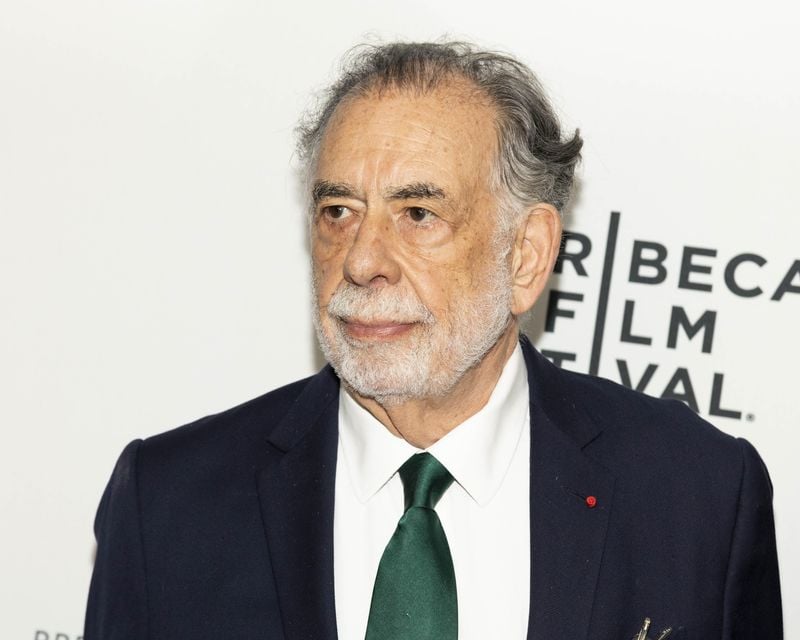
‘The Godfather’: Francis Ford Coppola on the problematic idea of working “under tension”

The Godfather, the now iconic and definitive gangster crime drama released in 1972 and directed by Francis Ford Coppola, who co-wrote the screenplay with Mario Puzo, the author who penned the original best-selling 1969 novel of the same title. The plot charts the complex and dangerous lifestyle of the Corleone family, a crime organisation helmed by patriarch Vito, who will soon pass on the title to his son, Michael. With a cast boasting the likes of Marlon Brando, Al Pacino, Robert Duvall, Diane Keaton and countless others, The Godfather changed the face of cinema forever.
In 2023, very little can be said about The Godfather that hasn’t already been said in the 50 years since its historic release. Coppola’s work is held in cinema as one of its most significant contributions ever, let alone one of the best gangster movies. It’s also responsible for resurrecting what was, at the time, Brando’s deteriorating career which had been failing throughout the 1960s.
Referenced and celebrated in pop culture and the medium since its release, The Godfather exemplifies brilliant story exposition and rich visuals against some compelling performances. However, this universal and untouchable success came at a cost for its talented and passionate director, who openly discussed the “nightmarish experience” of making a powerful artwork.
Speaking with Empire, Coppola stated: “After Marlon [Brando’s] first day, the big rumour was I was going to get fired that week because people watching the film, running it, felt the scene was too dark, you could hardly see him, and that he mumbled.”
“When I said, ‘Give me a chance, it’s his first day, let me go through a second take,” they said, ‘No, you can’t,'” he explained. “Then someone said, ‘The reason they don’t want you to do it is because this weekend, they’re going to put a new director in.'”
After firing his previous team and anyone working against him, he re-shot scenes to “save” himself, adding: “There was the perception that I had some power. But I really had no power at all”. This behind-the-scenes tale has become a heavily shared one, reading as surprising considering the acclaim Coppola found through The Godfather and turning into a tempting ‘what if?’ thought experiment concerning the outcome had he been fired.
However, what’s overlooked is the ethical discussion the director poses concerning pushing a creator to their limits for them to construct something successful. “A lot of people have the theory that you do your best work when you’re under tension. I don’t think so,” Coppola says. “The Godfather Part II, I had a lot of power, and it was a bigger, more complicated and difficult film to do.”
This concept of working, creating, and contributing to a piece of art or entertainment under such pressure isn’t really a revelation. One key example is Stanley Kubrick’s treatment of actor Shelley Duvall in 1980’s The Shining, as the perfectionist director exercised emotional and psychological torture of his star. This was done through numerous takes of exhausting scenes and telling other cast mates to ignore her, all to bring up what he felt were the best emotions for the role. The Shining can be considered The Godfather of horror, held as a brilliant and influential piece of its genre, but it also came from extreme measures.
While Coppola’s experience with The Godfather resides in a less morally questionable framework, his feelings of being pushed to his emotional limits and mistreated just for the sake of art echos the overall concept of being forced to sacrifice and struggle for creation and success. The director was doubted, criticised, under-appreciated and underestimated and, therefore, had to take sudden drastic action and overwork himself to prove his artistry.
He concludes: “There was no one firing me because I was then powerful. I was the boss. That was one of the smoothest productions I ever worked on.”
Coppola may have proven himself more than was initially expected, given how beloved and praised The Godfather is to this day. Yet, his experience of blessing film audiences with it still poses a thorough discussion of filmmaking and artistry combined with personal ethics and emotional well-being.
