


The “friction” Annie Lennox considered vital to Eurythmics

I’m not sure what level of embarrassment I should feel about this, but for about 30 years or so, I thought “Eurythmics” was a word Annie Lennox and Dave Stewart had just made up—kind of like “Ultravox” or “Kajagoogoo”—and that it was probably some sort of reference to having rhythm and being European. I have since learned, likely from a daytime quiz show, that “eurythmic” is, in fact, a proper word in the English language, and means “harmonious” or “characterised by perfect proportion”.
So, all along, Lennox and Stewart were basically just saying they were working in harmony? I guess that could have been part of the original sentiment, but once Eurythmics found success in the early 1980s, they were able to explain in much greater detail what the idea of harmony actually meant to them, and it wasn’t necessarily about two things coexisting in peace.
“You’ve got to give people something they can identify with and relate to,” Lennox told the Washington Post in 1984. “We thought it would be interesting to see the friction between the sweetness in harmony and dark underlying menace, between electronic machines and rhythm boxes and something very soulful.”
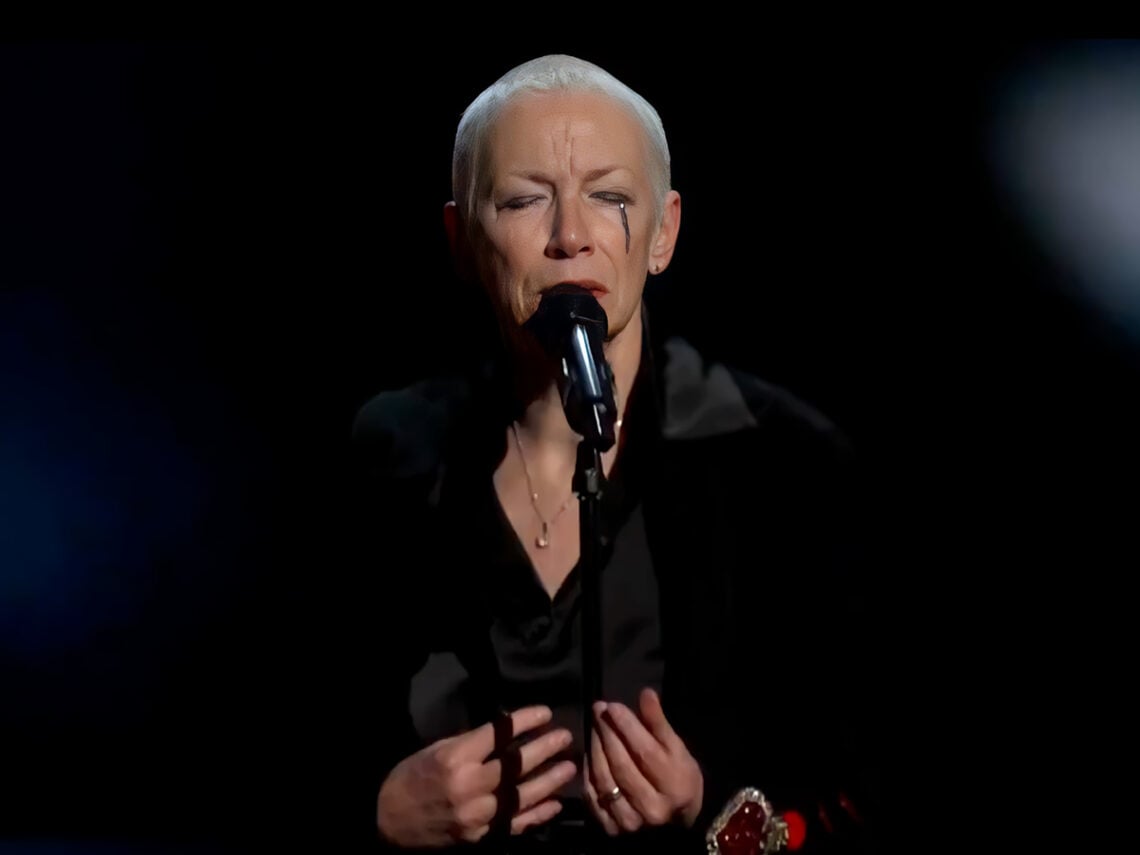
The eurythmic aspect of Eurythmics, then, was really about balancing contradictions, or maybe even letting them crash into each other. Once you go into their music with that mindset, just about everything clicks into place; from the fairly pioneering combo of synths and soul to Lennox’s gender-bending aesthetic and the juxtaposition of the two band members themselves: angular, buzz-cut, suit-wearing Annie and shaggy, bearded, trench-coated Dave. The interplay between the two, and their long-standing relationship off-stage, was all part of the magical formula.
“We are very intense friends, and we are sometimes very intense enemies,” Lennox said. “We have a fiery, intense relationship, and that must be very obvious to everyone”.
Eurythmics’ label, RCA, seemed to appreciate how the sometimes obvious friction between Lennox and Stewart could become part of their long-term marketability, and even once suggested that they get married as a promotional stunt.
“We almost agreed because we thought we’d have a great party and then get divorced the next day,” Lennox said.
Lennox and Stewart did actually date in the past and have lived together for years before deciding to limit their interactions to a professional partnership. They reverted to a simple arrangement regarding who is to do what: Lennox wrote the lyrics, and Stewart composed the music and put together their videos.
Annie’s voice and distinct style were almost always the first two things anybody had to say about the group, however, as no amount of memorable set design in the ‘Sweet Dreams (Are Made of This)’ video—boardrooms and cows!—could eclipse the impact of Lennox’s captivating face staring down the lens.
“Magazines think we’re a great fashion group, but we’re not,” Dave Stewart insisted. “This whole thing is about us manipulating ourselves and not being manipulated by [the] media. We’re always changing so that people can’t quite get us and put us on the market.”
It seemed inevitable to many fans that this constant change and palpable friction was eventually going to end in divorce, not of any stunt marriages, but of the ever-tenuous art project known as Eurythmics. Sure enough, after 1989’s ironically titled We Too Are One, Lennox went solo, not working with Stewart again until 1999’s Peace, which proved to be the final Eurythmics album.
