


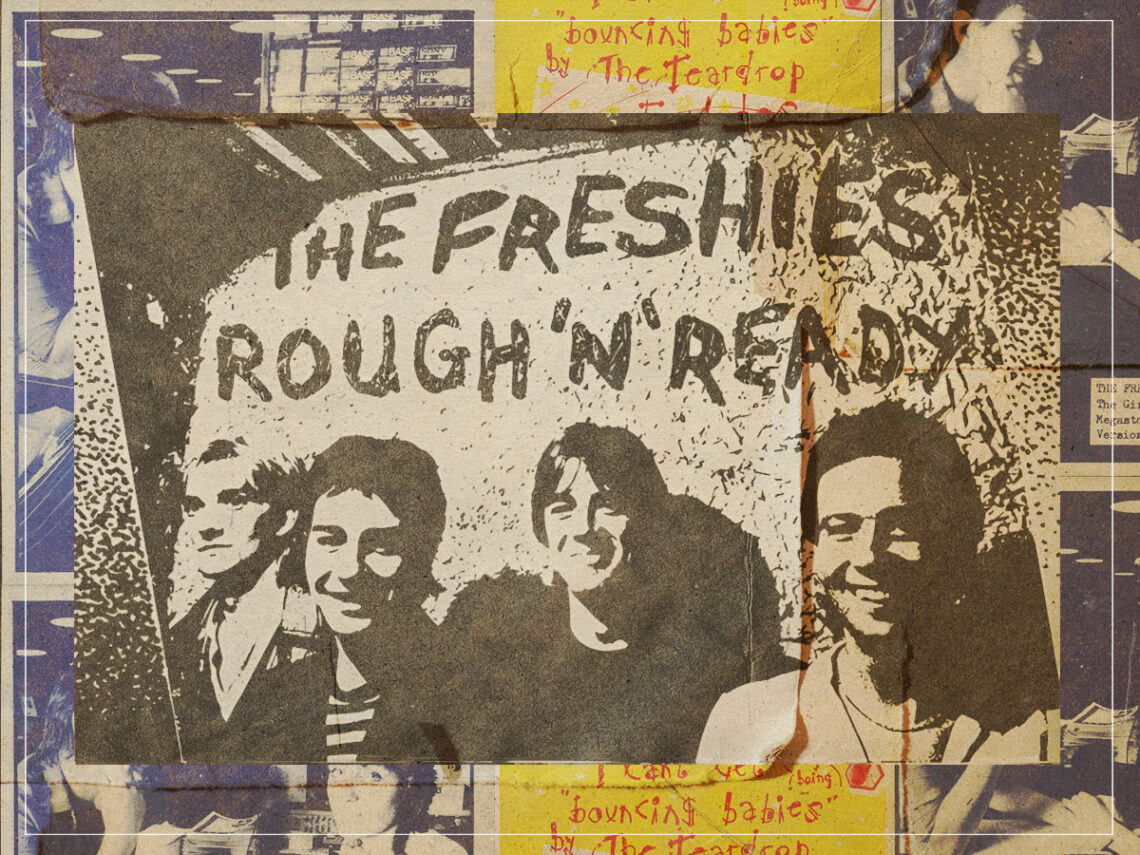
How The Freshies rejected the misery of the post-punk era

The late 1970s was a very interesting time for alternative music, particularly within the industrial gloom of Northern England. After the rebellious explosion of punk rock had died down somewhat, countless groundbreaking groups formed across the nation armed with a punk sensibility and a plethora of defiant musical ideas. Manchester seemed a particular breeding ground for this moody post-punk generation, producing groups like The Fall, Joy Division, The Durutti Column and, later, The Smiths. However, not every artist from Manchester during these years was a source of endless misery.
Only a little while away from the post-punk ground zero of central Manchester lies the quiet village of Timperley. Despite its tranquil environment, the village managed to produce one of the most stunningly original Manchester bands of the post-punk period: The Freshies. Spearheaded by Chris Sievey, who would later find fame as the man behind Frank Sidebottom, they first formed in 1978, at the peak of the city’s post-punk boom.
The early years of post-punk were storied by groups making a real effort to stand out and be original, though this inadvertently led to many bands adopting a fairly similar sound. In contrast, The Freshies never really made an effort to fit into the emerging tropes of the scene. They were different from all the rest in terms of sound and sensibility. You only need to look at the song titles to realise that The Freshies were something of an oddity within the music scene of the time.
Chris Sievey’s wife, Paula, reflected on her husband’s musical output in the 2018 documentary Being Frank, in which she recalled, “I think it was in rebellion against all the doomy overcoat brigade, you know, all into Joy Division. Everybody walking around like, ‘I’m so cool, I’m all in black.’ The Freshies were totally opposite to all that.” In many ways, Joy Division were the archetypal post-punk outfit, but their music and image have had a lasting effect on society and culture, particularly in Manchester, to this day.
In that sense, The Freshies were kind of the outsiders to the outsiders. Groups like Joy Division felt estranged from the musical mainstream, but even they were accepted by the independent post-punk scene in Manchester; The Freshies were out on their own. “It wasn’t cool,” Paula Sievey said, “nobody thought it was cool, and [Chris] did it anyway. It was great.”
In spite of not being “cool” or accepted by the Mancunian music scene, The Freshies still managed to produce a wealth of incredible music. Speaking to Sievey’s all-encompassing obsession with The Beatles, much of his work was imbued with a pop sensibility but with a punk attitude and a unique sense of humour that would later come to define his character Frank Sidebottom.
They never had a hit single – though they came achingly close – and the vast majority of their released material was self-released by Sievey on a DIY label, Razz Records, but they managed to amass legions of dedicated fans who felt similarly ostracised by the growing superiority complex of the post-punk scene. Above all else, their music still holds up to the test of time.

Never Miss A Beat
The Far Out Post-Punk Newsletter
All the latest Post-Punk content from the independent voice of culture.
Straight to your inbox.