


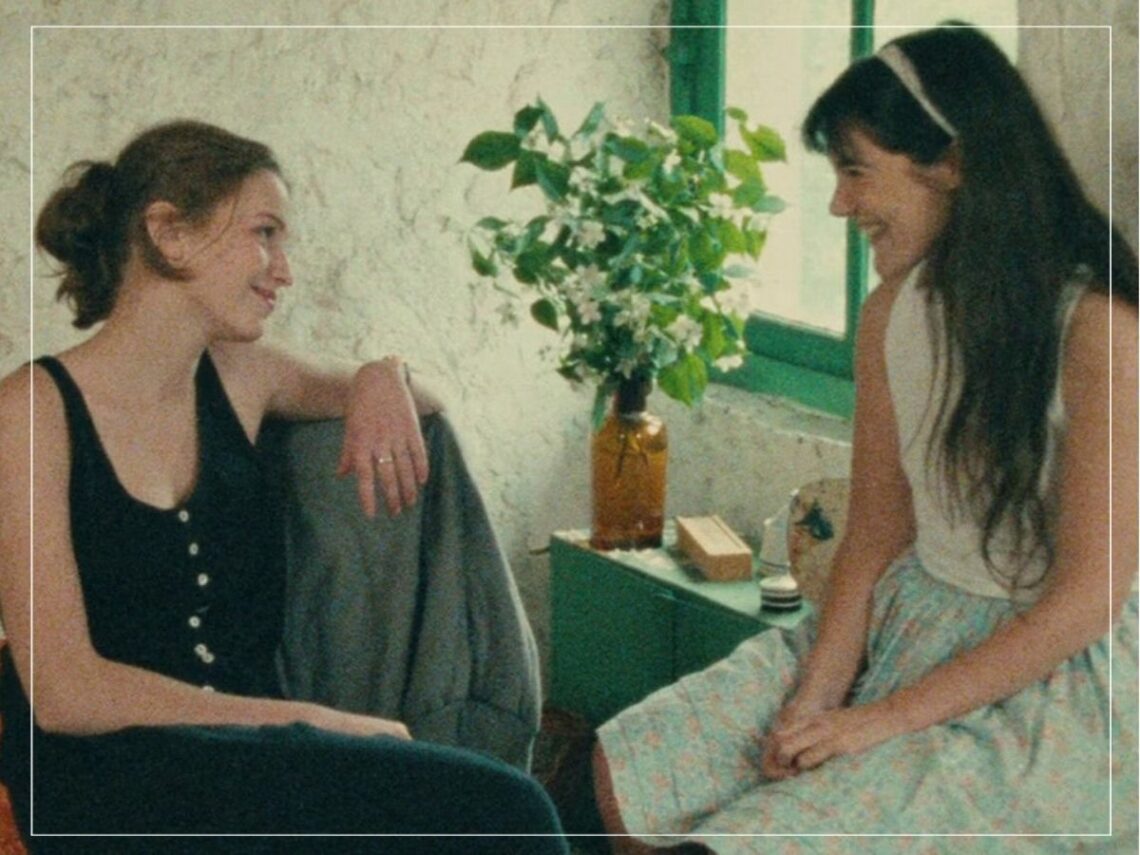
‘The Four Adventures of Reinette and Mirabelle’: an overlooked feminist masterpiece

The depiction of women within the French New Wave has long sparked debate. While the cinematic movement was dominated by male filmmakers, many popular movies from this period featured female protagonists, although the fact that their stories were told from a male perspective was usually obvious.
Luckily, Agnes Varda, the only female director working within the French New Wave, paved the way for an alternative perspective with films like Cleo from 5 to 7 and Le Bonheur. During this time, Eric Rohmer was also making movies about gender, but his films used male protagonists, with the women serving exclusively as love interests.
It’s interesting to consider how different the role of gender is within Rohmer’s work compared to his male filmmaking contemporaries from this time, though. The female characters in these films, like La Collectionneuse and Claire’s Knee, are depicted as more wise than the men, who are often portrayed as selfish, rude, and immature. Still, these female characters are sidelined, but you can definitely see the early rumblings of his feminist storytelling.
Fast forward to the 1980s – women’s liberation in France had progressed significantly since Rohmer started making films in the late 1950s – and you will find movies with clear feminist themes. It is hard to comprehend that some of Rohmer’s films from this time, like The Green Ray and The Four Adventures of Reinette and Mirabelle, were male-directed, and that’s because the filmmaker welcomed collaboration with his actors while also working primarily with a female crew.
Released in 1987, The Four Adventures of Reinette and Mirabelle was made during a break in filming The Green Ray, with both turning out to be some of his greatest films. Split into four chapters, the movie introduces two polar opposites to each other – a city girl named Mirabelle and a country mouse, Reinette. After Mirabelle’s bicycle tyre gets punctured while cycling through the countryside on holiday, Reinette saves the day and welcomes her into her home, which is full of her paintings.
The pair become friends in spite of their opposite ways of living, and Reinette introduces Mirabelle to the blue hour, a moment of silence that is rudely interrupted by a man driving by, leaving Reinette upset. Before this, the pair had spoken at length about the importance of art as a mode of expression, and Mirabelle finally sees how much this means to Reinette when her hopes of showing her new friend a moment of natural artistic phenomena are shattered.
We then skip to the women living together in Paris, where Reinette struggles to get used to city folk, many of whom are rather rude and unforgiving. It is interesting to note that on several occasions, a man will disturb the pair’s peace, whether that be through being difficult or talking down to them. In response, the main characters typically make bold stands against this kind of behaviour, proving the power of solidarity.
Compared to Rohmer’s typical explorations of love between men and women, this film is only concerned with female friendship. The two always have each other’s backs—even if they do clash a few times. The pair discuss art, love, and morality with each other, and Rohmer allows each actor to largely improvise their dialogue, subsequently making their connection feel incredibly natural and realistic.
Shot on film by Sophie Maintigneux, the movie is rich with colour, while María Luisa García’s editing allows us to sit with the characters for extended periods as though we’re a secret third member of their group. It’s a playful film, yet one that draws attention to the fact that female friendship is so incredibly important for our well-being and development as individuals. The pair might have different views at times, but at the core of the film is a message of respect and love for one another.
So, while The Four Adventures of Reinette and Mirabelle might have been directed by a man, it is perhaps the quintessential feminist entry into Rohmer’s canon, where women transformed from secondary characters to complex protagonists.
