


The forgotten towns of the Chernobyl exclusion zone

When reactor four of the Chernobyl Nuclear Power Plant melted down in 1986, beyond impacting Ukraine, then part of the Soviet Union, it had an effect across the world.
In the years that have followed, it’s become a niche tourist attraction, with dark tourists fascinated by this apocalyptic environment, with pictures abound on the internet of that famous, rusting Ferris wheel, the tall tower blocks being eaten up by nature and the school gymnasium littered with gas masks. Everyone remembers Pripyat, and it’s undergone a second life in popular culture, decades after the final resident left, but there lie some other towns and villages, forgotten from the Chernobyl exclusion zone.
Pripyat was the zone’s largest settlement, but it’s estimated that around 40,000 people from outside that city were forced to flee the area after the reactor went ablaze. The village of Zalissya was once the largest in what became the exclusion zone, with a population of around 3,000 people, and unlike Pripyat, which was built with the power plant, it had been a settlement for 400 years before the accident, surviving conflict, famine, occupations and even revolution.
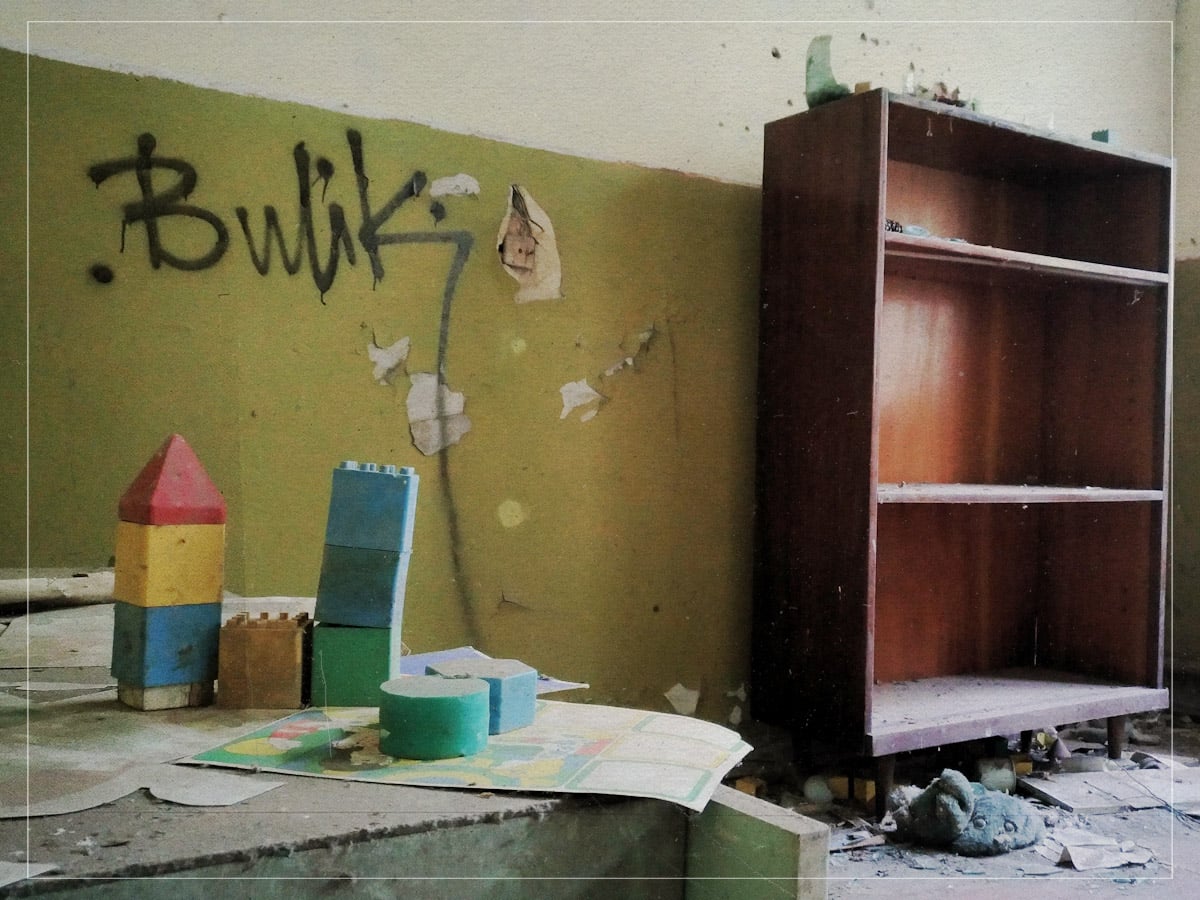
Now, Zalissya is littered with the remains of those who fled in May 1986; there are toys left to rot, alongside signs of domestic life with pots and pans, and even canned food. Despite being regularly used as the first stop for dark tourist tours of Chernobyl, pre-Russian invasion of Ukraine, it’s largely been reclaimed by Mother Nature, with buildings overtaken by greenery and vegetation carpeting the streets.
Not far away is Kopachi, or more technically, was Kopachi, a village, once home to 1,100 people, situated by the plant’s cooling pond, roughly equidistant between the towns of Chernobyl and Pripyat. While the place was evacuated like everywhere else, the radiation levels were so high that the authorities decided that abandonment wasn’t enough, and they needed to bury the village entirely.
Besides two brick buildings, one of which was the village’s nursery school, everything else was buried. From a distance, Kopachi looks like a bumpy meadow, but under those mounds remain houses and a reminder of the panic that defined those early weeks following the accident. Then, just over a mile from reactor four sits Yaniv, which housed only 100 people but was significant thanks to the train station there serving the plant. As of April 2003, it’s no longer a village, having been deregistered, but it still has an incredible story.
Some of the machinery used pre-accident and even after in the clean-up still sits there and sets Geiger counters off with their high levels of radiation; hence, the decision to not bury some of the equipment, such as the engineering vehicle built on the chassis of a tank, was a strange choice. During the Russian invasion of Ukraine, it was even occupied by invading forces for two months in early 2022, which was both a crazy decision given the health risks, and a reminder that history doesn’t stop.
It’s easy to think that all the abandoned settlements in the zone were tiny villages, but that wasn’t always true, like Poliske, which was a thriving town founded in 1415, and had led many lives, both as a textile production hub and a home for Jews, who made up 80% of the population around a century before the accident. Due to its location right on the western edge of the exclusion zone, it wasn’t abandoned with the haste of many other towns and villages closer to the power plant.
There was a decline following the accident, but it wasn’t until 1999, some 13 years after, that most of the population was evacuated. In fact, there were still around 1,000 people living there as recently as 2005, with a number of the elderly refusing to leave and happy to see out their days there. Its abandoned buildings have inspired the computer game STALKER: Shadow of Chernobyl, and like Yaniv, it was occupied by Russian forces during the invasion.
The village of Krasne has long been silent; just four miles from Pripyat, it was on the northern contamination track, which was one of the first directions that saw nuclear fallout following the explosion. While its residents have long gone, it’s notable because the over 200-year-old wooden church of St Michael still stands tall, its decay almost noble and rebellious, as it greys and is slowly devoured by weeds and undergrowth from below, serving to remember the power of faith.
The disaster at Chernobyl has had a lasting impact on Ukraine and the Soviet Union (the eventual collapse of which can be attributed to the incident), but while we think of Pripyat and its huge abandoned tower blocks, it’s worth remembering that there was life all over what is now the exclusion zone, where generations of families grew up, got old, married, and died, in the villages and towns that all got caught up in this epic disaster.
