


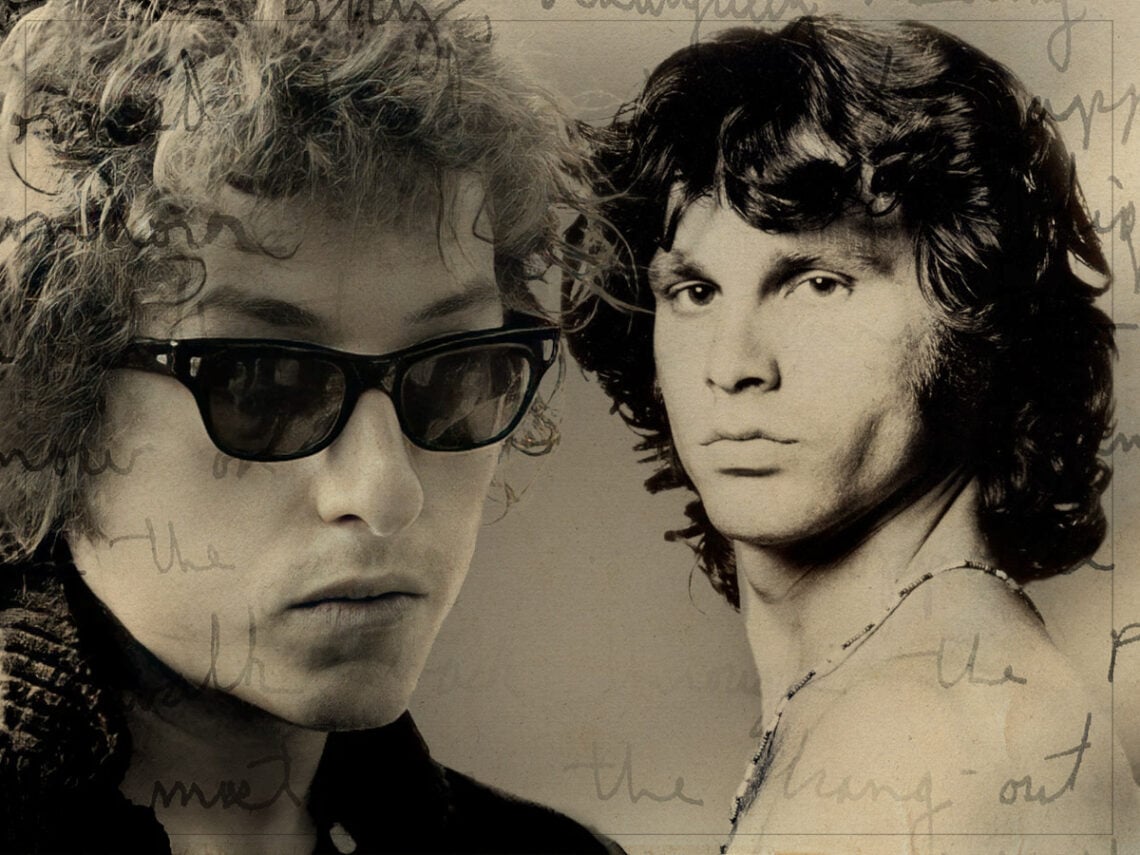
The forgotten novel that haunted Bob Dylan and Jim Morrison

In The Doors’ 1971 masterpiece LA Woman, Jim Morrison yells the words, “Well, I’ve been down to god damn long, that it looks like up to me,” with the war cry rattle of a frustrated builder who has just found out his jackhammer has been stolen but is going to try and shake the wall down anyway.
This wail of the beleaguered disenfranchised echoes in Bob Dylan’s music, too. Albeit Dylan’s disenfranchised poetry is a wildly different style, the connection between the icons is apparent. And the ties become far less nebulous when you look into the novel that links them both in an eerie manner.
Jim Morrison’s purring words in ‘Been Down So Long’ were actually plucked straight from Richard Farina’s seminal text, Been Down So Long It Looks Like Up To Me, published five years earlier. As if woven into place by fickle fingers of fate, this book almost serves as an allegorical paradigm of the tragic side of counterculture, weaving a few of its most prominent figures into the picture as it does so.
In the novel itself, “Farina evokes the Sixties as precisely, wittily, and poignantly as F Scott Fitzgerald captured the Jazz Age,” according to Penguin’s advertorial blurb. “The hero, Gnossus Pappadopoulis, weaves his way through the psychedelic landscape, encountering, among other things, mescaline, women, art, gluttony, falsehood, science, prayer, and, occasionally, truth.”
The proto-Fear and Loathing in Las Vegas masterpiece provides a vivid vignette of counterculture and almost prognosticates its demise, as Farina states therein: “This is a nervous little decade we’re playing with.” Everyone involved seemed to teetering on the same square inch of knife edge, and the backstory of the book would ironically prove that point.
Farina wasn’t just observing the counterculture movement and rendering it in precisely wavering prose, he was very much a part of it. He was a singer who became good friends with Bob Dylan and even married Joan Baez’s younger sister, performing with her as Richard & Mimi Baez. This inner-world insight illuminates his literary lines like, “The conscience of my elusive race gives not a fig for me, baby. But I endure, if you know what I mean,” with a certain fateful weight especially given what was to come.
Two days after his seminal work was published, Farina was at a book signing promoting the novel. He chitchatted with fans, discussed the whys and wherefores of the novel and mused on the notion that the art world was seemingly teetering on the brink of bringing the old William S Burroughs quote to fruition: “Artists to my mind are the real architects of change, and not the political legislators who implement change after the fact.”

When all was said and done, the novelist left the signing behind, jumped on his motorbike, drove away from the book signing, and was tragically killed in a collision.
Dylan was saddened by the loss and would later suffer a motorbike accident of his own, prompting him to turn away from the zeitgeist which, as Farina put it, “[mistook] induction for generation” and reclaimed a sense of spiritual youth, extolling that message that he was “much older then, I’m younger than that now.” With the portent of Farina’s fatal crash in mind, Dylan retreated from fame.
Meanwhile, Morrison was stirred by Farina’s prose and sad loss in a different way, relishing in the ways of youthful revolt in a splurge of visceral creativity that nevertheless harked back to some notion of the mystic spirit of great old America. He figured that if the crash was coming anyway, then you may as well enjoy the ride. Morrison would also tragically die shortly after he uttered the fateful title.
As it happens, even the novel that tied the counterculture icons leapt back into the deep roots of pop culture’s past. Farina hadn’t invented the phrase either. The line had already been drifting through American music for decades, long before Morrison barked it over LA Woman. The phrase “Been down so long, that it looks like up to me,” actually originates in the old rock ‘n’ roll precursor of the blues.
In Furry Lewis’ 1928 track ‘I Will Turn Your Money Green’ he lies his way through swooning a lady with lines like, “I show you more money Rockefeller ever seen,” before hinting at a darkness with, “If the river was whiskey baby and I was a duck, I’d dive to the bottom, Lord, and I’d never come back up,” before the truth is revealed that he is terribly lonely and he purrs out the now-iconic line.
In 1997, Dylan would then bring the loop full circle by lending a verse from Lewis’ track for his anthemic blues send-up ‘Trying to Get to Heaven’, which is inspired by both the late bluesman and his old friend Farina. In the song, Dylan rattles with his earthly tones the ‘…Money Green’ line: “When I was in Missouri, they wouldn’t let me be, I had to leave in a hurry, I only saw what they let me see.”
In doing so, Dylan seemed to tie together some long-wavering paths of history that had led culture to a particular point in the ever-unfurling roads of the disenfranchised folks, ala Leonard Cohen’s defining line, “We might be ugly but we have the music”. This connected tale might be one riddled with tragedy but the art it spawned along the way will always “endure, if you know what I mean.”

Never Miss A Tale
The Far Out Bob Dylan Newsletter
All the latest stories about Bob Dylan from the independent voice of culture.
Straight to your inbox.