


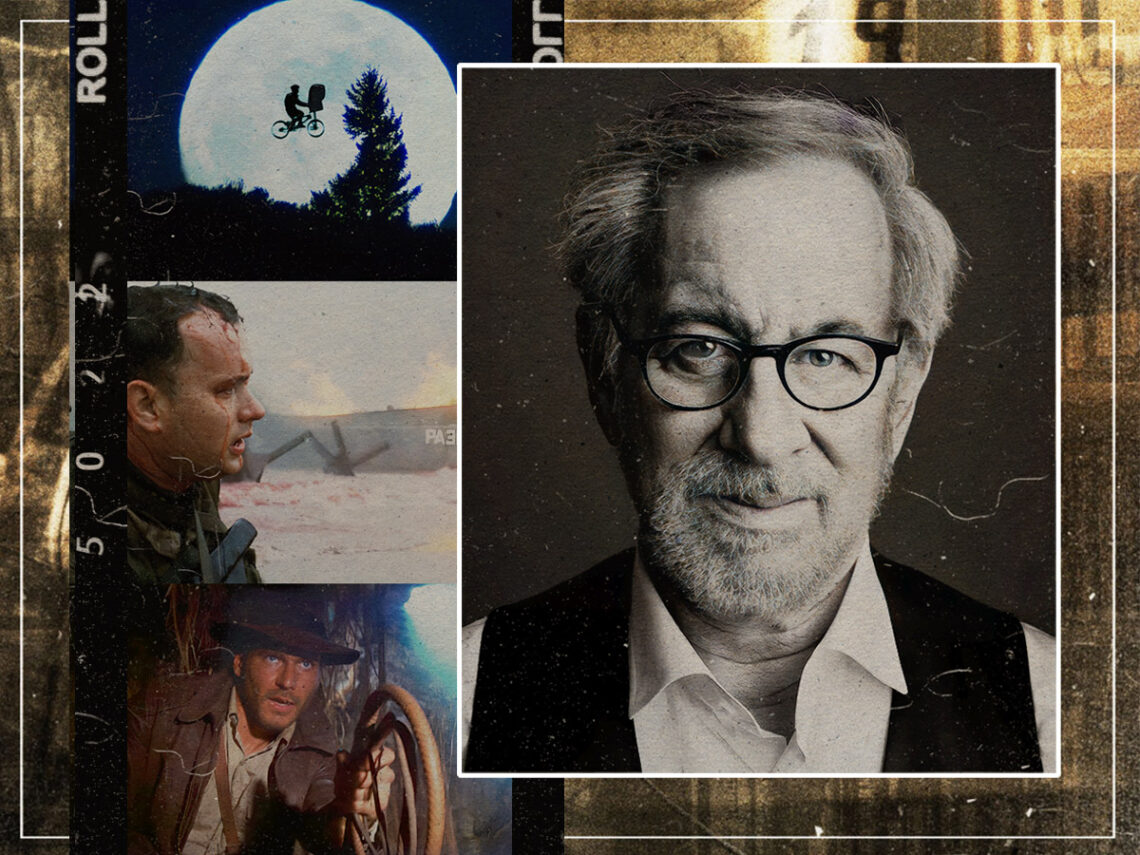
The five movie scenes that define the career of Steven Spielberg

There’s a reason why the American filmmaker Steven Spielberg is the most famous movie director of all time, with each and every one of his releases resonating with audiences across the world. Making fantasy flicks that toy with the cinematic magic of cinema, Spielberg has created such gems as Jaws, E.T. the Extra-Terrestrial and Raiders of the Lost Ark that will forever go down in the history of the art form.
A master of the allure and spectacle of cinema, Spielberg’s greatest strength is his ability to craft images and scenes that only filmmaking could conjure. Such scenes have ingrained themselves within the minds of movie fans, as well as society itself, with the stunning openings of 1981’s Raiders of the Lost Ark and 1998’s Saving Private Ryan having been referenced countless times throughout modern history.
Pioneering blockbuster filmmaking throughout the 20th century, Spielberg continues to further his craft to this very day, even if his modern flicks pale in comparison to the ingenuity of his early work.
Chronicling Spielberg’s career through five key scenes, take a look at the films and moments that define America’s most famous director below.
Steven Spielberg’s five scenes:
Raiders of the Lost Ark (1981) – The boulder chase
Rising to prominence in the early 1970s, thanks to his stellar TV movie Duel, it wasn’t until his blockbuster double-bill of Jaws in 1975 and Close Encounters of the Third Kind in 1977 that Spielberg would be an industry-known icon. Whilst both films included some iconic moments, nothing quite announced Spielberg onto the scene better than the boulder chase at the beginning of Raiders of the Lost Ark.
Introducing Indiana Jones to the world of cinema, Raiders of the Lost Ark was a film inspired by the early 20th-century adventure serials, with Spielberg very much realising this assignment with an opening scene that perfectly paid tribute to the past whilst establishing a foot in the future of filmmaking. Utterly joyous, the tomb of traps that are constructed during the film’s opening is every young child’s fantasy, as a fearless adventurer boldly goes where few others would dare.
The scene oozes with style, character and cinematic grace, with Spielberg capturing the momentous occasion of Jones’ discovery of the golden idol with masterful poise. Yet, Spielberg isn’t in the business of playing things straightforward, with the boulder chasing Jones out of the tomb perfectly representing the director’s own cinematic playfulness, inserting something wild, dramatic and joyous, crafting an iconic scene in the process.
E.T. the Extra-Terrestrial (1982) – Pedalling by Moonlight
It’s clear that Spielberg was in the creative zone in the 1980s, making the tremendous sci-fi flick E.T. the Extra-Terrestrial just one year after he had introduced Indiana Jones to the world. Well-known as one of his most beloved family films, E.T. tells the story of a young lonely boy who befriends an alien who has crash-landed on Earth and, in turn, helps the creature return to his home planet.
A novel concept, there’s no doubt that E.T. demonstrated one of the first examples of Spielberg’s fondness for saccharine storytelling, with melodrama playing a key part in his 1982 film. Yet, we don’t bring this up as a problem. Spielberg’s earnest form of melodrama is what has made him such a successful filmmaker, perfectly riding the line between wondrous cinematic fantasy and the realities of life itself.
Such is illustrated perfectly during the scene in which the protagonist, Elliot, and his friends are flown high up in the air thanks to the supernatural powers of E.T., whilst trying to evade the police. Allowing the audience the chance to dream, the scene may just be Spielberg’s very best, tapping into the untainted wonders of childhood where anything and everything can happen. It’s a beautiful moment, made better by John Williams’ scintillating score.
Jurassic Park (1993) – The T-Rex escapes
Spielberg continued to explore creative concepts following the release of E.T. the Extra-Terrestrial, creating such marvels as The Color Purple, Empire of the Sun and Indiana Jones and the Last Crusade throughout the remainder of the 1980s. Yet, it wouldn’t be until the 1990s that he would truly begin to thrive once more, beginning the decade with Hook in 1991, followed by the epic dinosaur film Jurassic Park.
Adapted from the novel of the same name by Michael Crichton, Spileberg’s film tells the story of an entrepreneurial businessman who creates a theme park where dinosaurs, brought back from the dead, are the main attraction. Based on the filmmaker’s previous cinematic feats, Jurassic Park was an obvious project for him to take on, allowing him to flourish as a director and flex his creative muscles.
The greatest moment from his masterpiece comes when the T-Rex breaks free from his enclosure and wreaks havoc on the unlucky guests. Building tension with unparalleled expertise, glasses of water from within the tourism trucks gently shudder as the beast approaches, with Spielberg using every trick in the moviemaking playbook to make the moment as scary as possible. A culmination of perfectly paced tension and magnificent cinematography make this moment utterly iconic.
Saving Private Ryan (1998) – The Omaha Beach sequence
After Schindler’s List, a sequel to Jurassic Park and the historical drama Amistad, Spielberg finished off his finest decade in cinema with the magnificent WWII film Saving Private Ryan, which featured an utterly spectacular opening sequence. Setting the scene of the war, Spielberg chose to open proceedings by painstakingly recreating the horror and violence of the breaching of Omaha Beach.
Confirmed as being disturbingly realistic by actual WWII veterans, the scene introduces us to our hero, Captain Miller (Tom Hanks), who attempts to lead his team up the beach and towards the German forces. Indeed, there is so much quality to this scene that it’s almost tricky to pick out one thing in particular. Instead, it is a perfectly composed moment of cinema, in which performance, cinematography, sound, lighting and everything else perfectly combine.
Spielberg is known for his fantastical melodrama, yet there is none of that here. This is a truly brutal retelling of one of WWII’s most significant battles, and the director does it justice by displaying the violence, turmoil and sheer panic that existed during the moment in history. A memorable scene in more ways than one, the Omaha Beach sequence showed Spielberg bringing his cinematic prowess to a scene that pulsed, not with fantasy magic, but with sheer palpable dread.
The Fabelmans (2022) – A meeting with John Ford
Spielberg has enjoyed an incredible career, but even the most ardent supporter of his will admit that his best films haven’t come in the 21st century. Sure, you have such successes as Catch Me If You Can, War of the Worlds and West Side Story, but the majority of his modern flicks have failed to impress. Despite this, our final choice for the scenes that define the director comes in his most recent movie.
Exploring the family history of the esteemed filmmaker, The Fabelmans told the story of Sammy (Gabriel LaBelle), a young man who aspires to become a filmmaker whilst his parents’ marriage spirals into turmoil. Lovingly recalling his own pathway into becoming a world-renowned director, The Fabelmans is a brilliantly constructed drama that culminates in a slice of movie magic.
The climactic scene depicts a young Spielberg meeting filmmaker John Ford, a remarkable event that actually happened in real life. But, in The Fabelmans, Ford is played by another filmmaking icon, the eccentric experimenter David Lynch. The movie, which explored the life of Spielberg with a familiar artistic flourish, was without the director’s love for escapist cinematic fantasy until the final moment.
When Lynch showed up, Spielberg surprised us with an effortless piece of cinematic magic, reminding us of when the boulder chases Indiana Jones, Elliot is silhouetted on the moon, a T-Rex stomps to freedom and soldiers storm Omaha Beach. It’s pure cinema.
