


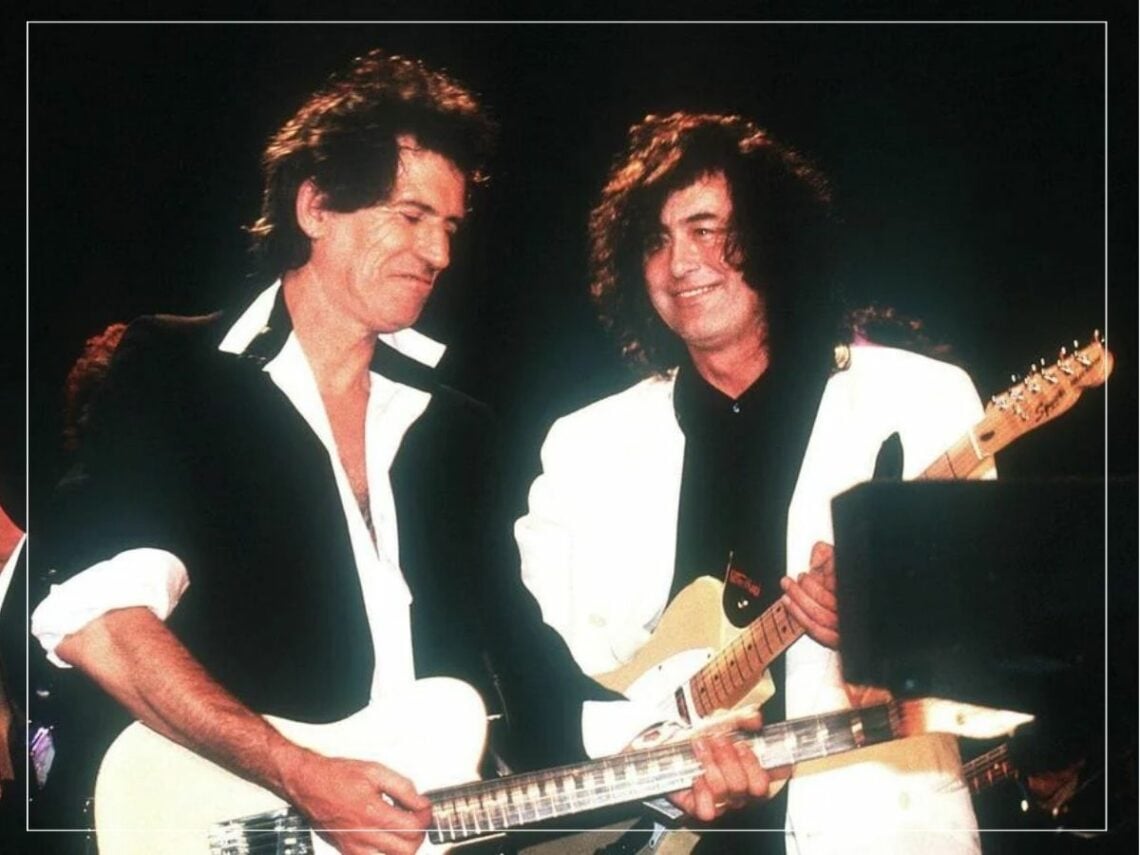
The first song Keith Richards and Jimmy Page played on together: “Great mutual respect”

On the surface, Led Zeppelin and The Rolling Stones are from different sides of the tracks. In fact, Keith Richards famously claimed to hate all bar one facet of the heavy metal pioneers, proclaiming: “To me, Led Zeppelin is Jimmy Page if you wanna cut the story short”. It may well be as backhanded as ever from the high seas captain of rock ‘n’ roll, but it does at least betray the burgeoning respect between the two guitarists.
When you dig beneath that disparate surface, it becomes all the clearer why they admire each other’s chops. Firstly, though their sounds and styles might be different, they are both merely mutators of the classic blues. Moreover, their mutations are based on feel, atmosphere and touch more so than anything else. They’ve both been labelled sloppy by their peers over the years, but they’d simply call it nuance and depth.
As Richards put it himself: “I would say that the acoustic guitar is the most important thing for a guitar player to start with, learn the feel and the touch of that string and what it does against the fret; learn that and then you can add the effects later on”. In his typically philosophical style, speaking about the guitar with a sort of wanton sultriness, he continued to tell Guitar Moves, “You know, if you want to be a guitar player you have to have your grounding. It’s like anywhere else. I mean, an astronaut doesn’t start in space you know, somebody’s got to build a rocket”.
For Richards and Page, this grounding was not only the blues but the smoky studios of early 1960s London, above drunken jazz clubs. These two elements would come together when they first got to know each other. “Our paths first crossed when the first American Folk Blues tour came through Manchester [October 21st, 1962]. To the true and faithful, it was a clarion call for all blues collectors and enthusiasts,“ Page recalled to Uncut.
Thereafter, they would frequently bump into each other in and around the studios where Page was a producer and session musician, and Richards was honing the sound of The Stones. They would chat about their heroes, namely Howlin’ Wolf, and, inadvertently, trade ideas about how to revivify the blues. Eventually, they wound up next to each other with guitars in hand. “The first time I was actually playing with Keith was when we were on the same Chris Farlowe sessions that Mick was producing,“ Page recalled.
The key song in question was ‘Yesterday’s Papers’ from 1967. “It was a really good one,“ Page opines. “I’m playing acoustic on that. We were sitting next to each other and I got on really well with Keith because there was a great mutual respect. You could see that he was really disciplined in the studio, because you know what those sort of sessions were like – it’d be a three-hour session or whatever, where they get as much done as possible. And he was on the nail all the way through“.
While this moment might have been fleeting, and the pair would go their separate ways, it offers an insight into their musical education that proved pivotal. Perfection was out of the question in a three-hour session, but you had to concentrate like hell to get close to it. In some ways, this typifies the energy and atmosphere that they subsequently looked to lavish their own bands with. This created an environment where innovation was dreamt up on a whim, preventing pretence and encouraging a naturalistic development of music—both The Rolling Stones and Led Zeppelin thrived on these tenets.
Finally, it was also clear that they were always up against it. Contrary to popular thinking, that doesn’t always quell creativity. You only have to look at the many masterpieces they produced in prolific quick-fire spells to regard that. Perhaps many of these traits fell into place as two of the most iconic guitarists in history sat inches apart, crafting a hit that might be somewhat lost to history, but the repercussions of the session are anything but.

Never Miss A Beat
The Far Out Led Zeppelin Newsletter
All the latest stories about Led Zeppelin from the independent voice of culture.
Straight to your inbox.