


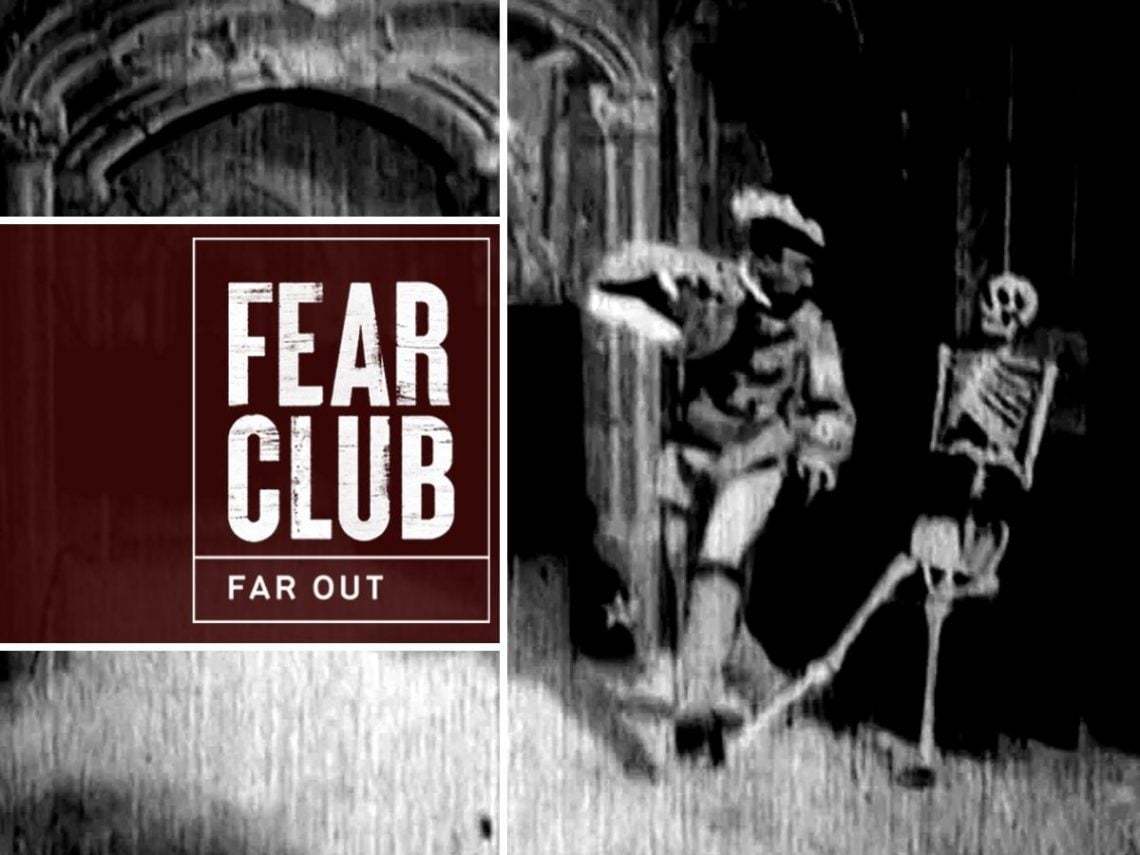
The first horror movies ever made

Since ancient times, horror fiction has been a widespread form of storytelling. Finding its origins in folklore and religious tradition, European horror fiction was popularised by the Ancient Greeks and Ancient Romans. Their stories form the basis of many well-known works, such as Mary Shelley’s novel Frankenstein, inspired by the myth of Hippolytus.
During the middle ages, the horror genre derived much of its stories from real-life figures, such as Dracula, who was inspired by Vlad the Impaler. By the 19th century, gothic literature was overwhelmingly popular, with John Polidori’s The Vampyre, The Strange Case of Dr Jekyll and Mr Hyde by Robert Louis Stevenson, and the tales of Edgar Allen Poe just some examples of the key works to emerge during this period. These works of gothic fiction were essential in creating enduring horror icons that are still widely depicted in horror stories today.
Therefore, during the early days of cinema, filmmakers took inspiration from classic horror fiction to create their own versions of these tales. Horror made for the perfect genre to experiment with special effects, such as making ghosts disappear or conjuring entities out of cauldrons.
The first ever horror film was made by French cinematic pioneer Georges Méliès, who created The House of the Devil in 1896. It was deemed a lost film until a copy was found at the New Zealand Film Archive in 1988. The short film was shot in Méliès’ garden in Montreuil, Seine-Saint-Denis, and his future-wife Jehanne d’Alcy can be seen emerging from the cauldron. The House of the Devil uses plenty of special effects that depict a bat turning into a human and entities appearing out of thin air.
That same year, Méliès created A Terrible Night, a horror-comedy with a Charlie Chaplin-esque sensibility that sees a man (played by the director) attempt to fight off a spider so that he can get to sleep. In 1896, he also created A Nightmare, arguably the first dream sequence depicted on screen. Upon its release, the film was advertised as a scène fantastique, which referred to cinema that contained elements of horror, science-fiction and fantasy.
Similar to A Terrible Night, the male protagonist finds himself unable to sleep. However, this time, he is tormented by the moon, which appears by his window in the form of a large cardboard prop. A beautiful woman even appears by his window, transforming into a clown when he tries to kiss her.
The following year, Méliès created another horror comedy, The Bewitched Inn, which marked the first time he depicted inanimate objects becoming sentient on-screen. A candle moves across the room before exploding, a man’s clothing flies through the ceiling, and his luggage mysteriously vanishes. Since Méliès pioneered numerous cinematic techniques and special effects, it is no surprise that his 1898 film The Cave of the Demons became the first moving picture to use double exposure. Sadly, this film is lost.
In 1897, George Albert Smith decided to utilise x-rays, which had only been invented two years prior, for his horror film, The X-Ray Fiend. In the short film, a couple flirts with each other before an x-ray machine is turned on, transforming the subjects into skeletons. This technique was achieved by the couple donning black bodysuits, but this effect was undoubtedly scary for an audience new to the concept of x-rays.
The following year, Smith released Photographing A Ghost, which has since been lost. Still, the film is regarded as one of the earliest examples of paranormal investigation cinema. Smith’s film follows a group of men who fail to capture a ghost on camera. Instead, they are tormented by the chair-throwing entity.
Across the globe, Japan was also creating some fascinating early horror shorts. In 1898, the company Konishi Honten released Resurrection of a Corpse and Jizo the Spook, both written by Eijiro Hatta. The films were rooted in Japanese legends, with Jizo the Spook depicting a haunted statue traditionally used as a protector of the dead. These are now considered lost films.
Since the late 1800s, horror cinema has blossomed into one of the most profitable genres in the world. The highest-grossing horror film of all time is 2017’s It, which is starkly different from the early horror films listed above. Regardless, modern horror cinema owes its debts to pioneers such as Méliès, who paved the way for the genre’s popularity.
Watch The House of the Devil below.
