


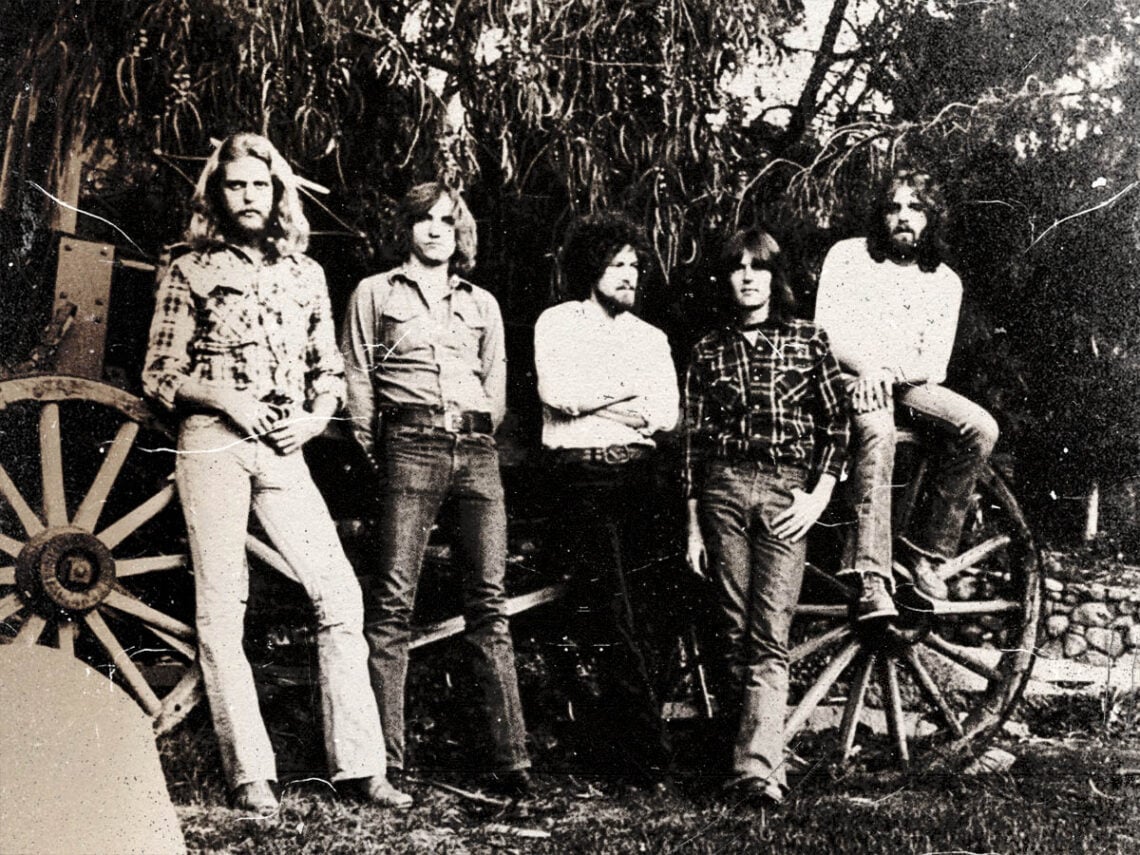
The feuds that brought down the Eagles

The music of Eagles always conjures up images of having fun in the sun without a care in the world. While entirely separate from the world of Flower Power, their turn towards sunshine rock in the early 1970s brought out some of the most incredible music of California, like ‘Take It Easy’ and ‘Hotel California’. However, their penchant for bright sunny tunes was only matched by their bitterness towards each other.
From day one, there was always friction between band members, from songwriting royalties to personal differences. Although the band acted as a unit onstage, every single one of their albums had a slightly bitter tone behind its production, as Glenn Frey and Don Henley ruled the band with an iron hand.
Outside of the studio banter, life out on the road wasn’t much better, with plodding and resentment against one another getting so much worse as the years went on. Add drugs and alcohol into the scenario, and the band was ready to combust by the end of the 1970s, as everything crashed down during a gig in Long Beach.
Aside from their breakup the first time around, the feuds continued during their reunion tour, with each member of the band disagreeing over the legacy of the group and who took an equal amount in the songwriting royalties. Eagles might have a specific formula for making hits, but every one of these songs tended to have some baggage to get them to their final form.
The feuds that brought down the Eagles:
Eagles vs. Joe Walsh
Towards the start of the ‘90s, it looked like an Eagles reunion might be possible. After years of fumbling around with their solo careers, they realised how much they were missed by fans who didn’t see them in their prime. Every member was on board from the start, but Eagles had to fight Joe Walsh to save him from himself.
Since his time in the group, Walsh began to spiral throughout the next decade, going on benders and tearing himself apart physically and emotionally. According to Glenn Frey, Walsh only surrounded himself with yes men, recalling in The History of the Eagles: “He was always around people who were enabling him. Everyone was just going along with Joe”. While Walsh was up for it, the band gave him an ultimatum: he should either get sober or not be in the group.
After years of fumbling in the dark, Walsh finally beat the bottle before heading out on the road, making his first sober public appearance on their exclusive performance on MTV. Granted, it didn’t come without its hardships too, with Walsh later recalling: “That was the first time that I was singing without being buzzed, which I hated doing. Man, that was scary”.

Eagles vs. Bernie Leadon
From the start of the band, Glenn Frey always wanted the Eagles to be a hybrid band of many different genres of music. Though they would mingle in genres like folk and country, Frey still held onto his rock credentials, constantly pushing the angle of rock and roll to his bandmates. Leadon wasn’t necessarily at the same stage in life, though.
Coming from a country background, Leadon was never into the rock scene that much, which became a more significant issue when they started moving towards harder material. Since he signed on as a country guitar player, seeing his group get bigger and bigger began to weigh on him, including one instance where he walked out of the studio in the middle of a session because he didn’t like the song.
By the time Frey began discussing the band’s future, Leadon had retaliated by pouring a beer over Frey’s head backstage, asking him to chill out. Though Leadon talked about looking back in shame on that incident, the writing was on the wall. Since they were on the road with Joe Walsh’s solo act, The Eagles adopted Walsh once the tour finished and never looked back.

Glenn Frey vs. Randy Meisner
In rock and roll, bass players are pretty chill people. Outside of the occasional rock star low-end master, most bass players are content to hang back in the groove and serve the song rather than grandstand. Everyone must get some time behind the mic in the Eagles, and Randy Meisner was starting to run out of patience by the time he finished the Hotel California tour.
Meisner’s vocal showcase live was always ‘Take it To the Limit’, which featured insane high notes at the end of the tune. After Meisner got scared of not hitting them, Frey reprimanded him, cracking, “Randy, there are millions of people waiting to hear you sing that song. You can’t just say ‘Fuck ‘em, I don’t feel like it. We just got fed up with that. So we said ‘if you’re not happy, quit’”.
The tension finally hit its breaking point in the middle of the tour. After refusing to sing the song as the encore, Frey got into an altercation with Meisner backstage that almost involved security guards getting involved. Although Meisner might have left the fold in a huff, the band soldiered on with Timothy B. Schmidt in his place, bringing a much more relaxed feel to their final album, The Long Run.

Glenn Frey vs. Don Felder
When Don Felder first came into the group, he was known as a hired hand. Ever since playing the session that turned into the hit ‘Already Gone’, though, Felder was asked to join, eventually coming up with the haunting chord sequence that became ‘Hotel California’. Once the money started rolling in, Felder became a bit jaded about how much attention he was getting in the studio.
After writing the track for the tune ‘Victim of Love’, Felder would originally sing the track before the band pulled a fast one on him. Convincing their manager to take Felder out to lunch, the rest of them recut the song with Don Henley singing the vocals instead. Though the tension was diffused at that juncture, all of those pent-up feelings came to a boil during a gig in Long Beach.
Performing for Senator Alan Cranston, Felder made a snide comment to the senator, which enraged Frey, culminating in both of them fighting onstage. Once they got offstage, Felder took one of his guitars and smashed it, leaving without speaking to the rest of the band. Frey announced the end of Eagles shortly afterwards, thinking that the years of plodding and resentment had finally snuffed them out. For a group as strong as they were, Frey willingly admitted that the Eagles went out with a whimper instead of a bang.

Don Felder vs. Reunion
No band breakup is ever set in stone. As long as every original member is still alive, there’s always time for them to get back together somewhere down the line, even for an impromptu performance somewhere. It sometimes comes down to money, and Don Felder was willing to join the Eagles reunion… at first.
After the great reception to the live album Hell Freezes Over, Felder signed on to be a part of the reunion until he found out how much he was getting paid. When combing through the finances, Felder found out he was getting paid considerably less than his bandmates, which he was unhappy about. Since Frey and Henley had written most of the tunes, they argued that they should earn more.
Not wanting to deal with the same problems they had back in the day, Frey confronted him through his middleman, recalling, “I called up Felder’s manager and said, ‘I’m sorry you happen to represent the only asshole in the band, but that’s the deal. He either signs it by sunset or he’s out of the band”. Felder would stick around for a few more shows, but being treated as less than an equal onstage and in his wallet couldn’t wash away all that bad blood.
