


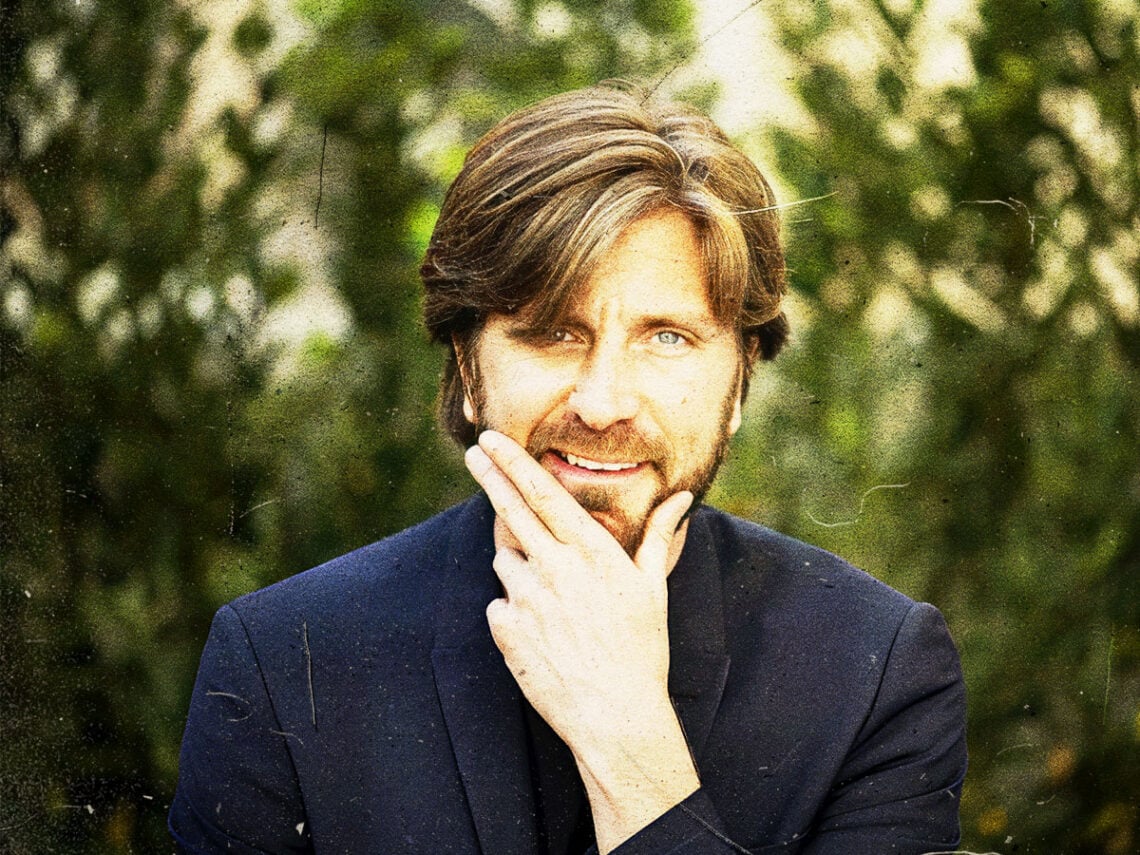
The evolution of Ruben Östlund: from ski videographer to Cannes Jury President

From the snow-kissed slopes of Åre, Sweden, to the coveted stage of the Cannes Film Festival, the career trajectory of director Ruben Östlund has been just as thrilling as his adrenaline-fuelled early ski films. With a filmmaking journey spanning over two decades, Östlund has carved a niche for himself as a daring Scandi auteur, eagerly and gleefully exposing societal foibles with satirical wit and razor-sharp critique.
However, Östlund’s foray into the world of film was far from traditional — his training ground was the peaks of his native Sweden. Östlund cut his directing teeth working as a ski videographer in the late 1990s, honing his eye for detail and kinetic energy. These are qualities that he would later abandon for his feature films, replacing them with a clinical stillness that allowed the rawness of the human experience to spill out.
Nevertheless, he emerged from the slopes with an eye for orchestrating action and a knack for knowing where to put the camera. With these newfound skills, the director hatched an idea for a narrative, and his first cinematic triumph arrived with The Guitar Mongoloid, in 2004. A blend of stark realism and absurdist comedy, his debut hinted at the distinctive style that would later become the director’s signature. While not a box-office smash, it still marked Östlund as a rising talent and garnered a loyal following amongst indie film connoisseurs — and paved the foundations for what would, in retrospect, be his most definitive film.
His 2008 feature, Involuntary, firmly established Östlund as a force in Swedish cinema. The film, a series of vignettes exploring group dynamics and societal expectations, highlighted Östlund’s outstanding ability to create tension and discomfort from ordinary situations and demonstrated a remarkable ability to work with actors. His preference for static shots and use of wide-angle lent a sense of stark realism, a stylistic choice that has become a defining feature of his work. While his later works would continue to build upon this framework, with equally magnificent results, there’s something about the limitations the director was working with, in terms of budget and time, that makes his sophomore feature the most outstanding in his filmography.
With 2011’s Play, Östlund took the film language developed in his previous feature and applied it to the world of children and bullying, deftly exploring themes of class, race and white liberal guilt whilst wisely never delivering a subjective verdict. Instead, he presented the audience with excruciatingly painful tableaux that challenged their concept of prejudice and morality, with staggering results. Play is the kind of film that, upon finishing the credits, an entire room of friends who’ve just watched it might erupt into fierce debate and argument about which character was in the right and which experienced the most injustice.
Despite missing the Oscar nomination for ‘Best Foreign Film’, 2014’s Force Majeure catapulted Östlund to international fame. Set in the French Alps, partly a nod to his ski-filming days, the movie is a masterful exploration of masculinity, family, and the veneer of civilised behaviour. Heavily inspired by several YouTube clips, which the director has quoted as his most inspiring source of creativity, it combined the vignette style of his previous films with a more coherent family drama narrative. The film’s tension-filled narrative and Östlund’s signature dry humour won him the Jury Prize at Cannes and marked him as a leading figure in global arthouse cinema.
Then, three years later, the director secured victory at Cannes once again, this time with a satirical commentary on the contemporary art world and societal norms, which bagged him the prestigious Palme d’Or and secured his place in the pantheon of great directors. The film showcased Östlund at his most expensive and international, working with a mixture of acclaimed Scandinavian and Hollywood actors and proving that he could successfully work with a larger budget. The Square was bigger than his previous films in every way and demonstrated that his distinct brand of filmmaking was not synonymous with low budgets and tight limitations.
In 2022, Östlund got the Palme d’Or again, this time with the sensational Triangle of Sadness — part critique of the fashion industry, part indictment of social media, and part Lord of the Flies-style desert island film. It was a strange yet potent mix and saw the director at his most fantastical, both in terms of narrative and visuals, yet it was unmistakably an Östlund film. When a luxury cruise ship filled with the elite and the ship workers facilitating their high-class journey is stormed by pirates, the balance of power and class dynamics is completely flipped on its head. It’s Below Deck meets Castaway and is as sensational as that sounds.
By the time the 2023 Cannes Film Festival rolled around, it was clear to all that Östlund, as one of the few directors to win the Palme d’Or multiple times, was in a prime position to lead the Jury as President in deciding who the next recipient of the much-coveted award should be. It showed not just acknowledgement from the industry that the Swedish director was a formidable force in the world of art cinema but that, as an accomplished director, he had both the good taste and foresight to judge who had made that year’s most significant contribution to the medium. From ski videographer to Cannes Jury President — it had taken him twenty years, but by God, did he deserve it.
