


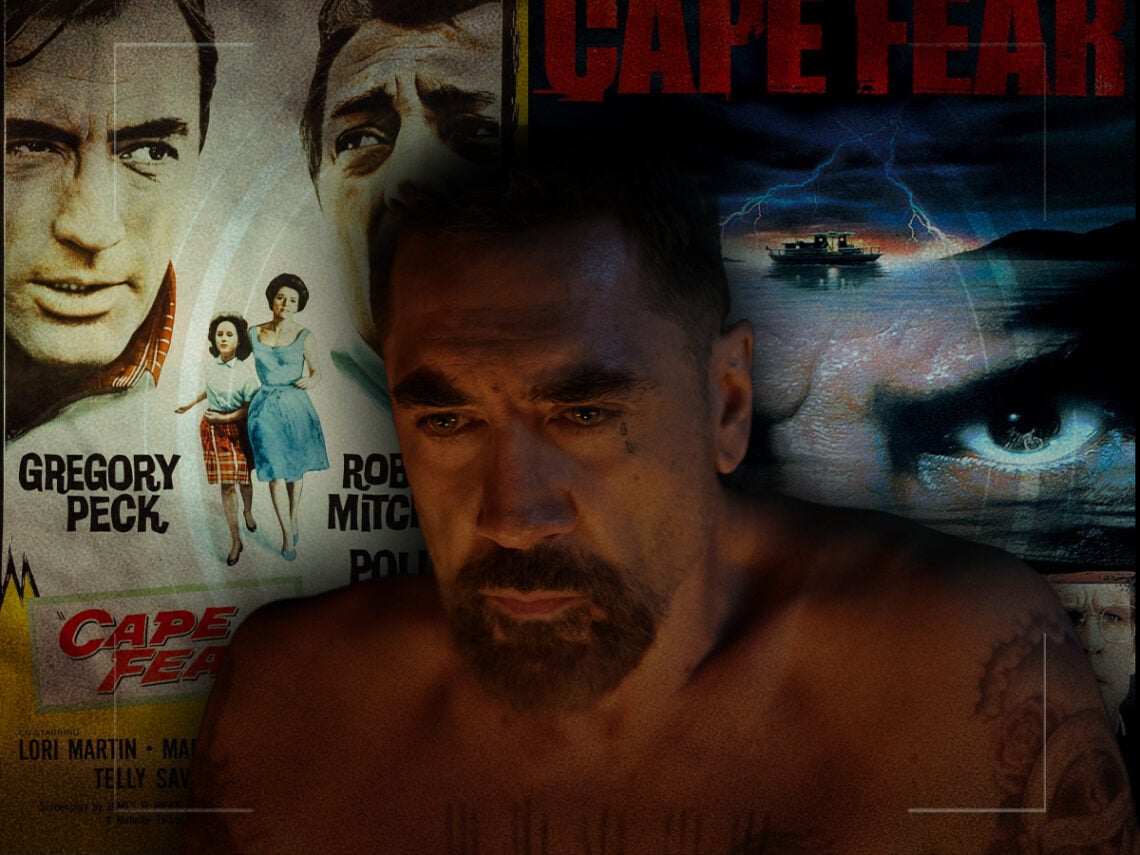
The evolution of ‘Cape Fear’

“You just put the law in my hands, and I’m gonna break your heart with it.”
In 1957, author John D MacDonald published The Executioners, a thriller about a prosecutor in Florida whose idyllic home life is upended when a psychopath who he helped put behind bars is released and begins stalking his family.
In 1962, it was adapted into a film called Cape Fear, starring Gregory Peck and Robert Mitchum as the attorney and villain, respectively. That film was remade in 1991 with Nick Nolte and Robert De Niro, and in 2026, it’s been turned into a series for Apple TV with Amy Adams and Javier Bardem.
The evolution of the story is like a game of telephone, in which each adaptation iterates off the last, becoming more complex but losing critical elements of character and theme in the process. The irony of these many, ever-lengthening adaptations is that The Executioners is a very short book – just 224 pages.
Sam Bowden, the prosecutor, has very little personality, and even Max Cady, the villain who has become one of the juiciest roles in Hollywood for multiple generations of actors, is hardly as chilling on the page as he has been on screen. In fact, he is more of a peripheral figure, and it’s Sam and his busy family life that account for the bulk of the prose. The book is a page-turner, but it lacks the sweaty, oppressive, noirish atmosphere of its adaptations.
It was Peck who came up with the new title, moved the setting to the coast of Savannah, Georgia, and insisted on shaping Max Cady into one of the screen’s all-time baddies. When he approached director J Lee Thompson to help him adapt it, he said that, although he planned to play Sam, it was the actor who played Cady who would steal the picture. Indeed, Mitchum delivers the definitive Cady performance.
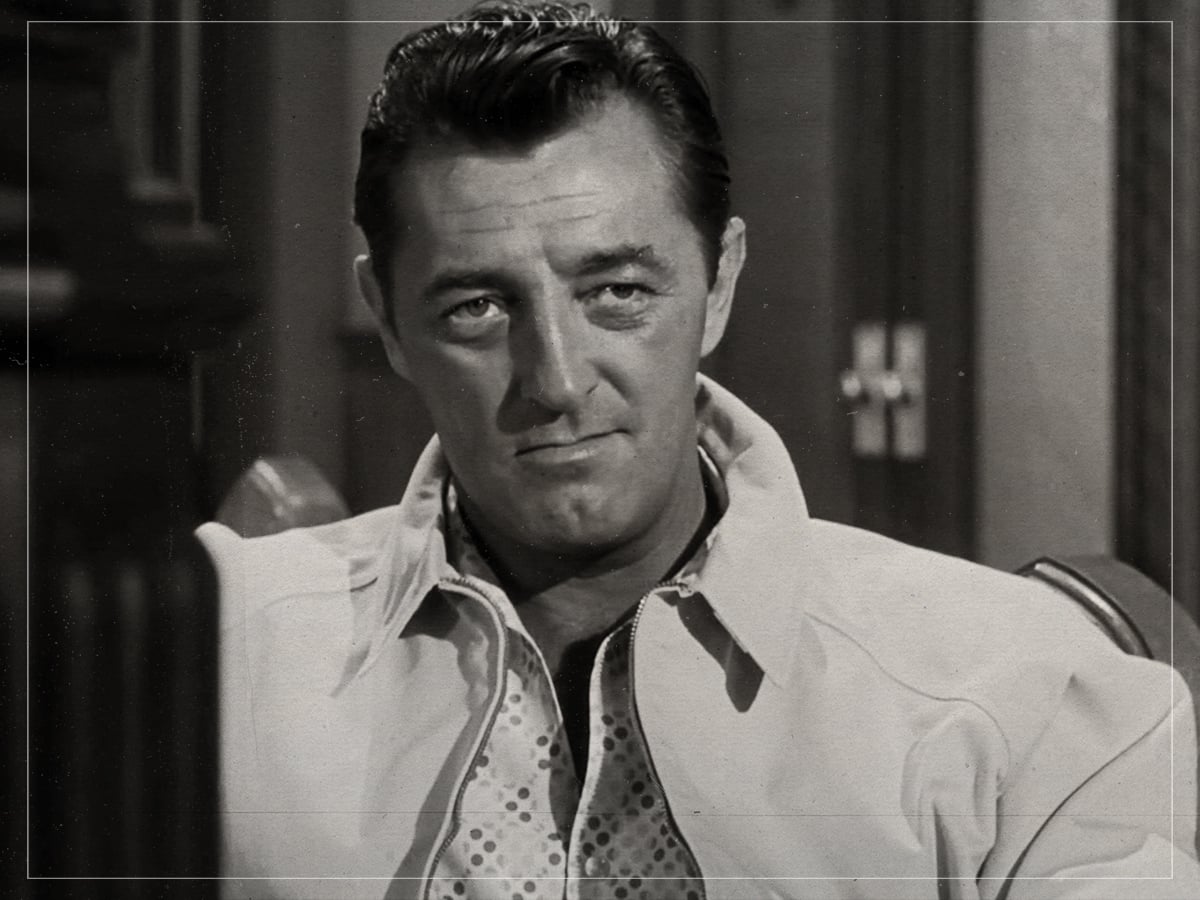
His velvety Southern drawl, cigar-puffing, and physical ease make his unthinkable acts of violence all the more chilling, and there is something perversely sexy about his sweatiness and occasional shirtlessness. Mitchum, who was a matinee idol before turning to villainous roles, imbues Cady with a laid-back animal magnetism just before revealing the depths of his depravity.
Peck, Thompson, and screenwriter James R Webb also streamlined the story, cutting the Bowden family from three kids to just one – a teenage girl the same age as the one Cady brutally raped and left for dead. In place of the lengthy descriptions of domestic life and a final standoff at the family home, the filmmakers opted for a few visually arresting confrontations between Cady and each of the Bowdens and a climax on the Cape Fear River.
Thompson was a devout follower and former collaborator of Alfred Hitchcock, and he made no attempt to hide the fact that he was trying to make a thriller in the mould of his hero. Not only did he enlist Bernard Herrmann to compose the score, but he also hired editor George Tomasanini, who edited many of Hitchcock’s most famous films, including Rear Window, Vertigo, and Psycho. As a result, the tension is as tight as a violin string ready to snap. It’s not a mere Hitchcock rip-off, though.
It is much more modern and vicious than even Psycho or Marnie, featuring sexual violence and psychopathy that are rough around the edges rather than glossy and glamourised. In one scene, Cady rubs eggs over the bare chest of Bowden’s wife, a bizarre but chillingly suggestive violation that Hitchcock, for all his overt horniness, never approached.
Thompson and Webb also opted to focus on the limits of the law as much as the invasion of the post-war nuclear family. As such, Cady’s relentless pursuit of the Bowdens is stronger than it is in the book, and his understanding of the legal system becomes a crucial plot point. Capitalising on Peck’s To Kill a Mockingbird persona, the script makes Sam a bland representation of a “Good Man” whose faith in the legal system is strained to breaking point.
In one scene, Sam wonders “whether we have too many laws or not enough”. Meanwhile, Cady pushes him to the brink. After Sam’s contract killers fail to beat him into submission, Cady calls Sam and delivers the most chilling line of any version of the story: “You just put the law in my hands, and I’m gonna break your heart with it.” The censors on both sides of the pond insisted that Thompson cut some of the violence, but they couldn’t excise that blood-curdling sense of inevitability in Mitchum’s line delivery.
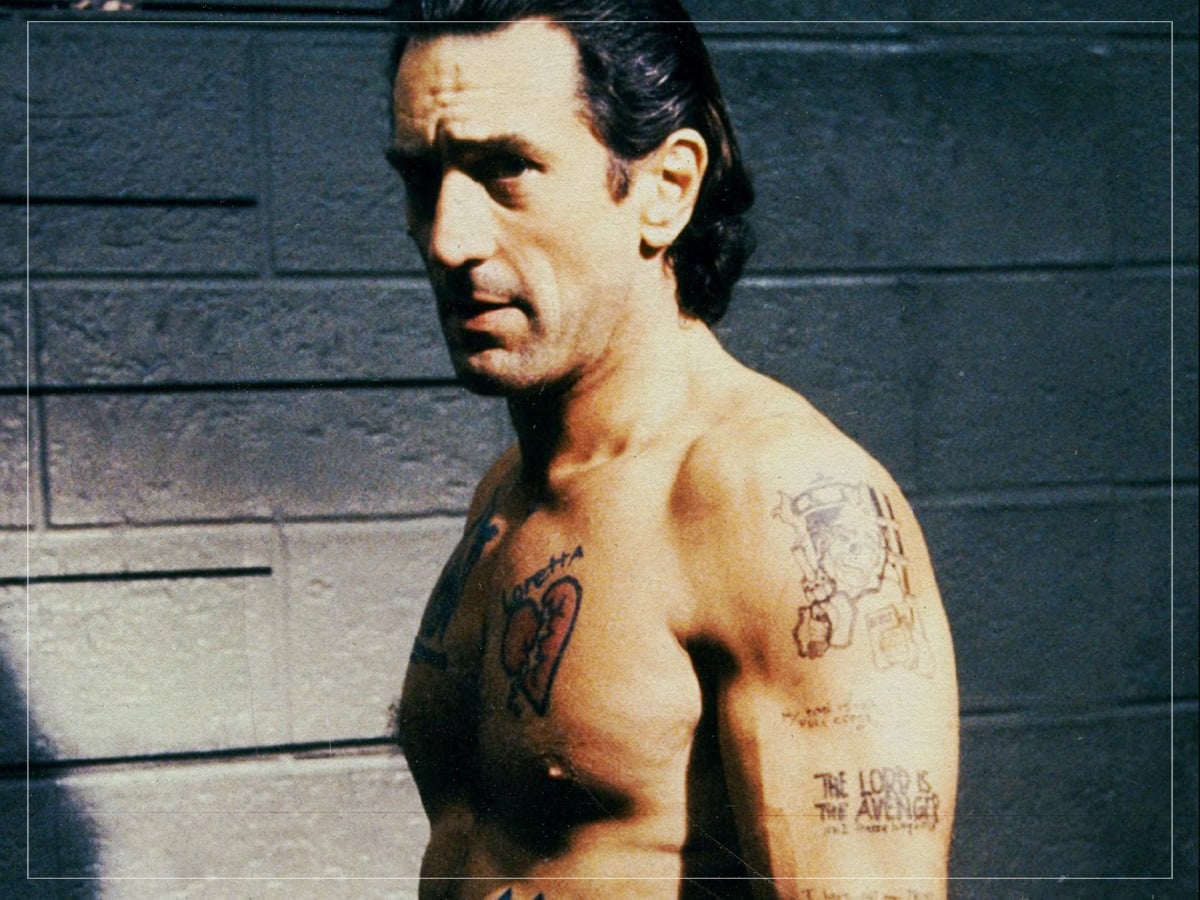
Scorsese set out to adapt the 1962 movie, not MacDonald’s book. Describing it as “the perfect B film”, the Goodfellas director nevertheless wanted to make it his own by focusing on new tensions in the Bowden family. Nolte’s Sam is not a stereotypically good man. He’s a serial cheater, a bit of a brute (it’s Nolte, after all), and you get the sense that he’s been spoiling for a fight long before Max Cady got out of prison. Against this characterisation, De Niro had to return to his King of Comedy state of mind to create a villain who could compete with this nastier version of Sam. His take on Cady is flamboyant rather than low-key, his accent is performative, and he wears his instability on his sleeve.
Without censorship, Scorsese was also able to make the sexual violence explicit, and at times, he goes too far. When Cady rapes a woman he approaches in a bar, we see the bloody, bandaged aftermath in full colour, not heavily-shadowed black and white. When he attacks Bowden’s wife (Jessica Lange) on a houseboat, the scene steps over the line of suspense and into perverse voyeurism. Somehow, it still doesn’t quite match the electric chill of those eggs. To his credit, Thompson loved Scorsese’s version, and even said he wished he’d thought to add a storm to the waterbound ending.
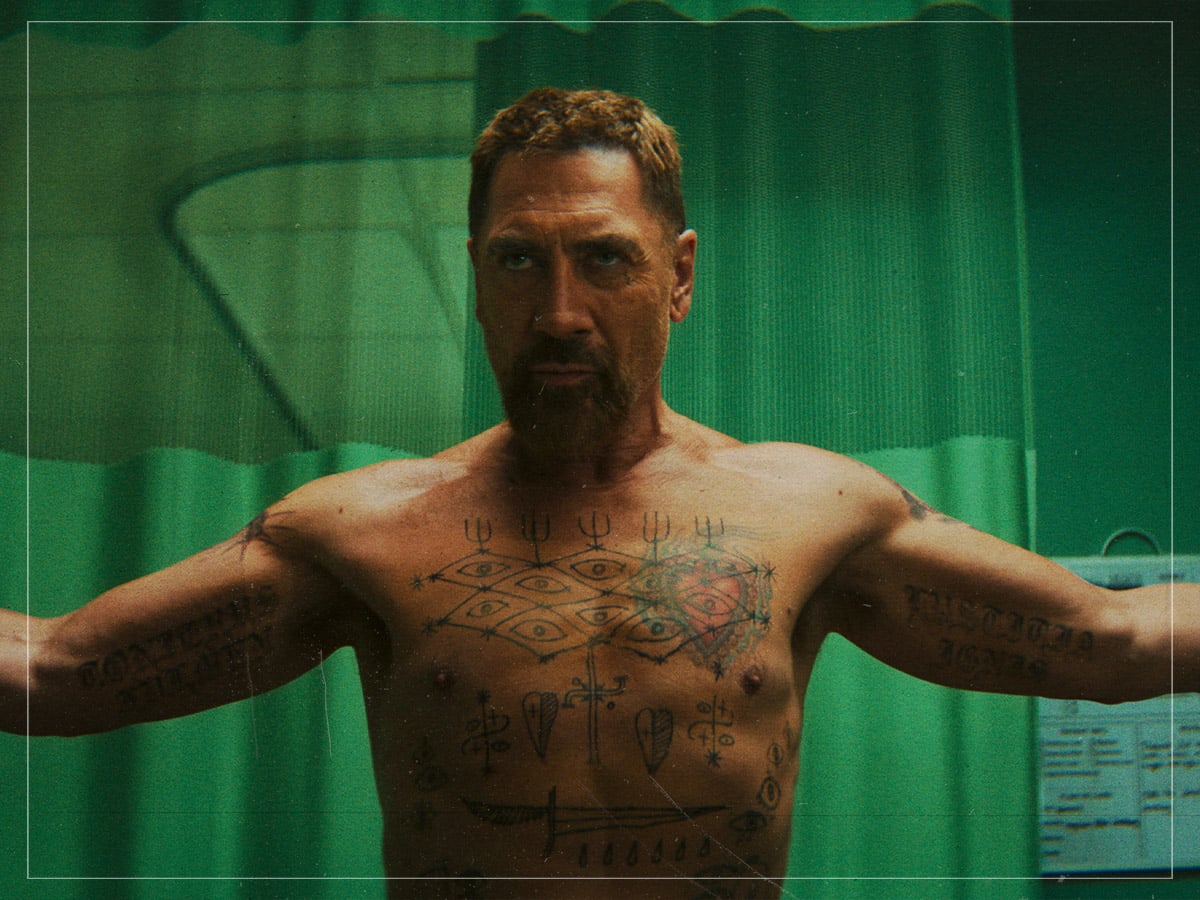
Then, there’s the Apple TV series, which seems to be adapting Scorsese’s film in broad strokes but which takes so many liberties that it’s easy to forget that it’s a remake at all. Created by Nick Antosca, it stars Javier Bardem as Cady and bundles Sam Bowden into an attorney couple played by Amy Adams and Patrick Wilson. In the first Cape Fear, Sam was a witness against Cady during his trial. In Scorsese’s film, Sam was Cady’s defence attorney who withheld evidence that might have lessened his sentence. And in the series, the Bowdens were Cady’s defence attorney and the prosecutor, respectively.
If that sounds confusing, brace yourself. The number of plot threads is so dizzying that it is almost laughable, like a long-running soap opera condensed into just ten episodes. Cady may or may not be guilty. The Bowdens have a teenage son who might also be a psychopath. Their various legal clients and colleagues become key plot points.
There are snakes, dogs, nipple piercings, frozen fish, a severed toe, some occult stuff, and Juliette Lewis being either drugged, mentally ill, or both. It is the first Cape Fear adaptation that may not be very good, but it is extremely enjoyable. Like a packet of crisps, it has too many ingredients for what should be a simple recipe, but it is also tailor-made to be moreish.
As Cady, Bardem is more in keeping with Mitchum, delivering a performance that is more physical and seductive than De Niro’s. So far, however, his efforts are hindered by the fact that we do not know whether he is, in fact, a sadistic villain. It’s the Bowdens who come across as violent, vengeful, and sadistic, and in the midst of their personal hysterics, breakdowns, and unconcerned law-breaking, Cady seems downright sane. That is no doubt the point, but it does remove an element of fear that came across so strongly in the film adaptations.
The chilling simplicity and claustrophobia of the original Cape Fear have been lost with each new iteration. Scorsese forfeited the neatness by making Sam a character in search of redemption, and Antosca has abandoned it entirely by creating a firehose of plot and character. Where Peck and Thompson found a blank canvas in The Executioners, Scorsese and Antosca have sought to layer onto the core ideas instead of drilling down into them.
Ultimately, the 1962 Cape Fear comes the closest to being a perfect movie, and it’s a testament to its convergence of excellent writing, directing, performances, and post-production that it has proved so ripe for adaptation.
