


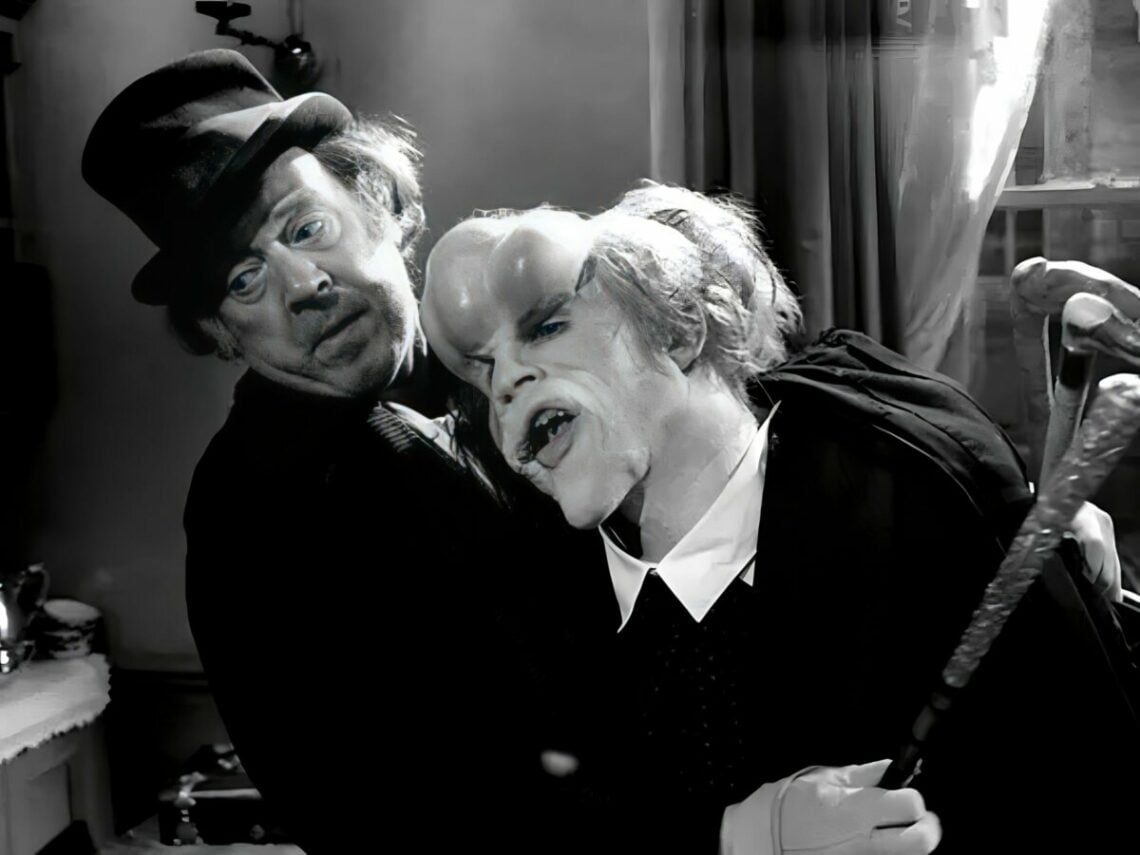
‘The Elephant Man’: David Lynch’s masterpiece remains essential viewing

It often feels like the world we’re living in today is sorely lacking in compassion. With everything from rampant racism and war to gender-based violence and cuts to disability benefits worsening by the day, it’s hard to hold onto belief in people’s kindness. The world – led by a growing number of fascist figures – feels more divided than ever. Rather than embracing differences in appearance, background, or experience, fear and hatred seem to be the main forces keeping people apart.
In an ideal world, everyone would get along, and there would be no conflict, manipulation, greed, or suffering. However, of course, believing in any possibility of harmony between humans is simply futile. Yet, that doesn’t mean we can’t secretly hope for a world where kindness is more widespread, something that David Lynch’s 1980 film The Elephant Man explores with both nuance and empathy, highlighting the innate selfishness and fear at the heart of humanity and warning viewers of the consequences of this behaviour.
If anyone knows about the darkness lurking at the core of humanity, it’s Lynch. The filmmaker made many pieces of work about the widespread violence and pain that affects communities, like Blue Velvet – where a severed human ear and bugs are found lurking beneath a perfect-looking white picket fence lined with beautiful red roses – and Twin Peaks, with the town’s dark secrets unravelling upon the discovery of Laura Palmer’s body, washed up and wrapped in plastic.
With The Elephant Man, Lynch told a story that was more accessible than many of his others, but it is perhaps his most emotional. At its core, it’s a tale about the importance of being kind to others, no matter your differences, with the film following John Merrick, based on the real Joseph Merrick, who lived during the Victorian era with a rare condition that caused severe bodily deformities.
Treated like a circus attraction in a freak show, Merrick is eventually rescued by a surgeon, Frederick Treves, in order to be studied, but he soon becomes an object of fascination for high society. Treves and his upper-class pals begin acting like saviours for ‘looking after’ the mistreated Merrick, once again forcing him into a world of performance.
The Elephant Man highlights the importance of selflessness and why you shouldn’t judge someone on the surface. Merrick is treated like a child, as though he has no capability to speak intelligently or act as a functioning member of society, but Lynch reveals that this simply isn’t the case. There are various scenes that will stick with every viewer of the film, like when Merrick is chased and ridiculed in public, only for him to stand in front of everyone and protest, “I am not an animal, I am a human being.”
Lynch well highlights the hypocrisy and innate selfishness of these people, who can’t seem to accept Merrick as a normal human being because of his physical differences. He makes us consider why we are so scared of those who aren’t the same as us.
The Elephant Man is a vital watch, not just because of its astounding performances from John Hurt and Anthony Hopkins, and Lynch’s impressive direction, but also because it reminds us of the importance to accept those around us and welcome difference because, really, we’re not all as dissimilar as we might think.
