


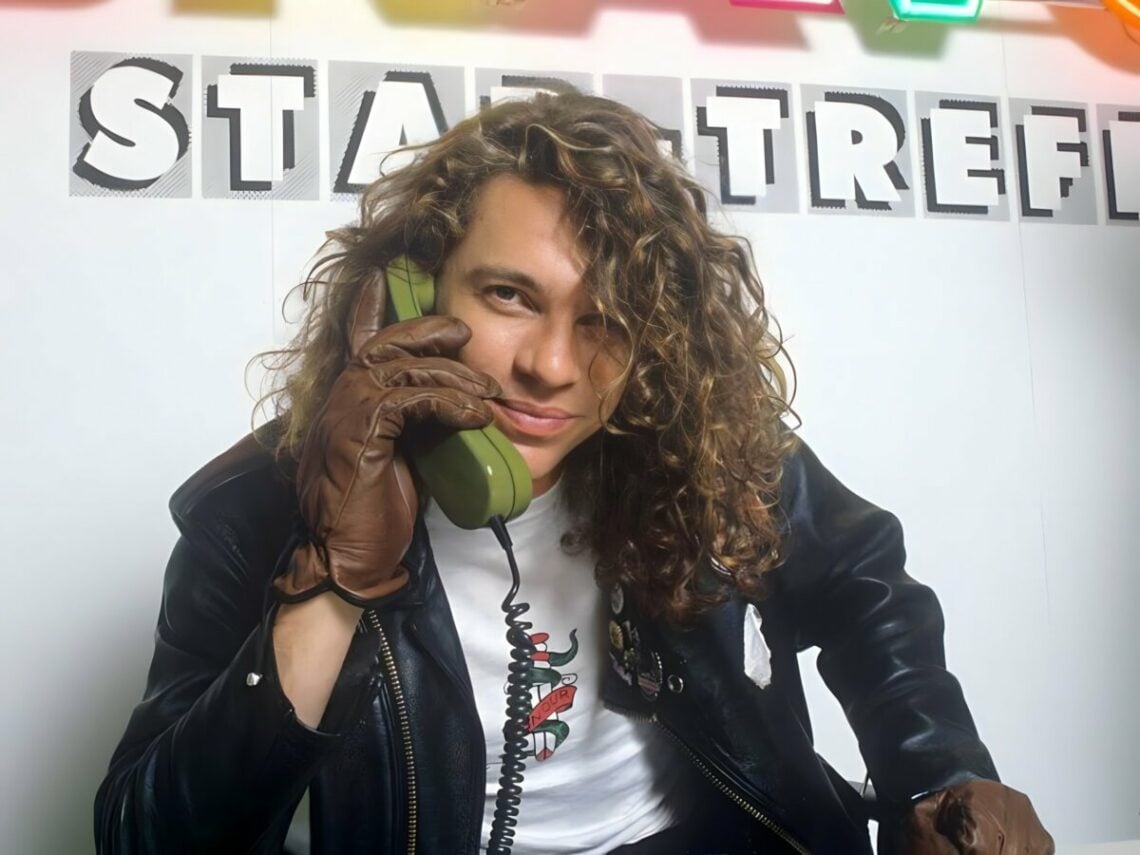
Michael Hutchence explains how electronica carried on the legacy of The Rolling Stones

During his teenage years in Australia, INXS singer Michael Hutchence was immersed in a vibrant scene where punks, soul enthusiasts, and disco lovers congregated in all the same clubs. This unique environment played a pivotal role in shaping his distinctive fusion of rock, funk, and pop. As a person of diverse tastes and abundant wealth, he describes his continued passion for music still as “carnivorous” as ever.
In Hutchence’s perspective, akin to numerous musicians, The Rolling Stones exuded an energy that had an unparalleled impact on the music world. Hence, replicating such allure may appear to be an insurmountable task. Nevertheless, Hutchence found that The Prodigy accomplished precisely that with their second studio album, Music for the Jilted Generation.
“They’re my current favourites,” Hutchence admitted, “They take the excitement of a rave and turn it into something tangible on record. In a way their energy reminds me of the Stones when they first started.” The sweat on the walls palpable on Sticky Fingers is more than present on The Fat of the Land.
Hutchence looked to carry this visceral torch in his own music, also citing Serge Gainsbourg as a major influence, particularly his work du Jazz dans le Ravin; Comic Strip; Couleur Cafe, which Hutchence calls “fantastic”. The romantic endeavours in Hutchence’s life also proved to have some kind of profound musical impact on him, as evident in the INXS hit ‘Suicide Blonde’.
This sense of channelling influences, both personal and musical, into something pointedly blunt is what The Rolling Stones largely pioneered. Their live shows were so incendiary that wearing a shell suit to their shows was hazardous. However, this began to subside from guitar music during the era of prog-rock and mellowed bands like the Eagles.
However, according to Hutchence, this was merely channelled into a new form of music. Electronica looked to seize upon insurgent tech and almost weaponise its musical potential. The Prodigy looked at the computer love of artists like Kraftwerk and then paired it with the rock ‘n’ roll of old. Their shows were far more akin to Mick Jagger joins than circus than any typical electronica shows of the day. Keith Flint carried on the counterculture frontman persona in a way few bands of the era were doing.
Thus, it is far from surprising that Hutchence championed the band as one of his favourites. Not only was he trying to pair punk attitude with the poppy sylings of synth with INXS, but he also had a profound love for The Rolling Stones, even performing with them as a guest at the Royal Albert Hall.
