


“The perfect mix”: The classic Eagles song that inspired Buckingham Nicks to make an album

As the wonderful witch of pop culture, Stevie Nicks‘ writing and performance style is powerfully poignant to the point of verging on the glorious brink of melodrama. She could somehow make a trip to Costco to pick up bargain bog roll Shakespearean.
It’s been that way since she was very young. When Nicks received a guitar for her 16th birthday, she quickly attended to her soul-pouring duties. The first track she penned came with a title well ahead of her years: ‘I’ve Loved and I’ve Lost, and I’m Sad but not Blue’. It might be a touch corny and overlong, but it’s certainly not ‘Stacy’s Mom’. She was much more morose and measured than that typical teenage fodder.
Her first step was a tentative one. As Nicks explains, “It was actually a very nice little guitar song…but it was silly, I was only sixteen, it was my sixteenth birthday….and I was recovering from my first, like, incredible (I thought) love affair, y’know.”
Recalling the incident with a tinge of retrospective embarrassment, she added, “I was crazy about this very popular kid in school, and he actually looked at me a couple of times, so I wrote this song.” Recognising the fantasy in it all, she continued, “And it was all over nothing, it never happened, and it was just this whole thing I made up.”
But it did have a profound impact. “I realised right away that I could write songs because I could have experiences without even having them, by just singing about them,” she concluded.
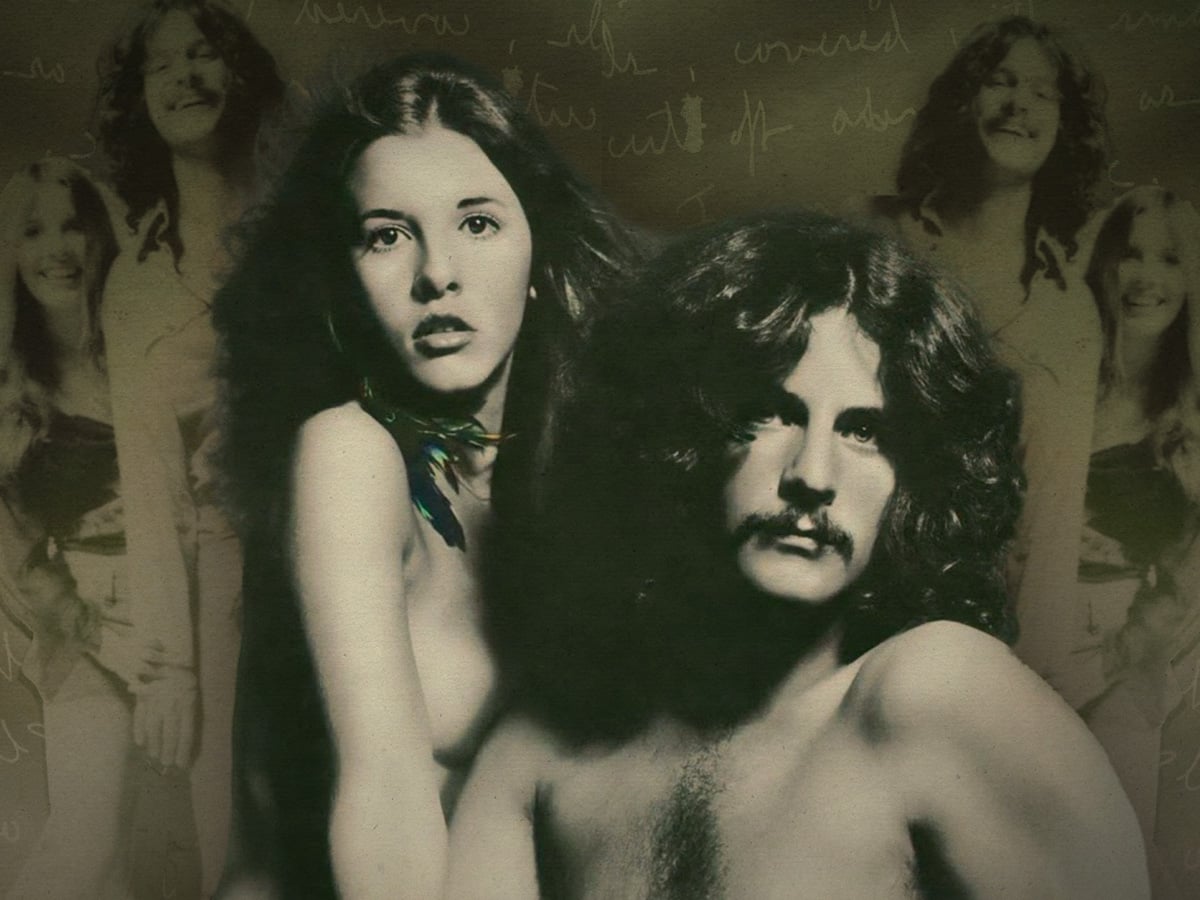
Shortly afterwards, she joined her first band while attending Arcadia High School in California. But that didn’t last long. Thereafter, she moved on to Menlo Atherton High School as a senior and met Lindsey Buckingham at a Young Life social event. He was playing ‘California Dreamin’’, and she provided sweet harmonies. The rest, as they say, is ancient history, and Nicks has been extolling heartbreak and exultation from it ever since.
But along this journey, one vital track convinced Buckingham and Nicks to quit playing covers and start penning their own songs. For a while, it seemed like Nicks was going to have to give up on her own musical aspirations as Buckingham went off as a touring musician, leaving her behind, but an emerging sound from the West Coast caught their ear as something that they could further develop together.
“The Eagles were very inspirational to both Lindsey and I because we loved their singing,” Stevie Nicks said. “And we loved their ability to bridge country and rock and roll so beautifully.” This was something that they could augment with a smattering of pop.
How the Eagles shaped their sound
She added, when waxing lyrical about the impact of their 1972 hit ‘Witchy Woman’, that it “was just the perfect mix of country and rock and roll. And so we were very inspired by that, Lindsey and I.” Soon, they began a blend of their own, mixing the hook-laden simplicity of pop with the mysticism of the blues and the visceral edge of rock. This unique mishmash made them perfect for the next chapter of Fleetwood Mac when the faltering British band was looking for a reunion.
As it happens, Mick Fleetwood initially only had Buckingham in mind as a replacement guitarist. They auditioned him, and he passed, but an impasse soon arrived: he informed the band that he strictly comes as a pair with Nicks. Fleetwood Mac were not interested in hiring a singer, so they stepped back. However, with nobody else quite fitting the bill, they ultimately agreed. This proved to be the most profitable move in their tumultuous history.
Now, the band stand as one of the few rock acts that can rival the commercial success of the Eagles. And perhaps the reason behind that is that both groups were able to pull in fans from a broader range by pairing a couple of influences. And when it comes to ‘Witchy Woman’, you can’t help but think it inspired Nicks’ persona and aesthetic, too. She would even invent a witchy character of her own in the form of the mystic Rhiannon, based on the Celtic mythology of yore.
What makes that influence so striking is how completely Nicks internalised it rather than imitated it. ‘Witchy Woman’ did not provide a template so much as permission, a signal that mysticism, femininity, and emotional directness could coexist at the centre of popular music. Nicks took that spark and filtered it through her own experiences, transforming borrowed atmosphere into something intensely personal and recognisable.
From those early teenage songs to her defining work with Fleetwood Mac, the throughline has always been belief. Nicks writes as if emotion itself is a form of truth, something to be trusted even when it borders on excess. That conviction, first ignited by records like ‘Witchy Woman’, would become the foundation of a career built on intuition, vulnerability, and an unwavering sense of self.
With that in mind, you can easily argue that ‘Witchy Woman’ has had a royally profound impact on music. And that’s far from bad considering that Buckingham frankly hated country, stressing to Fleetwood Mac’s management that they should avoid pushing them in that tarring direction.
