


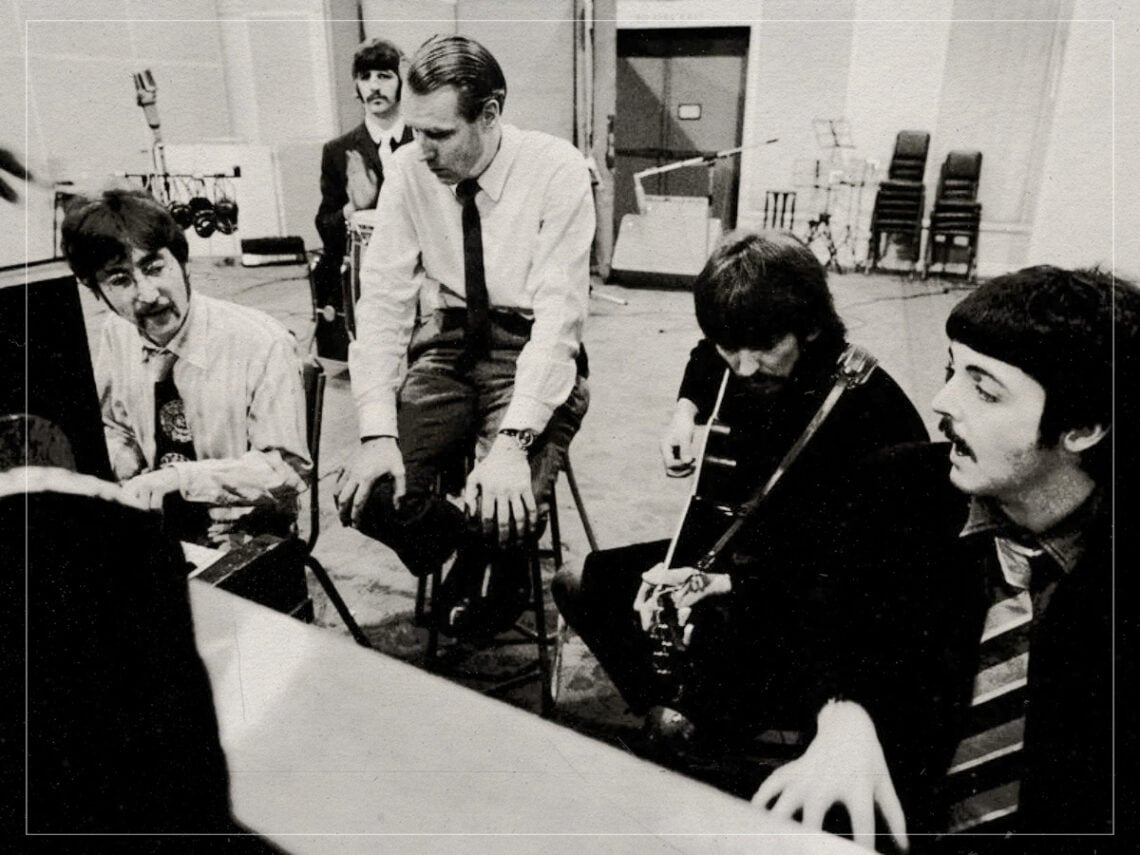
The “dreary” George Harrison song that disappointed George Martin

Towards the mid-1960s, George Harrison was just starting to come into his own as a songwriter.
Although The Beatles’ albums were dominated by one great tune after another from John Lennon and Paul McCartney, Revolver was the first time where the ‘Quiet Beatle’ started to gain equal footing with his songwriting bandmates, sporting three songs on the final version of the album. While his contributions were far more muted for the conceptual album Sgt. Peppers Lonely Hearts Club Band, The Beatles’ producer had some reservations about the song Harrison brought to the table.
Opening up side two of the record, ‘Within You Without You’ was a bold exploration of Harrison’s fascination with Indian music. Where other songs had used Indian instrumentation like sitar and tabla, there wasn’t a Western instrument to be found in this tune, dominated by Harrison and a few Indian session players laying down a song about expanding one’s consciousness.
At that point, Harrison wasn’t just experimenting with a new sound; he was actively reshaping what a Beatles song could be. While Lennon and McCartney were still largely working within the framework of Western pop, Harrison was looking outward, treating music as a vehicle for spiritual and cultural exploration. That shift didn’t always sit comfortably within the band’s established identity, but it marked an important turning point in broadening their sonic palette.
When asked about recording the song, though, George Martin remembered how much it stuck out to the rest of the songs on Pepper, recalling in The Beatles: Paperback Writer: “George’s contribution, ‘Within You Without You,’ was, with all deference to George, a rather dreary song, heavily influenced by his obsession with Indian music at that time. I worked very closely with him on the scoring of it, using a string orchestra, and he brought in some friends from the Indian Music Association to play special instruments”.

Though Martin had worked closely with The Beatles for their orchestral arrangements, he noted that a certain challenge came with capturing the essence of Indian music. Since most of the common Indian scales were so alien to him, Martin would write different musical sweeps into the score, mimicking the improvisational nature of what the Indian session players had made up on the spot.
This collaborative process also pushed Martin into unfamiliar territory. Accustomed to structured Western arrangements, he had to adapt quickly to a style that prioritised feel and spontaneity over rigid notation. In doing so, he effectively acted as a bridge between two musical worlds, helping translate Harrison’s vision into something that could sit alongside the rest of the album while still retaining its distinct identity.



It’s not hard to see why Harrison’s tune clashed with his fellow Beatles’ songs, given the fact that Paul McCartney was making chipper numbers like ‘Getting Better’ and ‘Fixing a Hole’ for the same album. Even with his lone contribution, Harrison still found ways to infuse his love of Indian music into other recorded songs. As the mid-section unfolds for ‘Getting Better’, the droning sound of the sitar can be heard setting the tone before McCartney’s line about being cruel to his woman.
Harrison’s knowledge of common Indian musical practices also worked their way into ‘Lucy in the Sky With Diamonds’, hanging on one note for most of the pre-chorus to create a drone-like effect that a sitar is set up for. The fascination with Eastern scales only grew as the years went on, with Harrison creating the hazy atmosphere for ‘Blue Jay Way’ off of Magical Mystery Tour and eventually recording ‘The Inner Light’ in India with some native musicians.
Although Harrison maintained an appreciation for the music throughout his career, he let most of it fall by the wayside when going solo, only occasionally picking up a sitar and using his signature slide to express his emotions. Since Indian music was about expressing what was in the musician’s heart, Harrison’s touch on the slide guitar was the only way he could recreate those beautiful sounds using Western musical techniques.

Never Miss A Beat
The Far Out Beatles Newsletter
All the latest stories about The Beatles from the independent voice of culture.
Straight to your inbox.