


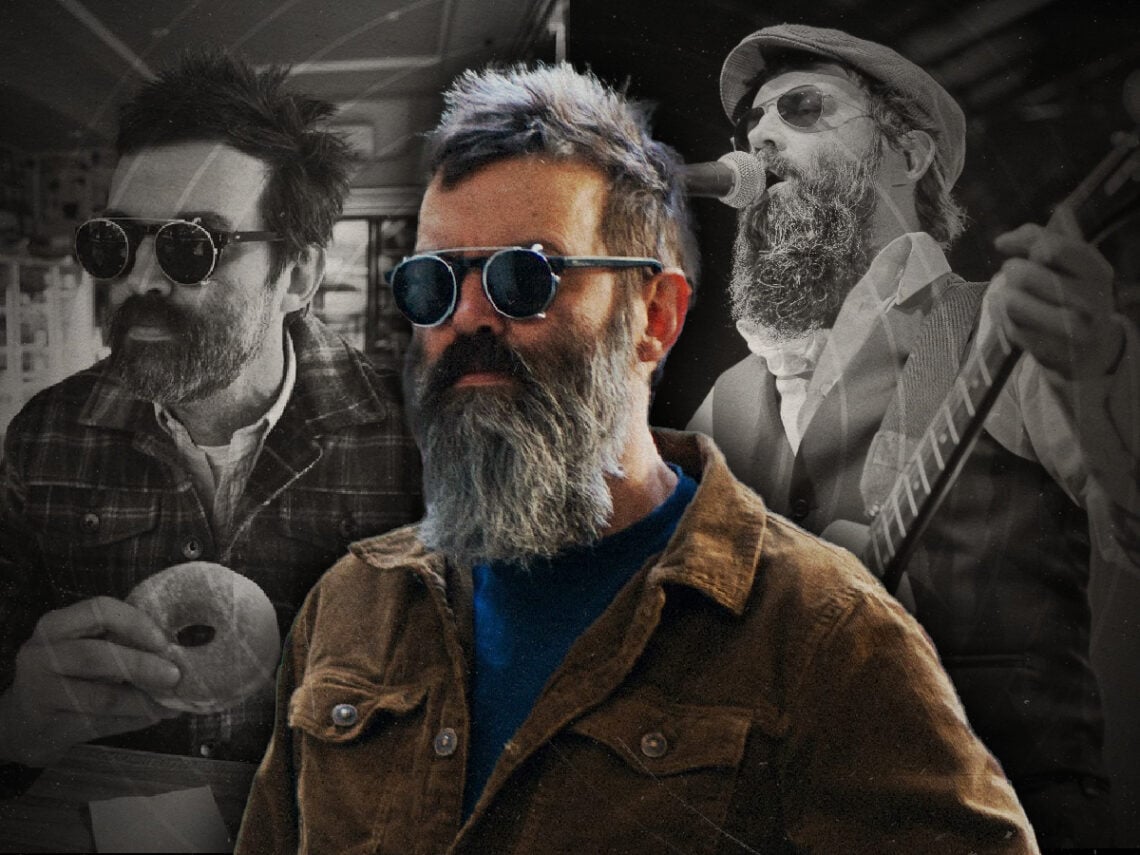
The documentary-worthy story of Eels’ Mark Oliver Everett

Director Judd Apatow has sneakily become the Ken Burns of comedian-centric documentaries over the past few years, producing some fascinating portraits of several of his own heroes, like Mel Brooks, George Carlin, and Garry Shandling, as well as a recent bio-doc on one of his comedy contemporaries, Maria Bamford.
This makes the announcement of his newest docu-subject perhaps a bit puzzling at first, as Mark Oliver Everett, known to his fans as E, frontman of the LA band Eels, is decidedly not a comedian, and yet, for those who know his story, the Apatow fit makes perfect sense.
Everett, 62, has never been a stand-up or a sketch writer, but he has a few acting credits, including a recurring role in the Apatow-produced Netflix comedy series Love in the late 2010s. His dry, self-effacing sense of humour worked effectively in that show in the same way it has served Everett on stage for more than three decades as the lone constant member of Eels, the least pretentious life-affirming rock band of its era.
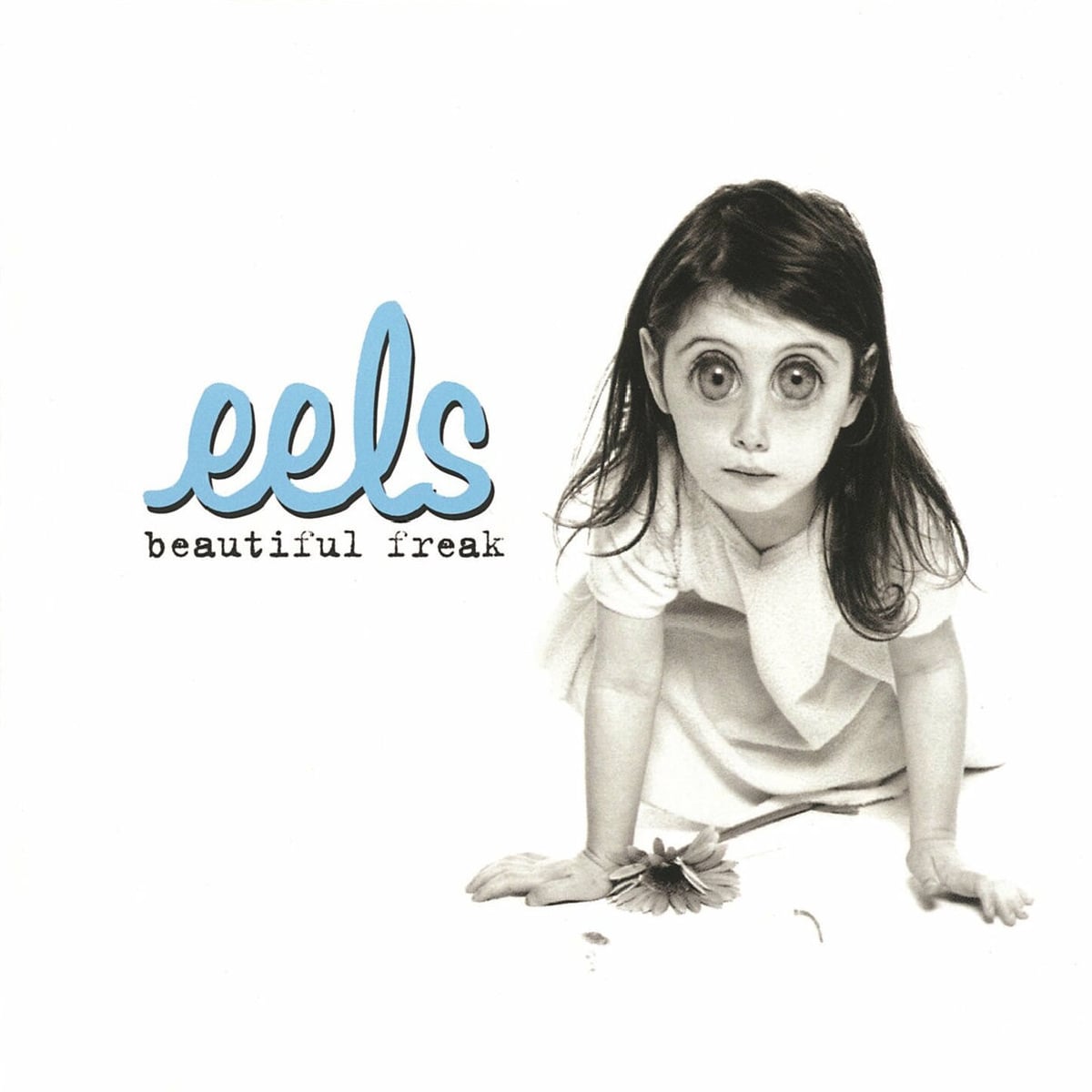
This year marks the 30th anniversary of Eels’ debut album Beautiful Freak, and its breakout alternative radio hit, ‘Novacaine for the Soul’. Back then, the bespectacled and soul-patched E was grouped somewhere in between the hip-hop flavoured weirdo slacker sound of Beck and the sensitive depressive indie rock of Elliott Smith: both fellow Angelenos. If critics thought Beautiful Freak was a bit on the sad bastard side, though, they were thoroughly unprepared for its 1998 follow-up Electro-Shock Blues, the album that revealed the true depth of Everett’s entirely unique worldview and life experience.
Written in the wake of the deaths of both his sister, by suicide, and his mother, from cancer, the album shed the mildly ironic posturing of Beautiful Freak and allowed Everett to do essentially what he’s been doing ever since: write simple, straightforward songs about the tenuous nature of mortality and the way he and the characters he encounters try to navigate that reality.
It’s an effort that often got the Eels unfairly labelled as makers of ‘depressing pop’, with even a seemingly joyous anthem like the 2000 hit ‘Mr E’s Beautiful Blues’ getting special notice for its description of gun-wielding clowns and bummed out elephants. But E has always rejected that label.
“I think we were pigeonholed as ‘the sad band’,” Everett told the LA Times in 2018, “But all I’ve tried to do is reflect life. There’s been some tragic stuff for sure. But that makes the bright stuff more hard-won”.
In the late 2000s, shortly after turning 40, Everett put the Eels on ice for a few years, but entered into what could only be called a prolific hiatus, releasing a couple compilations of his old tunes, writing a fantastic and engaging memoir about his life called Things the Grandchildren Should Know, and working with the BBC on a documentary about his father, Hugh Everett III, one of the cult heroes of quantum physics.
That doc, titled Parallel Worlds, Parallel Lives, followed E as he spoke with the scientists and colleagues who’d worked with his late father, the man credited with pushing forward one of the early, influential theories on the existence of multiple realities. It’s a fantastic film that Apatow will be hard-pressed to top, as it captured the experience of a famous son getting to know his posthumously famous dad, someone he’d barely had any relationship with at all when they’d actually lived in the same house.
Hugh Everett died in that house from a heart attack in 1982, and a teenage E was the one who found his body, another defining family tragedy. “My father was so uncommunicative that I thought of him the same way I thought of the furniture,” E wrote in his memoir, noting that his dad, who spent much of his career as a defence researcher at the Pentagon, never discussed his earlier work in physics, nor much of anything else. Finding his father’s body that day was “the only time I can remember having any physical contact with him”. Nearly 20 years later, on September 11th, 2001, one of E’s cousins was working as a flight attendant on the plane that was hijacked and crashed into the Pentagon, leaving Everett to wonder if his dad’s old office had also been destroyed in the process.
The tragedies of Mark Everett’s life are unavoidably the foundation of any story that will be told about him, but the thing that makes it a story worth telling is the “hard-won bright stuff” that’s come later, as E put it. Eels’ music, while seemingly never hip enough for the indie crowd and too dark and atmospheric for the mainstream, is extremely human music in an increasingly synthetic age.
Don’t get it twisted; E likes his synths and samples, too, but the 15 albums he’s released under the Eels name, whether filled with fuzzed-out, rollicking guitar jams or sparse piano ballads, are all equally a reflection of the wandering and wondering human being called E and his quest for the worthwhile stuff of life. There are no escape hatches to any parallel dimensions, just a hopeful reckoning with this one.
It’s not unlike a comedian’s work; making us smile and feel more connected by facing our own fears and quirky insecurities together. Hence, it’s quite suitable Judd Apatow territory.
