


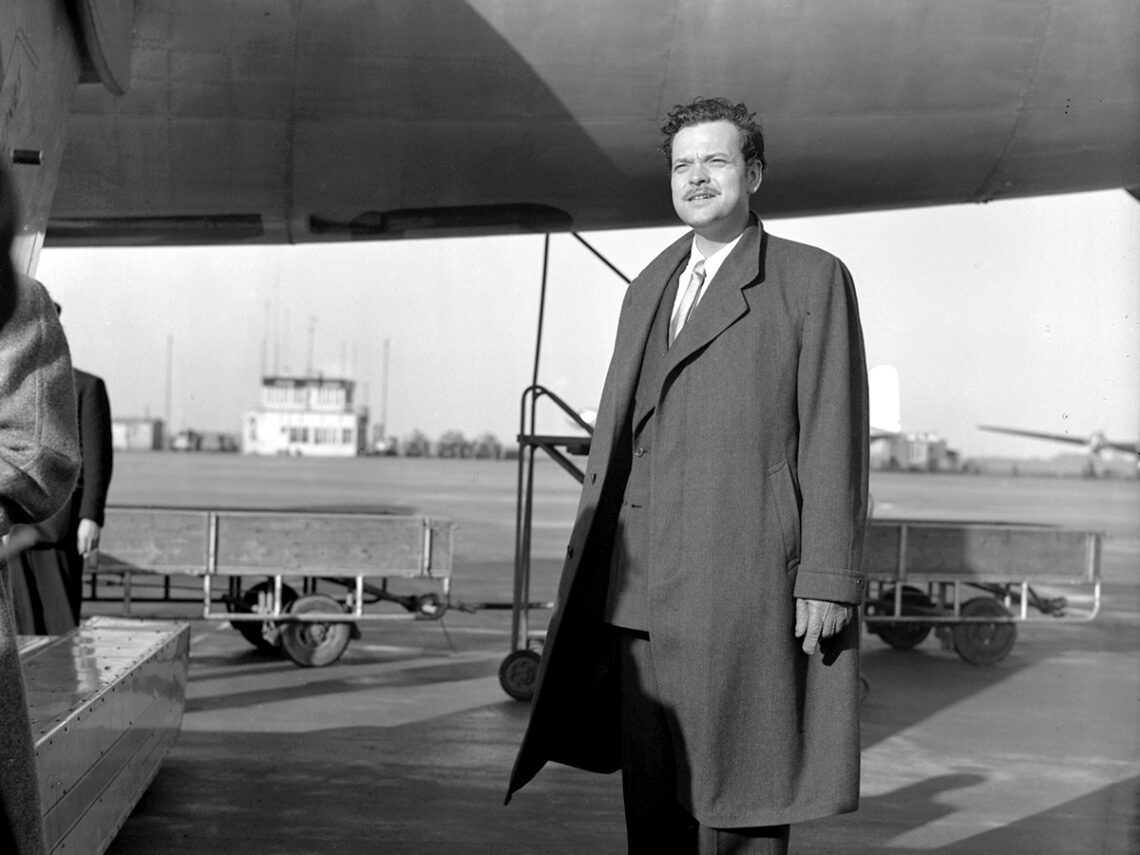
The divisive movie Orson Welles called “the tragedy of my life”

When it comes to artists who faced unfair expectations throughout their careers, no one in the history of Hollywood had it worse than Orson Welles.
Welles achieved something with his iconic directorial debut, Citizen Kane, that would reverberate in the industry for generations hence, praised as perhaps the greatest film ever made, and the director being considered to be a ‘boy genius’. Unfortunately, that meant that everything else that he made would feel like a disappointment in comparison.
Welles struggled with his subsequent films to appease critics, and often took it personally when they attacked his work. In a conversation with Peter Biskind for My Lunches with Orson: Conversations Between Henry Jaglom and Orson Welles, he recalled that the negative responses to his idiosyncratic documentary F for Fake was “the tragedy of my life”.
“I think, F for Fake is the only really original movie I’ve made since Kane,” he said, explaining, “You see, everything else is only carrying movies a little further along the same path. I believe that the movies, I’ll say a terrible thing, have never gone beyond Kane. That doesn’t mean that there haven’t been good movies, or great movies. But everything has been done now in movies, to the point of fatigue.”
F for Fake was unlike anything he had made up until that point in his career, as it combined non-fiction components with staged recreations and footage of himself giving interludes, and while the boldness that Welles had in changing the style of genre made him the envy of many other great directors, the later work of his career wasn’t seen as being commercial in the same way Citizen Kane was.
Although he would have never made some of his masterpieces had he not taken it upon himself to disregard the nasty criticism directed towards him, F for Fake was a project that he was personally invested in. Beyond the fact that he had devoted meticulous effort to the unusual project, Welles said that he hoped it would help evolve the form of filmmaking in a way that would inspire other directors.
“You can do it better, but it’s always gonna be the same grammar, you know?” he said, noting, “Every artistic form, the blank-verse drama, the Greek plays, the novel, has only so many possibilities and only so long a life, and I have a feeling that in movies, until we break completely, we are only increasing the library of good works. I know that as a director of movie actors in front of the camera, I have nowhere to move forward. I can only make another good work.”
F for Fake ended up being one of the last ‘official’ completed projects of Welles’ career, as he had many films that he had started and not finished due to insufficient funds. Although the director later released the documentary Filming Othello, about his own experiences making the Shakespearean adaptation, his last narrative feature, The Other Side of the Wind, wasn’t released until many years after his death, thanks to a restorative campaign to finish the film using his notes.
F for Fake may have been lambasted initially, but it was eventually seen as being another masterpiece. Thankfully, critics had learned their lesson by the time that The Other Side of the Wind finally made its debut on Netflix, as Welles’ last endeavour was greeted more warmly.
