


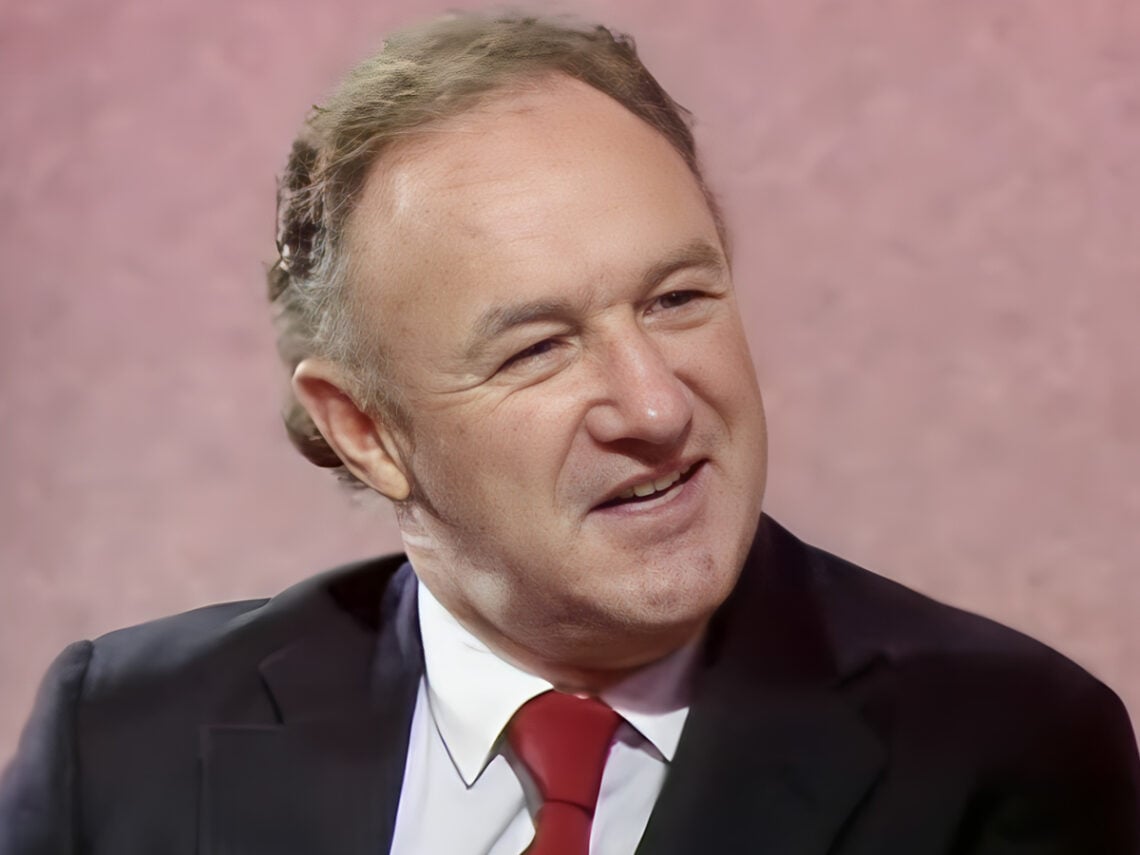
The director who accused Gene Hackman of wasting his career: “Like using a Ferrari to haul sheep”

There’s no doubt that Gene Hackman deserved far better than the desperately sad circumstances surrounding his death last year at the age of 95; after all, he was a man who had brought joy to moviegoers for decades as one of the finest actors of his generation.
Perhaps it had something to do with the fact he was never as conventionally handsome as many of the more famous leading men, but he certainly had the charisma and talent to carry movies, as he did so memorably in some of the best films between 1970 and the late ‘90s, including Francis Ford Coppola’s The Conversation, William Friedkin’s The French Connection and Clint Eastwood’s magnificent western, Unforgiven.
When he did lead a film in the ‘hero’ role, even in lesser-known gems like 1974’s Night Moves, Hackman always managed to convey a side and a history that the audience never fully got to see, a complex character with a complicated past that would sometimes hinder his path to getting the job done.
But perhaps that complexity, his own former life as an ex-marine who lost his mother in a house fire, came to the fore most effectively when he got to play characters on the other side, like his role as Superman’s nemesis Lex Luthor, or as the morally bankrupt lawyer in The Firm.
Like The Firm, some of Hackman’s best performances came in later roles in the 1990s when he was able to translate his life experience and decades of filmmaking into authoritarian characters. In 1995 and 1996, he made two movies, The Chamber and Extreme Measures, the second of which saw him opposite then-flavour of the month Hugh Grant as a doctor who does experiments on homeless people, and the first as a high-powered Klansman, coming full circle from his FBI agent in Mississippi Burning.
Even back then, it seems directors believed Hackman wasn’t getting the credit he warranted after so many years of great performances. Extreme Measures director Michael Apted said at the time: “I’d love to find a film that Gene is the heart of, where he is the whole movie,” while James Foley, who directed The Chamber, agreed, saying, “He should be at the center of every movie. So many of his parts have been supporting. It’s like using a Ferrari to haul sheep. It’s a waste.”
Hackman, however, was not exactly anonymous in the eyes of critics or audiences. Over his long career, he was nominated for five Oscars in five different decades, winning two, for The French Connection and Unforgiven. He was also nominated for eight Golden Globes, and won one as recently as 2002 for Wes Anderson’s The Royal Tenenbaums.
At one point in the 1970s, Hackman was one of the most in-demand actors in the world, able to go from genre to genre with huge success, making comedies like Mel Brooks’ Young Frankenstein, brilliant low-budget dramas like the fantastic road movie Scarecrow with Al Pacino and huge blockbuster disaster films like 1972’s The Poseidon Adventure.
Hackman retired from acting some 20 years before his death, but some of his final movies proved to be just as successful, with the courtroom drama Runaway Jury marking his third John Grisham adaptation, and his war film Behind Enemy Lines with Owen Wilson bringing in $121m at the box office against a budget of just $40m.
