


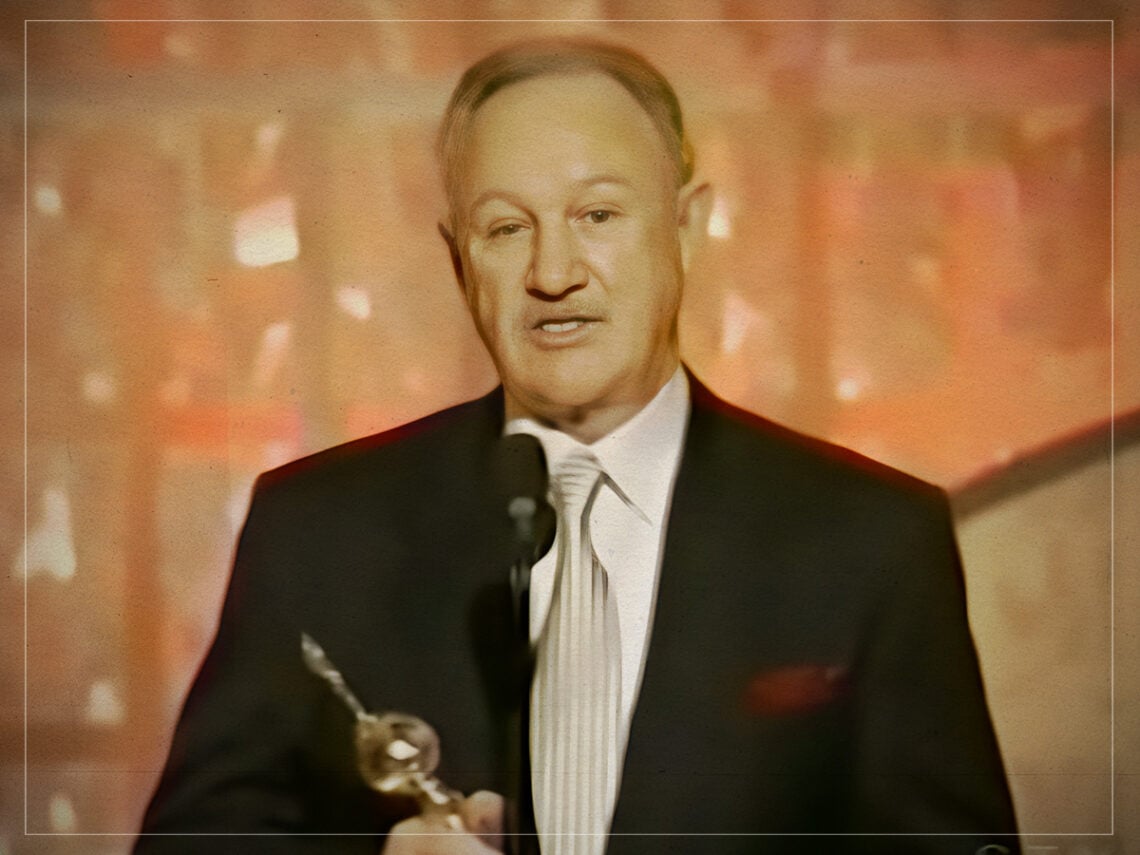
Gene Hackman found the character of his most famous role with just one move: “That’s him!”

The late great Gene Hackman held the rare distinction of being in multiple films that could reasonably be considered to be among the greatest ever made, with many of these parts taking him down dramatic transformations, but he found the essence of his most iconic role through an unusual process of getting into character.
It didn’t take long into his career for the industry to recognise that there was a very special actor on the rise. While he took supporting roles in Downhill Racer and Bonnie & Clyde which he knocked out of the park, it was evident that Hackman was itching for a project where he could play the lead, an opportunity that inevitably landed at his door when he was selected by William Friedkin to star in an off-kilter crime thriller based on a stranger-than-fiction true story.
The French Connection introduced a tough-as-nails protagonist who was virtually the opposite of typical action heroes; Jimmy Doyle, known affectionately as ‘Popeye’, was an unapologetic, womanising hard drinker, who frequently ruffled the feathers of his superiors. The role would come to define Hackman’s career and set a new standard for what neo-noir thrillers looked like in the 1970s, but before it all went down, the actor felt some trepidation about how to find the essence of a character whose personality was so distinctly different from his own.
Hackman’s moment of actualisation didn’t come from research or training, but because of the sharp eye of director Friedkin, which began with a morning before filming, when the actor dunked his breakfast doughnut in a cup of coffee, which he instantly threw into the street. Rather than calling out his star for being callous, Friedkin pointed to say, “That’s him!”, and it was from this point in the production that the duo seemed aligned on just who Popeye Doyle was.
Little did Friedkin and Hackman know that it would be such a small, seemingly insignificant character beat like the discarded coffee cup that would end up ensuring The French Connection’s place in history. The film presented an unsanitised, gritty portrayal of the realities of pursuing international criminals, and was willing to point out the flaws in the functioning of law enforcement forces. Ironically, this multifaceted approach to the never-ending cycle of the drug war is what has made the film feel so fresh and relevant in the decades since its initial release.
Compared to a snarky, quick-witted character like Clint Eastwood’s Lieutenant Harry Callahan, who made his debut the same year in the original Dirty Harry, Doyle was a more desperate, workmanlike cop who had no qualms about putting innocent people in danger.
There’s always the potential that this degree of honesty would have been off-putting to a potential audience, but The French Connection was a major hit among the industry’s awards voters, wherein the Academy Awards’ bias towards British period pieces, musicals, and epic biopics, was thrown for a loop when it ended up sweeping the ceremony with five wins, including ‘Best Picture’, ‘Best Director’ for Friedkin, and ‘Best Actor’ for Hackman.
The French Connection was sadly the last film that Hackman and Friedkin would work on together, but they both went on to find great success individually. Hackman even reprised his role as Popeye in the underrated sequel The French Connection II, in which the director’s chair was occupied by John Frankenheimer, and while Friedkin isn’t credited on the film, he will always be the one responsible for knowing that there was a bit of Popeye in Hackman all along.
