


The David Bowie song inspired by The Rolling Stones: “I didn’t get that near to it”

David Bowie and New York City feel like a match made in heaven. The mercurial edge of music’s great evolutionary artist patrolling the streets of opportunity, actively seeking out the essence of his next great trend, is almost cinematic.
“When I first came to New York, I was in my early 20s, discovering a city I had fantasised over since my teens,” he wrote for New York magazine. “I saw it with multicoloured glasses, to say the least. Also, I rarely got up before noon and hit the sack again around four or five in the morning. Two New Yorks, really.”
He needed multicoloured glasses, for New York in the early 1970s was a largely bleak city. It was cascading into a deep sense of urban decay, with crime rates skyrocketing and drug abuse lacing every facet of life. It burgeoned what is now an iconic era of New York punk music, but where did Bowie fall into that?
Well, upon arrival, he would have been the observer, slipping through the cracks of the scene and seeing the beauty in the destitution. Watching his soon-to-be partner in crime, Iggy Pop, tearing the roof off dingy stages with his raucous and frankly unpredictable brand of performance.
He was the sort of performer on the verve of culture, an environment Bowie desperately strove to be a part of. So into the studio he went, and penned ‘The Jean Genie’, a song whose lyrics were inspired by the dangerous and frightening onstage antics of Iggy and his almost reptilian presence.
But it wasn’t just Iggy that Bowie pulled from the charm of New York’s finest creatives. No, as he immersed himself in the work of the city’s best creatives, he rubbed shoulders with Cyrinda Foxe, the American actress and model, in whose presence the coalescence of the song’s narrative came to be.
David Bowie explained in his 2005 book Moonage Daydream: “Starting out as a lightweight riff thing I had written one evening in NY for Cyrinda’s enjoyment, I developed the lyric to the otherwise wordless pumper and it ultimately turned into a bit of a smorgasbord of imagined Americana…based on an Iggy-type persona. The title, of course, was a clumsy pun upon Jean Genet.”
But what soundscape did Bowie feel was fitting for this mutt of pop cultural references? Something futuristic and dystopic to accompany the irreverence? Or perhaps something nostalgic that harked back to the glory days of cultural fame?
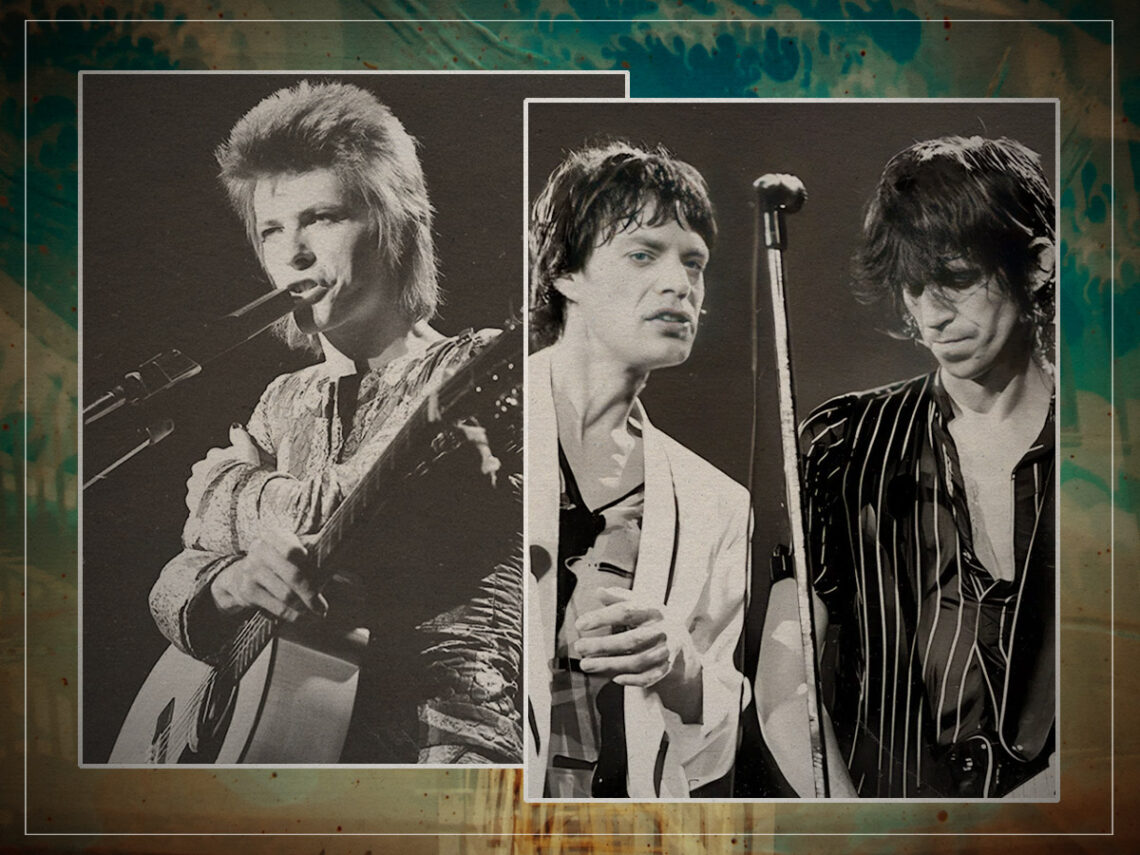
Surprisingly, he chose the latter and created what felt like a link to the 1960s. He said, “I wanted to get the same sound the Stones had on their very first album on the harmonica. I didn’t get that near to it, but it had a feel that I wanted—that ’60s thing.”
Foxe inspired this exciting brand of 1960s rock so much that Bowie made sure she was front and centre of the music video as well. She became this picture of alternative charisma that was perfect for a song, blending the decades and telling the story of lives lived in the cracks of New York’s music scene.
