


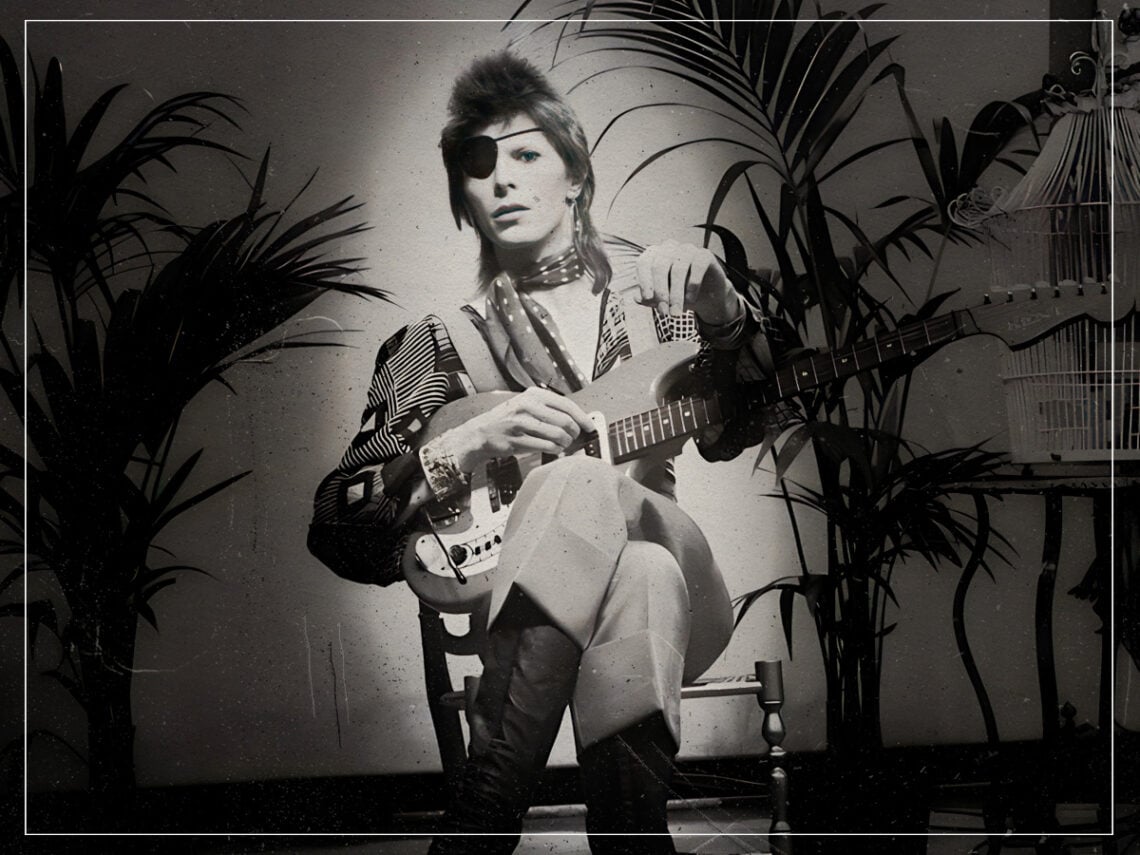
“It’s louder and harder”: The album David Bowie thought sounded psychotic

Everything David Bowie touched was meant to be slightly off the wall. Even though he could string together disparate genres under one roof and make it work, there was always that sense of excitement and even danger in seeing him go off the rails, practically daring anyone to call him out for not going along with the program. As he came off one of the darkest periods of his career, though, Bowie thought that he was dabbling in something that was downright insane.
By the time he reached the late 1970s, though, nothing that Bowie had touched could have been considered normal. From the moment that he crashlanded on Earth with his flaming red hairdo in the video for ‘Space Oddity’, people knew they were dealing with a true original who was never going to compromise his sound because of what some industry insider thought would have been cool.
Around the time of Station to Station, though, Bowie started realising that kind of attitude began to have diminishing returns. After years of inventing different characters whenever he performed, ‘The Thin White Duke’ was one of his darkest, and once he managed to escape Los Angeles and get over his nasty cocaine habit, Berlin was the perfect place for him to deconstruct his music and start again.
Whereas Low had a lot in common with his previous outing to some extent, Bowie’s work with Brian Eno on the instrumentals was where everything started to get more abstract. The lyrics of a tune like ‘Be My Wife’ were already archaic, but bringing in soft ambient textures on the back half of the album was the beginnings of post-rock years before anyone had really claimed it.
While “Heroes” stands in direct opposition to the previous masterpiece, many of the songs have more weight to them. The title track is still one of the most stirring anthems of the 20th century, but other pieces of the album are meant to be as zany as possible, whether that’s the off-kilter groove of ‘Beauty and the Beast’ or calling back to bands like Kraftwerk on ‘V2 Schneider’.
Twisting the genre in different directions was already the mentality behind the record, but Bowie thought that what he had on here sounded insane, saying, “It’s louder and harder and played with more energy in a way. But lyrically, it seems far more psychotic. By now, I was living full-time in Berlin, so my own mood was good. Buoyant even. But those lyrics come from a nook in the unconscious.”
Despite a tune like ‘Joe the Lion’ not making the most sense from one line to the next, Bowie seemed to be making music the same way an artist would make an impressionist painting. Not every piece of it will make the most sense when broken down, but once it’s out in the world, millions of listeners will walk away with their own interpretation of what every line means.
While Bowie did find his way back to sanity after leaving Berlin and going full pop on Let’s Dance with Nile Rodgers, “Heroes” is still one of the most fascinating glimpses into his artistic process. As opposed to people trying to spend time with him deciphering every piece of his material, this is the closest anyone will ever come to looking deep into ‘The Starman’s subconscious.
