


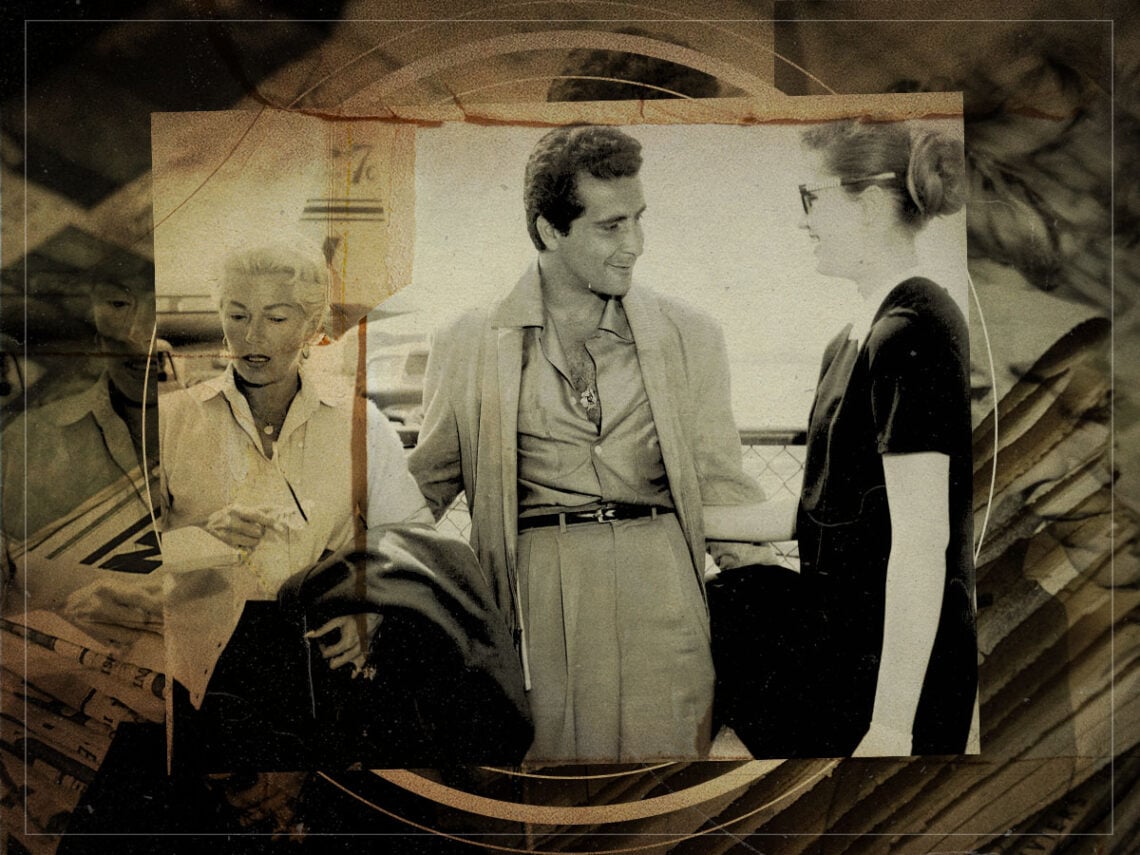
The dark side of Hollywood: When the 14-year-old Cheryl Crane murdered Johnny Stompanato

Celebrity trials have been a tabloid fixture since OJ Simpson was tried for the murder of his ex-wife in 1995. But long before the ‘90s, a court case featuring one of Hollywood’s biggest stars stole headlines around the world. As is so often the case, the trial involved a real-life tragedy. 1958, Cheryl Crane, the daughter of movie star Lana Turner, stabbed her mother’s boyfriend, Johnny Stompanato, to death with a kitchen knife when she was just 14 years old. The media frenzy following the event painted mother and daughter-like characters in a melodrama, ignoring the decades of abuse that haunted them.
Turner was a true creature of Hollywood. The star of such golden age classics as The Postman Always Rings Twice, Peyton Place, and Douglas Sirk’s Imitation of Life, she was born into poverty in Idaho in 1921 to a teenage mother and a gambling father. When he died in 1930, Turner was put into an abusive foster home, setting the course for her dysfunctional relationships with love and family throughout her life.
At 15, she was discovered by a studio talent scout in Hollywood, dressed in a figure-hugging sweater, and cast in a movie as a murder victim. It made her an instant star and would forever be dubbed ‘the Sweater Girl’. As a starlet, she spent most of her time basking in her newfound glamour, going to every star-studded party and relishing high-profile romances with everyone from Clark Gable to clarinettist Artie Shaw.
Turner married eight times to seven different men and suffered numerous miscarriages. When she finally gave birth to her daughter Cheryl with actor Steve Crane in 1943, she ensured that her baby had all the lavish comforts that a child of Hollywood should have.
Later in life, Crane didn’t focus her resentments on her mother the way the children of Joan Crawford, Bette Davis, and many other stars did with their parents, but she did acknowledge that she was given very little time with her. Instead, she was left to marvel at her mother and glamorous friends from afar, just like another adoring fan.

Soon, however, their relationship intensified in the worst way possible when Turner’s fourth husband, Tarzan actor Lex Barker, allegedly began molesting Crane when she was just ten years old. In her memoir, Crane remembers telling her mother about the ongoing abuse when she turned 13 and Turner putting a gun to Barker’s head while he slept. They divorced quickly after that, but the cycle of abuse in the household was only just beginning.
In 1958, Turner began to date Johnny Stompanato, an alleged gangster known for being the bodyguard and enforcer of Mickey Cohen, the notorious head of the Cohen Crime family. Their relationship was full of violent arguments and passionate reconciliations, but on the night of April 4th, Good Friday, Turner announced that she was leaving him. The fight that ensued escalated quickly. According to both Turner and Crane, Stompanato began threatening to ruin her face (and, thus, her career) and kill her mother and daughter.
As Crane remembered it in her memoir, she was hiding behind the door where the fight was taking place and ran downstairs to get a knife. “I picked the knife up off the floor. The door flew open. Mother stood there, her hand on the knob. He was coming at her from behind, his arm raised to strike. I took a step forward and lifted the weapon. He ran on the blade. It went in.”
Her memory in the immediate aftermath is spotty, but Crane remembered her father arriving in the pink bedroom and leading her out of the house as cameras flashed. The police report would later state that Turner had begged them to say that she had stabbed Stompanato rather than her daughter, undermining future conspiracy theories that the actor had forced her daughter to take the blame for the killing.
Even by today’s standards, the press furore surrounding the case was beyond the pale. The media began to publish love letters between Turner and Stompanato, gleefully described the expressionless look on Crane’s face when she was made a temporary ward of the state, and poked fun at Turner’s testimony on the stand as one of her great performances.
The killing was ruled a justifiable homicide, but Crane’s ordeal was only just beginning. She remembered years later that she and her mother dealt with the trauma at different stages. Crane walked through the fire immediately, while Turner suppressed it under alcohol, drugs, and an exaggerated movie star persona that Crane called “L.T”.
Immediately after Stompanato’s death, Turner enjoyed a career revival with the film Imitation of Life, but her daughter, suffering from unimaginable trauma for a 14-year-old, struggled to find her way out of the darkness. She ran away from home, attempted suicide, and was enrolled in several reformatories before being checked into a psychiatric hospital. Somehow, by her early 20s, she was on the other side. She began to work for her father’s hospitality business, fell in love with a woman she met at a party at Marlon Brando’s house, and moved to Hawaii, where the couple became successful restaurateurs and estate agents.
It would take Turner years to become sober and reconnect with her daughter, but by the time she died in 1995, they had, according to both women, found peace with each other and their past. For the rest of Turner’s life, they called the Stompanato incident “the paragraph”, a reference to the fact that every news article about them would always have a passage about that fateful day in 1958.
Stompanato’s killing reads like a saga from a Hollywood film, and it’s no surprise it’s been the subject of numerous theatrical retellings. But as with nearly all headline-grabbing celebrity trials, it was a human tragedy with human costs. The fact that the Hollywood system was built on the notion that its stars were untouchable deities only served to dehumanise Turner and, above all, her daughter. It’s no accident that both women only came to terms with their past once they had left Hollywood and Turner’s stardom behind.
