


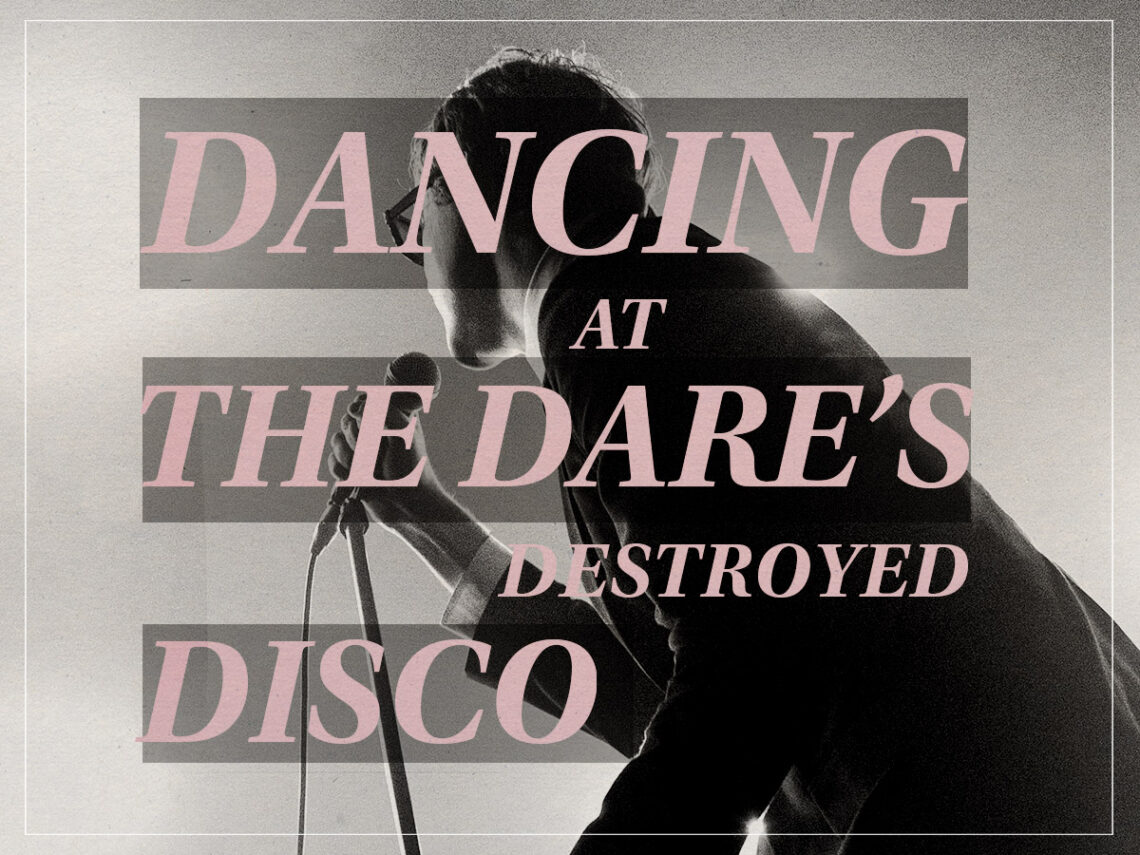
Dancing at The Dare’s destroyed disco: Two nights inside the growing cult of the new sensation

Anything Brat touched turned green to gold. With the release of Charli XCX’s album, which shot the artist from niche fame to global celebrity, the same Midas effect caught her collaborators, too. AG Cook went from PC music’s leading light to one of the most sought-after producers on the planet, and all it took was the one line “send it to The Dare, yeah, I think he’s with it” to shoot Harrison Smith from a cult figure to an all-out phenomenon.
But The Dare isn’t a new name. ‘Girls’, the track currently making him a rising star, was actually released way back in 2022 when his debut EP split opinions between electric and embarrassing. Even way before that, Smith has been an underground sensation since 2014, when people first knew him as Turtlenecked, and his releases under that moniker made him the buzz critic’s latest darling. Or for club kids in the know, he’s known for his Freakquencies nights, for which tickets have been getting increasingly sought after as the years roll on.
The last time he played in the UK, his cult was already there, whispering about how much they loved his Turtlenecked old stuff. But now, as he touched down in London for his first shows since the Brat boom, the aftershocks are fascinating to watch. As per my job description, I’ve been locked in for a while. But when a fledgling one to watch who you’ve had your eye on for a while explodes in a major way, there is a curious peculiarity to how it all unfurls.
Walking into Camden’s Electric Ballroom and into the sea of Charli XCX and Troye Sivan look-alikes was like exposure therapy for that readaption from the ‘on the radar’ to the mainstream. With the help of Brat and a few viral TikTok tracks, The Dare is now huge, and his audience has morphed a long way from the original indie sleaze crowd he first drew of girls who grew up during the Wild West of the internet’s 2010s Tumblr phase.
Now, the average age of the room has dropped, and the phones are being raised higher with flashlights on. The classic TikTok crowd has descended, and for a moment, I wanted to groan.

It’s easy to be pessimistic about this stuff and about this gaggle especially, but looking beyond the easy out of the social media app being the cause of everything, there’s something bigger at play in the cult of The Dare. When he killed off Turtlenecked and put on the suit and shades for the first time, he said that his music was “a rejection of the last five years of music”. He thought everyone was taking everything too seriously, looking around at the constant stream of sob stories told online to try and boost streams or musicians acting as if their art was saving the world.
Some people try to brush The Dare off as derivative or meaningless, but Smith says that that’s the whole point. This is not thinking music or groundbreaking; this is just music to have fun with, which is perhaps exactly what the world needs right now. And from the fact that his entire UK tour not only sold out in minutes but led to venue upgrades too, it’s clear that the market interest is there for his own brand of a ‘Good Time’ pop.
But what does seem somewhat lost in the growth of it all is Smith’s position. Online, he’s a parody of himself. He’s a post-ironic figure sharing videos of himself trying to smoke a cig as fast as he can or leaning so far into the joke of the character he’s created that it’s impossible to know where it ends. Even out on stage in front of his new crowd of 1500, he quips, “It’s good to be home”, acknowledging the running joke about how that LA native and NYC dweller is the most British-looking man to ever exist. It’s clear that The Dare is a kind of shroud that Smith exists in, but he’s played it so well that the crowd don’t know how to react.
With the entire set being absolutely smothered with strobe lights and red backlighting, I said a prayer for our photographer while wondering what the point was. Musically, the room is electric. ‘Open Up’ kicks down the doors to his set, and each and every track is a short, sharp burst of pure energy that your body can’t help but move to. After only one or two listens, you know the words. The whole room is involved in the call and response. It all feels like a collective.
But this comes with a negative flip side as it feels like the entire crowd is desperately pushing to get to the front and get close to the man. Obviously, this is nothing new. However, as he stays somewhat hidden behind his lighting, you get the impression that he’d rather be a kind of MC or a soundtrack to a heaving party than the face thousands are staring up at.

After a swift sub-hour set and a closing rendition of ‘Girls’ that was always going to go off, we left and considered our positions.
Two days later, we’re back for more, back in the group chat wondering if wearing a tie is too pastiche. This time around it’s Freakquencies, the club night that made The Dare but also the club night that The Dare made. By now, the two are inseparable, so it is impossible for Smith to keep his rising star from affecting this crowd, too.
Once again, we enter a new age range, undeniably younger and undeniably there for him. Up on the Moth Club stage with the entire room turned to face him, I think out loud to my friend, “I wonder how long it’ll take for people to treat this like a club and not a gig”. It goes through a few phases. First, it feels like we’re all back at The Dare’s show, simply watching and swaying. Then it transforms into a Boiler Room as it seems like almost half the crowd is clamouring up on stage with him, putting their phones in his face and offering him cigs that he lights up there and then. But it’s the third stage, when things settle down, that finally gets the room moving.
The one consistency, though, is the quality. Smith is an incredible DJ. From club classics to Brat tracks to British favourites, I catch him smirking as his drops Dizzee Rascal to a room of British kids suddenly transported back to their primary school discos, or singing along and dancing himself as he plays the entirety of The Beatles’ ‘Twist And Shout’. It’s the sort of DJ set that would have you dancing all night and staying till lights on, even if it wasn’t The Dare behind the decks. But it is, and that’s now an impossible fact to ignore in this odd position he finds himself in—it’s hard to know what appreciation for his obvious talent is and what the buzz of a shiny new celebrity is.
The result is more of a question than an answer as after two nights witnessing the swelling cult of The Dare, I’m wondering: what next? I’m wondering what it is that Harrison Smith actually wants to do, where he hoped this moniker would take him or even if he’s starting to feel overwhelmed by his new role as a leader of a suddenly huge flock. I’m wondering what album two will look like or how the crowd will adapt when the hedonistic ways of the Brat era undeniably and inevitably morph into something new. Smith certainly has the talent to develop with it, but will the suit, in the end, become restrictive as the shine of his new stardom is as smothering as his strobes and fame potentially threatens to destroy his disco.


