

The fateful night that Robert Smith wrote an entire The Cure album
Read More


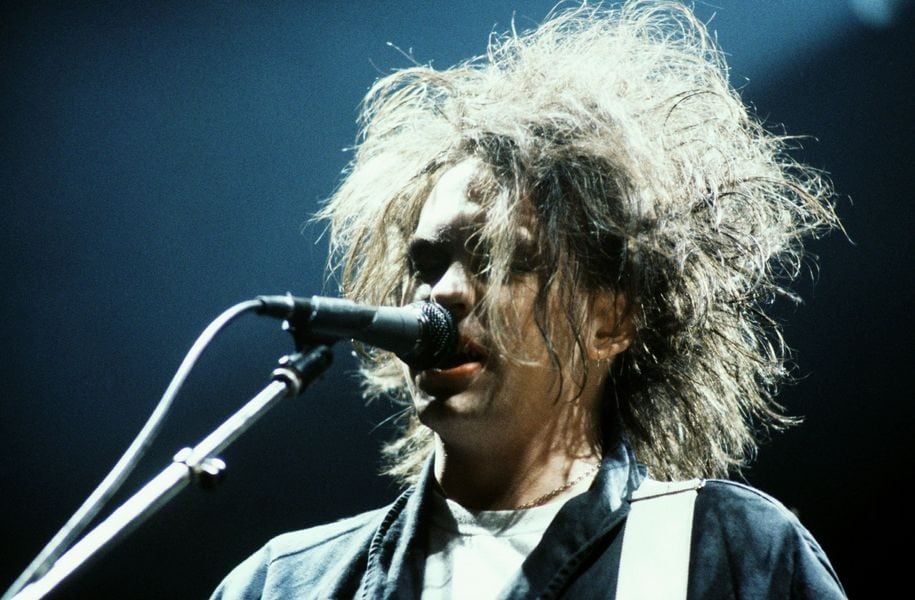
A fumbling goth hit machine seems like a dichotomy as profound as an igloo in the desert. And yet, like the world’s strongest baby, Robert Smith and his cohorts in The Cure defied all expectation and went from shuffling about shoegazing, crept out from a darkened corner of dark wave and captivated a fair chunk of the mainstream. In this unnatural spotlight, they managed to influence the influx of alternative bands that lay ahead and like Van Helsing on holiday, they managed to grab a legion of followers in this foreign commercial land.
When you strip away the specifics, the arc of this tale is akin to another music hero who faltered in the world of mime trying to make it big before weaving a string of avant-garde, mainstream-defying influences, that captured a massive alternative audience. When David Bowie appeared on Top of the Pops a generation of youths wondered: Who was this creation and what kind of monster bore it? Smith was one of the fellows scratching his chin with wonderment.
As The Cure frontman told Placebo’s Brian Molko when their mutual admiration resulted in an interview, “I was immediately fascinated by the character, like a lot of people of my generation. I discovered him with “Starman”, at the end of 72 – early 73, I was about 13-14 years.” That was the question that accompanied the first part of his appeal.
And then it happened—with one lanky finger, he unzipped the TV screen and welcomed a million bewildered eyes into his new bohemian oeuvre. From that moment on, the world wouldn’t just change for a couple of thousand enamoured youngsters, and the reverberating ripples are still shaping things to this day.
Chatter was abound in the playgrounds. It was a proto-viral moment, and the watercooler discussion was all about this new freak. “Each of my friends who were interested in music, were talking, ‘Have you seen the weird guy yesterday night on tv?’ He personified another world. When you are 14 you feel a frustration. Bowie showed us that a fanciful world existed.”
With that, Bowie’s revolution was underway, and Smith’s is a familiar story that ‘The Starman’ would’ve feasted on. As Bowie said himself, “I suppose for me as an artist it wasn’t always just about expressing my work; I really wanted, more than anything else, to contribute in some way to the culture I was living in.”
In this regard, Bowie made the world more bohemian and soon kids were able to come up with their own corroborations on his singular design. “And then, I bought Heroes and I criticised it because I began to have my own opinion. It was weird, like questioning your own parents. But I turned away from David Bowie. The punk movement began in 1975-76 and that’s what attracted me.” In a strange way, that proved that Bowie’s job was done. It was a feat of his ability that his evolution moved things along.
As the equally ever-evolving Nick Cave would put it: “With each new record, almost inevitably some fans will move on. I can only say that I am truly grateful to have been a part of their journey, and that they have been part of ours. In the end, to challenge our fans is to love them, even if it means losing them.” You could say the same for Bowie and Smith too—whether they’ve dropped you off or are carrying you to terminus, they’ll have made their mark along the way and that is pretty much the pinnacle of art. As Bob Dylan, the man who pretty much started the engine said, “The highest purpose of art is to inspire. What else can you do? What else can you do for anyone but inspire them?”
Thus, Bowie might have been a formative influence for Smith but he also picked him back up later down the line. “But when I heard Earthling in 1997, I went back to Bowie,” Smith explains. “I was really moved to play with him for his 50th birthday in New York. He left a message on my answering machine. As my phone number is not listed, nobody knows it, I thought it was a joke from a friend. I left a message on his answering machine: “I’ll call you back, I’m not sure”. but deeply in myself, I was euphoric.”
