

50 years on: Is David Bowie’s masterpiece ‘The Rise and Fall of Ziggy Stardust and the Spiders from Mars’ the greatest album of all time?
Read More


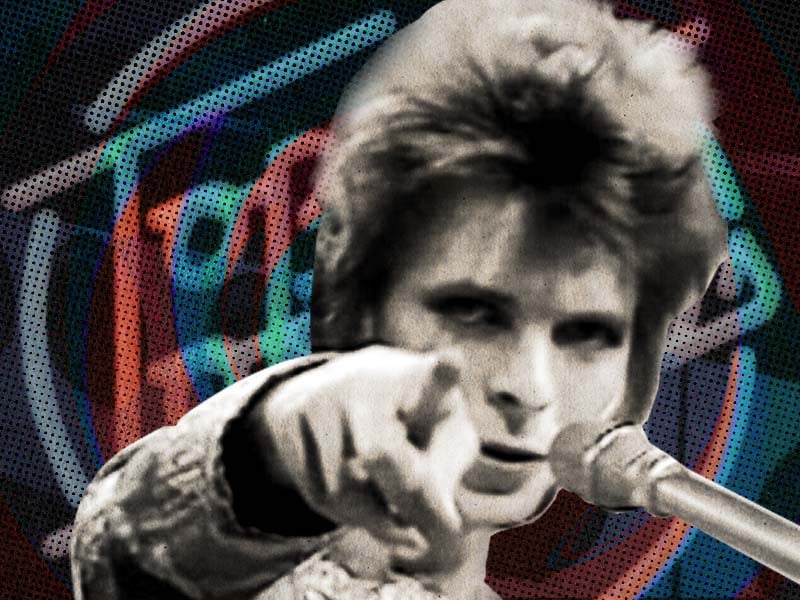
There is a moment in everyone’s childhood when the floor is just about pulled out from under them, and the dangerous precipice of the future presents itself. Often it is the cultural slap across the chops of music which coaxes this presentiment to the fore. David Bowie appearing on Top of the Pops already represented a weird allure — inducing something between a mildly perturbing mass meshuga and the dangerous come-hither attraction of some street side fisty-cuffs.
Who was this creation and what kind of monster bore it? That was the question that accompanied the first part of his appeal. And then it happened—with one lanky finger, he unzipped the TV screen and welcomed a million bewildered eyes into his new bohemian oeuvre. From that moment on, the world wouldn’t just change for a couple of thousand enamoured youngsters, but for all of us, and the reverberating ripples are still shaping things to this day.
The beauty of the ‘Starman’ melody is almost lost amid the commotion that it caused that night. It was quite simply pop perfection, but pop perfection had already been done by 1972. There was something different about this pristine example. There was something more to it. And whether you were swept up by his pointed bony wand – that spoke to a nation of youths looking for their hero after the counterculture Gods of old fell away – or your screen was angled in the wrong direction, it was undoubted that something had just happened.
That something was somehow mad and mainstream, it was a hit, and it was avant-garde, it was unbelievably listenable and yet undeniably strange, and it was both instant but buoyed by an unspoken depth. Elements of that had been done, but never before had it all happened at once on the ye olde Top of the Pops. The key was the music, because everything else couldn’t have happened without it, but it was everything else that made it magical. And it was beamed directly into living rooms and delivered as a personal message by the most intrusive signal of a point.
For years Bowie had lingered on the outskirts of the mainstream, jabbing away to try and weave his weird form into it. Some people think it happened long before Ziggy Stardust hit the BBC stage, but it was 50 years ago when he truly took off as a cultural impact (and even that took quite a while to reach the stratosphere). The Rise and Fall of Ziggy Stardust and the Spiders from Mars, arguably the greatest album of all time, only reached number five on the UK charts and a mind-bending 75 over in the US. But that point is remembered crisply, and it heralded something new.
Why? What exactly was so profound about the finger? The famed Lord Kitchener Wants You poster that employs a similar technique came from way back in 1914, so the point itself wasn’t all that ground-breaking. But when coupled with a leotard and the androgynous look it was provocative enough to promote a response. It was an incisive gesture that involved the audience. In encouraging an individual response, he seemed to be encouraging individualism itself.
When Jimi Hendrix burnt his guitar and invoked awe it was certainly startling, but it didn’t call upon you. It was brilliant but it didn’t open any doors. This almost bipartisan point and the daring outfits that went along with it, all dressed in the weird medium of standard pop structures, earmarked Bowie as what you could class as an early influencer. It wasn’t so much ‘look how brilliant I am’ or even ‘listen to this’, it was more akin to ‘come and join’ me.
Bowie later went on to say: “I suppose for me as an artist it wasn’t always just about expressing my work; I really wanted, more than anything else, to contribute in some way to the culture I was living in.” Bowie was more concerned with “becoming” rather than “being”, and he wanted people to join him to create something new, not just to be part of it.
As he later declared in 2003: “However arrogant and ambitious I think we were in my generation, I think the idea was that if you do something really good, you’ll become famous. The emphasis on fame itself is something new.” Adding: “Now, it’s to be famous you do what it takes, which is not the same thing at all. And it will leave many new artists with this empty feeling.”
Fortunately, his ‘really good’ creation was witnessed, and it was a simple publicly broadcast friend request which lit the touch paper there. Ask any Bowie fan of a certain age and this moment will be pop-riveted onto the scarred bonnet of their memory like it happened yesterday. Now, you could change culture in one single moment, if you had something singular on offer. Punk would soon perturb in a similar way, and so on, and so on.
