


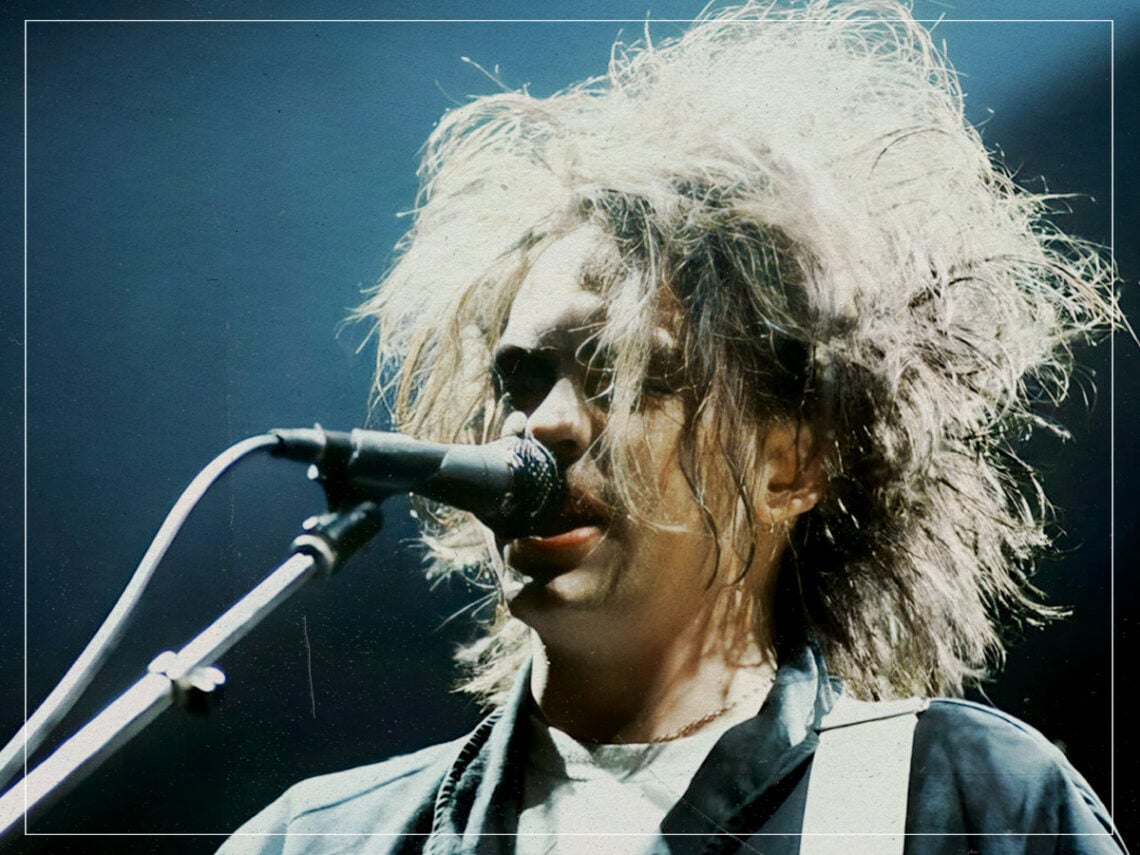
The 1983 hit Cure song Robert Smith called a joke: “Far from [my] favourite”

Most B-sides often find themselves relegated to the shadows of an album, reserved for experimental tracks or those unlikely to hit the charts. However, sometimes these hidden gems become unexpected fan favourites.
Such was the case with The Cure‘s ‘The Lovecats’, which, despite Robert Smith’s reservations, emerged as one of their most beloved deep cuts.
Throughout their early development, The Cure was one of the few bands where it felt like the audience was watching them develop in real time. Despite rising to prominence in the post-punk world, it wasn’t until ‘A Forest’ that everything began to click, bringing together different foreboding sounds that made them finally sound in tune with the gothic rock that they would create later.
That evolution helped establish The Cure as one of the most distinctive bands of their era. Rather than remaining confined to a single style, they continuously expanded their sound while retaining their unmistakable identity.
Outside of the biggest names in goth rock like Bauhaus, though, The Cure was one of the few that actually sounded like they were having a good time every now and again.

Even though a song like ‘Lullaby’ might not be for the faint of heart, Smith was also responsible for making some of the most heart-wrenching tracks of his generation, either talking about lost love on ‘Just Like Heaven’ or showing his devotion to his other half on ‘Lovesong’.
Whereas every studio album saw the band progressing, Japanese Whispers was a compilation of songs that were included on the flip side of many of their pieces. Any typical artist may have looked at this as a pedestrian entry in their catalogue or a means to fulfil their contract, but ‘The Lovecats’ was something much different than what we were used to.
At a time when many listeners associated The Cure with darker and more introspective material, the song’s playful character came as a welcome surprise. It revealed another side of the band’s personality that was rarely given centre stage.
Compared to the moody synth textures across the band’s other major singles, this is one of the sunniest songs the group could have ever made, featuring Smith’s voice sounding far more jovial than it has any right to sound. Although the track was a more lighthearted romp from the group, Smith admitted that it is not among his favourite Cure tracks.
When talking about the work later, Smith thought that it was easy to hear the unprofessional sound of the session on the final track, saying, “’The Lovecats’ is far from being my favourite song: composed drunk, video filmed drunk, promotion made drunk. It was a joke.” While that drunken sound may be palpable on the tape, that didn’t stop millions of fans from resonating with the track.
Even when the band were being inducted into the Rock and Roll Hall of Fame years later, Trent Reznor of Nine Inch Nails would mention ‘The Lovecats’ in his speech among the greatest tracks that the outfit had ever released, which was met with a massive roar from the audience. While Smith may not have seen the funny side of the song, that subtle trace of humour ended up becoming its greatest strength.
For all of the great music that The Cure are capable of turning into melodramatic exercises, ‘The Love Cats’ is the kind of piece that makes people appreciate the other side of the band as well. Smith may prefer to write songs with a pitch-black tone a lot of the time, so when the colours get a bit brighter, it’s nearly blinding.
Although Robert Smith may continue to view ‘The Lovecats’ as a drunken diversion rather than a masterpiece, its legacy tells a different story. The song remains a perfect example of how a carefree experiment can sometimes leave just as lasting an impression as an artist’s most carefully crafted work.
