


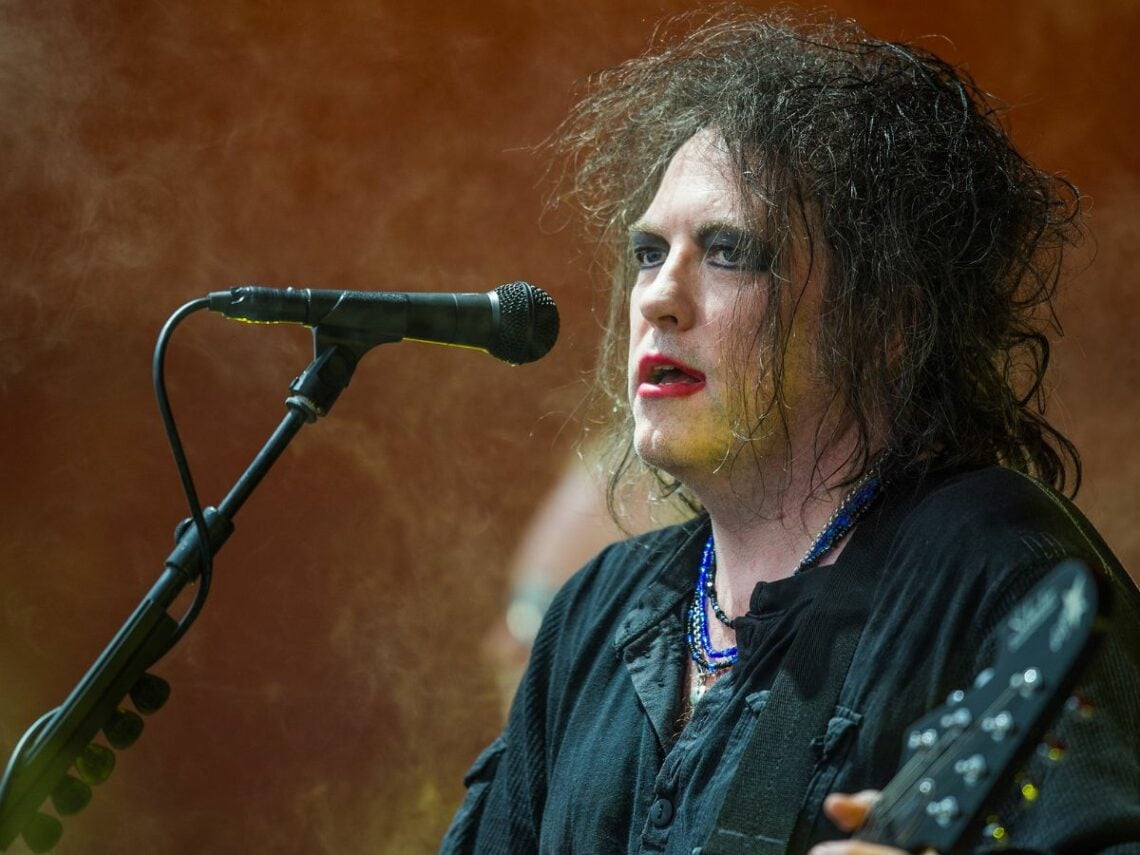
Robert Smith was ready to quit The Cure until this 2000 classic: “It changed my mind”

All musicians encounter significant transitions in their art. For some, different experiences coalesce with different sonic ventures, while for others, their sound largely remains the same but is inspired by varying events.
For Robert Smith, ensuring that The Cure always remained fresh and exciting meant constantly coasting the fine line between tragedy and creative expression, where beauty manifests in ambiguity.
This vagueness has always thrived in the complexities of the band’s arrangements, bookended by dark and visceral musings and metaphors that reflect Smith’s own dealings with demons. Even ‘Lullaby’ literally dealt with the nightmares he faced in his childhood. As he would recall of his father’s chilling closing line to bedtime stories: “There was always a horrible ending. They would be something like ‘sleep now, pretty baby or you won’t wake up at all.’”
From Three Imaginary Boys through Songs of a Lost World, Smith has presented his nightmarish qualms with glistening flames, knowing that the embers themselves will always embellish ambiguity in the lasting smoke clouds.
But the one thing that has always ensured the music of The Cure resonates as well as it does is Smith’s continual strive for impactful art, compounded by his own artistic and musical influences, with words that poetically reflect the themes and messages he wants to explore. One such lightning bolt came when he discovered a metaphor about blood flowers from both Norwegian painter Edvard Munch and a World War I poetry book he was reading at the time.
In Munch’s case, he used this as a metaphor to describe the moment he felt creative euphoria, saying he knew he created good art when he felt “a bloodflower popped out from his heart.” In many ways, Munch’s remark was adjacent to the state of ‘creative flow’ that Smith had been missing as The Cure approached the 2000s.
As the founder of ‘flow’ studies, Mihaly Csikszentmihalyi, defined it, “The best moments in our lives, are not the passive, receptive, relaxing times—although such experiences can also be enjoyable, if we have worked hard to attain them. The best moments usually occur when a person’s body or mind is stretched to its limits in a voluntary effort to accomplish something difficult and worthwhile.” Smith was missing that but he saw it reflected in Munch’s metaphor.
Similarly, the poetry book Smith was reading had a poem that described “how a wound in one of the soldiers, hit by a bullet, opened a blood flower in his body,” he said, saying that he “liked this analogy” because it reflected both “pain and art.”
This delicate perspective, coasting between pain, art, beauty, and intensity, not only influenced the title of one of their albums but permeated the walls of every track, exploding with gracious, emboldened hues as Smith entertained his newfound journey into a deeper emotional abyss. Famously attached to connotations of strength, passion, and resilience, the blood flower became Smith’s guiding principle, coaxing him out of disdain and despair as he debated The Cure’s future.
Before experiencing this new sense of energy and drive, he had been ready to call it quits on the band with bittersweetness, knowing that their legacy would live on years after he pulled the plug. However, uncovering new avenues for creative expression, he fought through the disillusionment and kept going.
As he reflected to the Chicago Tribute in 2000: “‘Bloodflowers’ was written during a period when I was really disenchanted with the group and had no intention of carrying on. But the process of making it changed my mind.” He decided to keep going, and tap into flow once more. He was an artist renewed.
Although an overlooked gem in their broader discography, Bloodflowers is perhaps their most important record ever. Not only did it come at a pivotal juncture for the band and Smith itself, but it also presented a different side to The Cure, one that showcased Smith’s affinity for more straightforward instrumentation that both guided and set the stage for his signature lyrical musings. From start to finish, it’s a melodic and lyrical goldmine, without which we certainly wouldn’t have Songs of a Lost World.
