


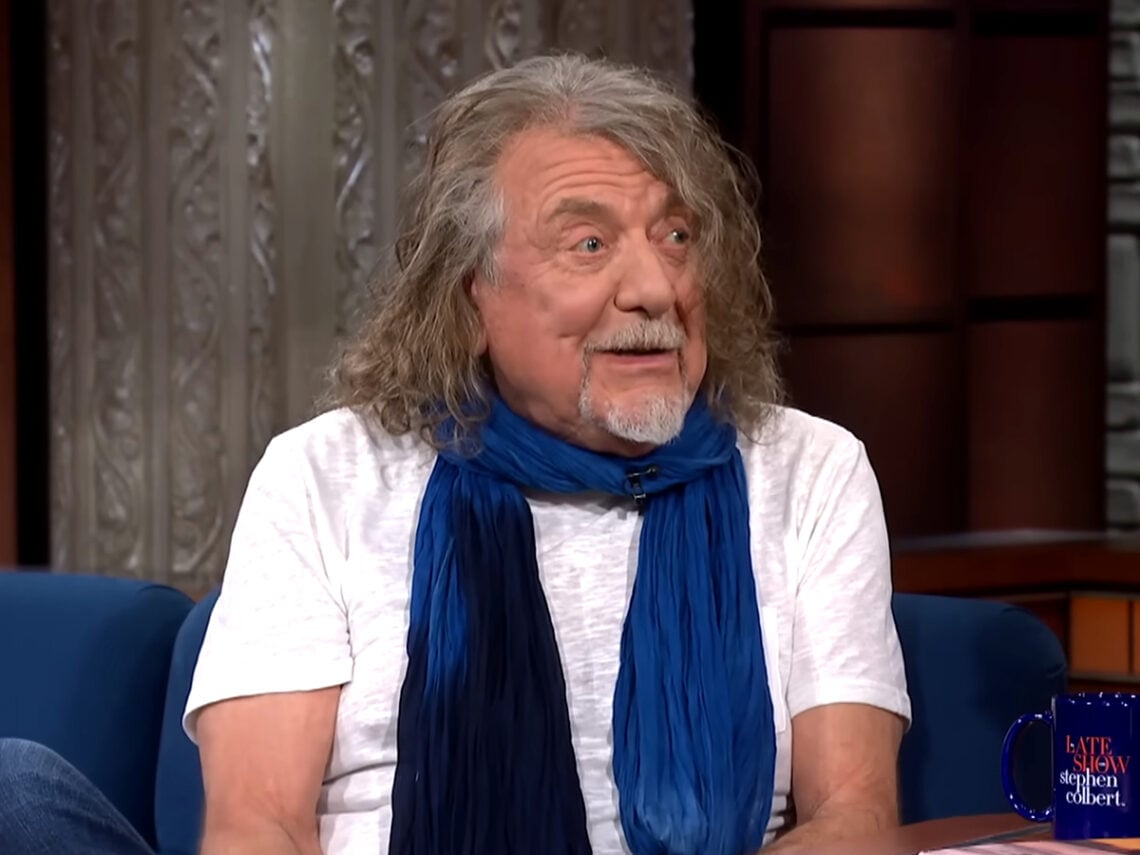
The country star Robert Plant said the world would never forget: “Enduring treasury”

When Led Zeppelin first formed, Robert Plant wasn’t going to be relegated to being a one-trick pony whenever he sang.
He loved the idea of working on whatever genre he could and see what happened, which could mean him taking on an epic like ‘Kashmir’ or ‘Stairway to Heaven’ or eventually shedding his rock and roll skin in his solo career to sound like a member of Talking Heads. But no matter how many times he tried to dress up his music, nothing could get in the way of the raw passion that he put into his music every single time he played.
And that all came from listening to the greatest names in blues before he even started Zeppelin. A lot of the songs the Band of Joy made in the mid-1960s may have been more indebted to the hippie scene, but to get into that ‘Percy’ persona, Plant was going to have to listen to a lot of the greatest blues belters of his time. His higher register wouldn’t have felt out of place next to Janis Joplin, but even with the greatest names in British blues to compete with, Plant had clearly done his homework by going back to people like Howlin’ Wolf and Willie Dixon before making his vocal ad-libs.
But the beauty of Zeppelin was being able to take the blues and twist it ever so slightly on every one of their albums. Led Zeppelin III may have the clearest pivot away from straight ahead hard rock, but even for being the black sheep of their self-titled records, it’s hard to really argue with the classics on there when looking at ‘Immigrant Song’ and ‘Since I’ve Been Loving You’. The acoustics were a change of pace, but that was also about them paying tribute to their heroes from the folk scene.
Jimmy Page was already an avid fan of folk music when he was hearing people like Pete Seeger before Zeppelin had formed, but there were new members of the folk scene that stopped every member in their tracks. Page was so impressed with Joni Mitchell that he wanted her to join the band, but when it came to writing perfect songs, there was no one in Plant’s mind who could come anywhere close to John Prine.
Because if you look at the kind of imprint that someone like Bob Dylan left on the world through the pure craftsmanship of his songs, Prine belongs in that same company. His debut album alone would have given him status as one of the greatest artists of his generation, but even if you were to dissect individual tunes, ‘Hello In There’ is among the most complete stories that the country world has ever heard.
And even for someone who knelt at the altar of lyricists like Dylan and Leonard Cohen, Plant knew that what Prine did was going to live on for generations to come, telling him when inducting him into the Songwriters Hall of Fame, “Your work is extraordinary. It’s a vast enduring treasury, a beacon of light in these ever-weirder times. Sometimes it seems like you’re writing for all of us, which in fact, you probably are.” But the true appreciation of Prine’s tends to come from songwriters rather than the mainstream.
There are plenty of fans that have called Prine an icon for generations, but for anyone interested primarily in rock, he has been the model for some of the greatest songwriters of all time. Roger Waters had nothing but good things to say about the way that Prine wrote, and without the attention to detail in a lot of Prine’s songs, chances are that many of Zeppelin’s greatest material would have looked very different.
But never for a moment was Plant ever trying to copy what Prine was doing, either. Because when you look at the music that Prine left us, his catalogue is a classic example of what a music legend could sound like if they remained true to themselves in every generation they found themselves in.
