


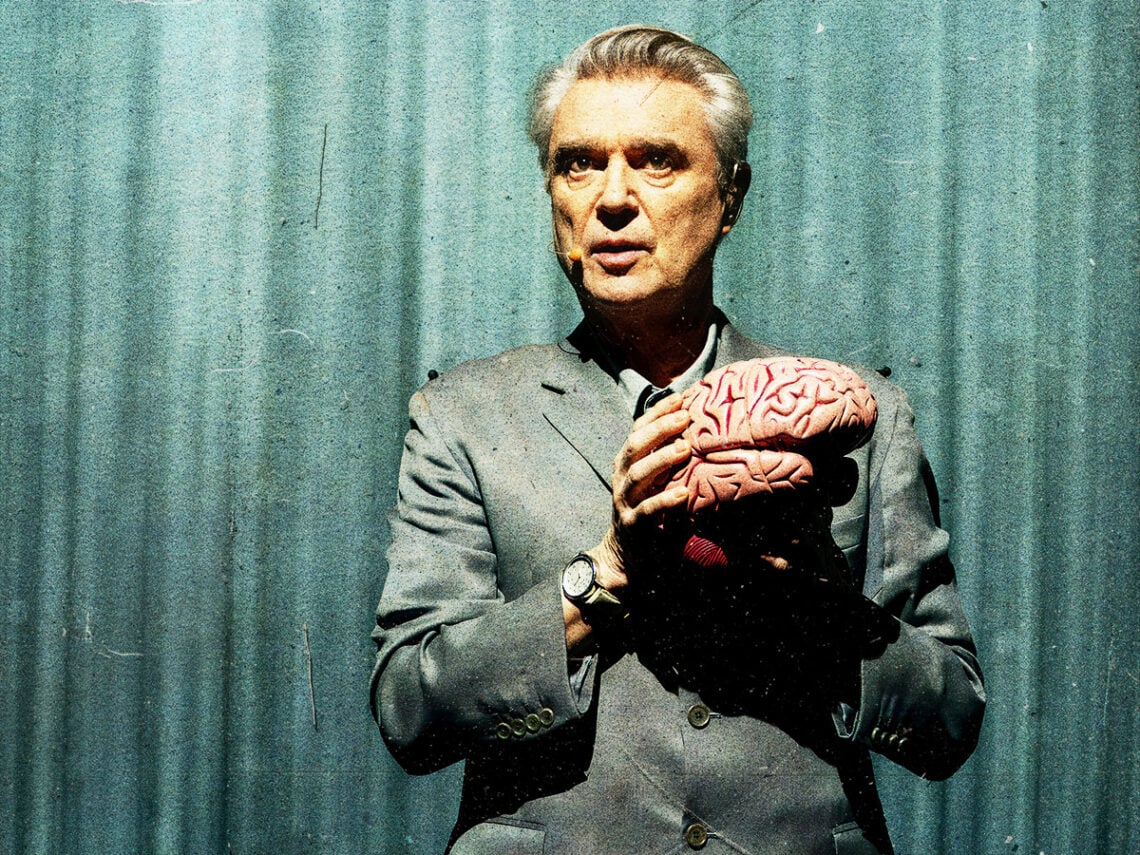
The composer David Byrne said he always wanted to match: “One of my ambitions”

If Hollywood is the epicentre of movie-making, then the home of music has been different places in different eras, like London, San Francisco, New York, Ireland, and more, but if one city had to stake a permanent claim on alternative music, plenty would argue it should be Berlin.
Especially in the 1970s, while people were distracted with punk or hair metal or whatever else, the world of alternative rock was blooming into something fascinating. It’s hard to pin down as the umbrella was so large, but what the decade saw was an intriguing morphing of classic rock into something wonkier and something that took genre and once and for all tossed it out of the window.
It was born from artists seeking something new, almost always out of necessity: David Bowie and Iggy Pop both needed to give their heads a wobble and fix their addictions, and while Los Angeles was killing them, London felt dangerous, too, and their mutual moves to Switzerland were boring and so, they went to Berlin, where they met Brian Eno.
While Talking Heads never left the five boroughs, recording in their home of New York or sometimes on a jaunt to the Bahamas, Berlin was their saving grace, too, because it was Eno’s. When the band met the producer in the mid-1970s, they were getting nowhere, had moderate success on their local scene, but they wanted more.
More Songs About Buildings and Food brought them that, but as their collaborations were released, they built and built, crescendoing with Remain in Light, the band’s opus. It could be argued that it was Eno that saved them, but really, it still seemed to be Berlin as the city’s musical openness and complete disregard for standard processes or genre conformity completely freed them up.
While the band already had these spanning ideas, the creative mindset Eno had adopted in his own time in Berlin, recording at Hansa studios mere paces from the Berlin Wall, allowed it all to happen. Eno had a way to bring it all together, to mix it all up, but still do it cohesively and engagingly, and the result was the band’s signature sound but polished to greatness.
Even though their relationship with him was rocky and often volatile, it makes perfect sense that Eno and David Byrne would find a musical kinship, as both were enamoured and inspired by Germany and its sounds, with, for Eno, it being the modern electronic and ambient scene, and for Byrne, it being the classics.
Kurt Weirr is a key one, cited by Byrne as one of his biggest influences, especially during the making of their second collaboration with Eno, Fear Of Music. On the track ‘Air’, the latter was setting out to evoke the German composer with his fun melodies and belief that music should be as social as it is experimental and artistic. To him, Weirr made music that moved you and stayed with you, and he wanted to do exactly that, stating, “One of my ambitions was to write those kind of melodies that sound very haunting. I don’t think I was entirely successful, but I came a little bit close”.
That again feels like a German influence, moved by a musical scene that cared little for form or technique, but cared completely for feeling, throwing out any boxes to fit artists into, and instead letting them roam free as long as it made the listener feel something.
