


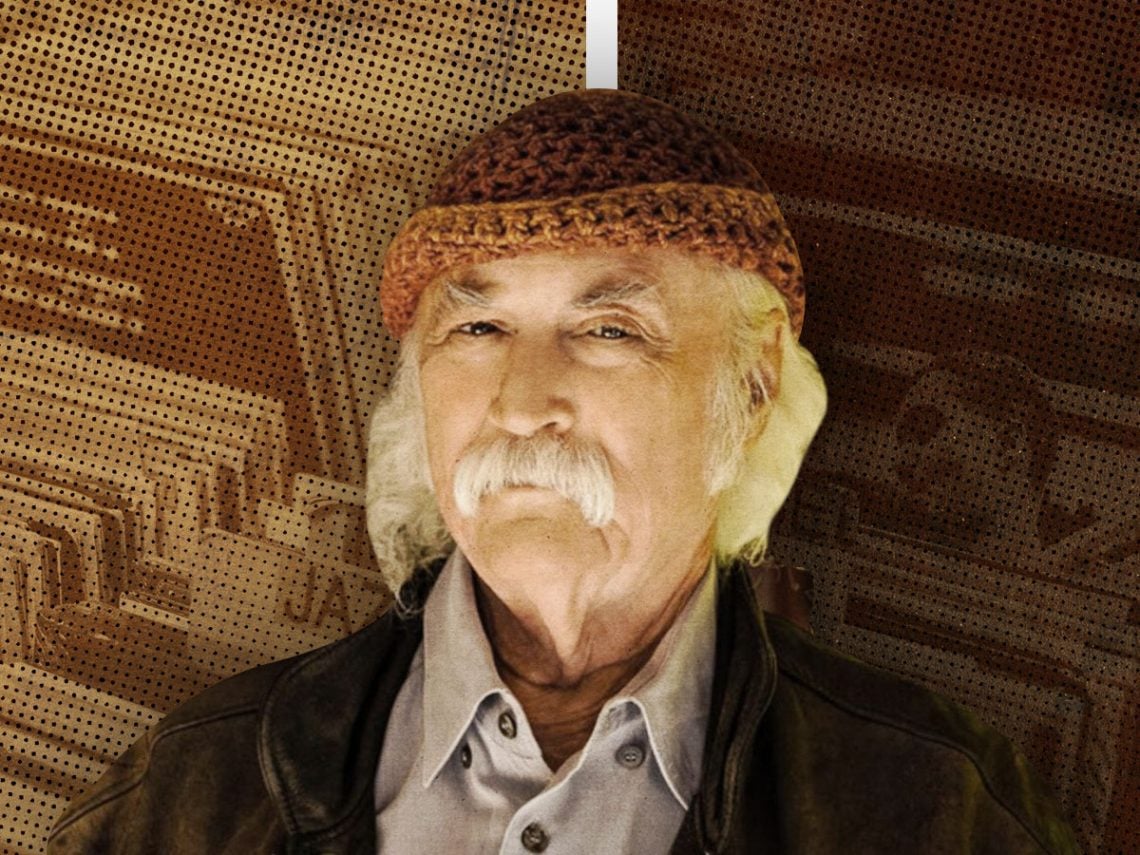
The collaboration David Crosby considered “perfect”

For a man who wasn’t easy to work with, David Crosby sure as hell worked with a lot of people. Oddly enough, he might’ve called Neil Young the “most selfish” person he had ever encountered and even disagreed with his hero, Miles Davis, but musical harmony was somehow always his strong point. From the Byrds to Crosby, Stills, Nash, and Young, his career was littered with stunning collaborations and sore backstories about how they always almost fell apart.
Perhaps what drew him to work with so many peers was a stunning understanding of music and what made it work. He was one of the first to ever encounter Joni Mitchell, and he knew that when he was producing her debut album, all he had to do was stay out of her way. He was also one of the first to hear an early dogeared demo for Bob Dylan’s classic ‘Mr Tambourine Man’, and just as everyone else in the room was dismissing it as shoddy, he urged them to listen to the words.
He was eclectic, too, his good taste extending to jazz, avant-garde, and more. Among his favourite records are Aja, Blue, and Kind of Blue, evidencing his love for complex musicology that comes across as effortlessly smooth. In short, the reckless rogue of the 1960s had an ear for music comparable only to Brian Wilson.
So, when he heard ‘For Free’ by the young Texan folk star Sarah Jarosz while he was working on his eighth and final studio album back in 2020, he knew he had to record it. “I listened to Sarah Jarosz’s record, Build Me Up From Bones, a fantastic record. Then she put out World On The Ground, and it was even better. I couldn’t stand it,” he told Guitar World.
Build Me Up From Bones was Jarosz’s third album, released back in 2013 when she was only 22 years old. The luscious tones, blending simple earthiness and complex depth, hit Crosby in his sweet spot. “I got hold of her, and I said, ‘Listen, this is a stunning record. I really love your stuff, and I’d like to sing something with you‘,” he enquired. She was luckily a fan of his work and quickly agreed.
A liaison was arranged. Crosby’s years of experience collaborating hinted to him that he might be onto something good, but he remained, as ever, measured in his approach. “We are not trying to accomplish anything. We just want to have some fun. How about ‘For Free?’ She said, ‘Oh, I love that song.’ Then I went to James, and James did a piano track for it that is so evocative and so beautiful that it made me sing it better than I’ve ever sung it. I transcended myself,” he says.
The end result is perhaps the stand-out track on his farewell record. As he concluded: “We sent it off to her, and she sent it back with that harmony on it, which is like a lesson on how to do harmony. Just fucking perfect. I called her up and said, ‘Listen. Can I put that on my record? It’s just so good.’ She said, ‘Of course you can. I think it’s fantastic.'” Fittingly, he closed his catalogue with a song about the spirit of liberation that showcased the power borne from two musicians perfectly intermingling.
