


The co-star Anthony Hopkins couldn’t stand working with: “What I’m speaking about is discipline”

Anthony Hopkins has been doing all of this for quite a while. The Welsh actor got his start in the theatre under the watchful eye of Sir Laurence Olivier way back in the 1960s and recently earned his third Oscar.
He is the kind of Shakespearean actor who makes Hollywood A-listers tremble – a performer who worked at his craft on the most pompous and traditional stage possible and came away with a bag of tools rather than a nebulous, charismatic vibe over which he had little control.
Since making his debut at the National Theatre, Hopkins has won an Olivier Award, two Emmys, three Baftas, and two Oscars, so when he calls out a fellow actor for being unprofessional, it’s safe to assume that he knows what he’s talking about. For the most part, the actor has kept himself to himself. He isn’t the kind of thespian whose life is paraded through the tabloids or who seeks cover stories wherever he can get them. He is refreshingly straightforward in interviews but not particularly loquacious, much like Brian Cox or Harrison Ford.
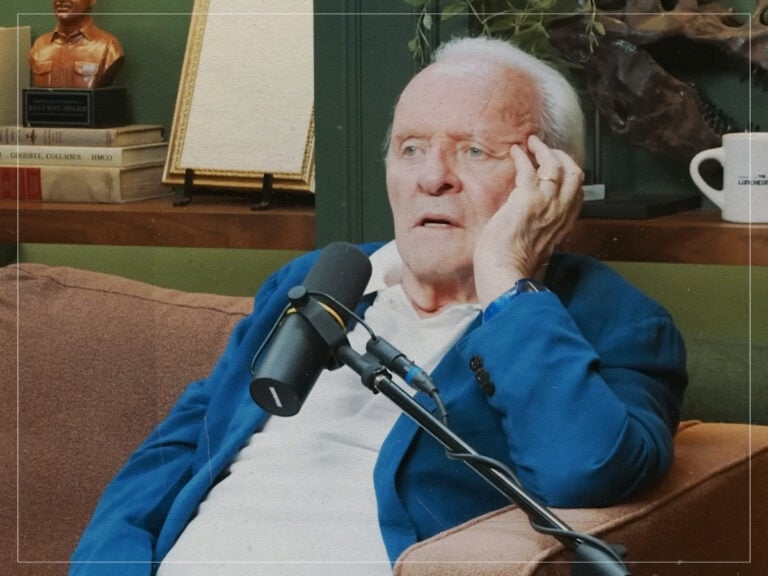
There was at least one female co-star who got him so riled up, however, that he was willing to go out on a limb and be catty (all in the name of actorly integrity, of course). In an interview in the 1970s, around the time he starred in The Lindbergh Kidnapping Case, he spoke about the craft of acting and one person who apparently didn’t bother with it.
“What I’m speaking about is discipline,” he said. “It always comes back to that. I don’t care how you get prepared, even if it’s standing on your head in the morning, as long as you’re prepared. The most pure thing that an actor can do is be prepared. Acting is basically a craft, and an actor has to know his craft.”
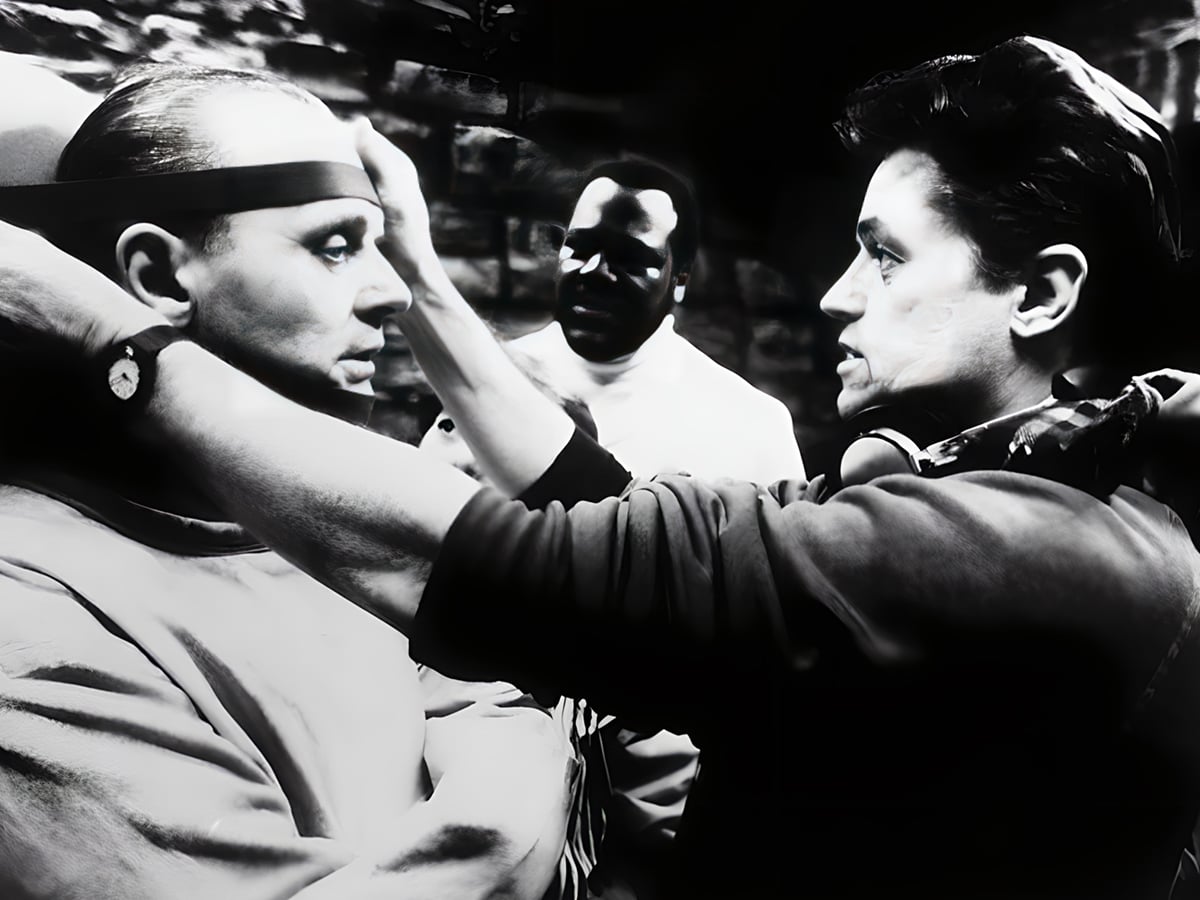
He continued, “Any actor who doesn’t and gets paid an enormous amount of money like Goldie Hawn did when I was working with her on The Girl from Petrovka, and who, like Miss Hawn, came to the set two hours late and doesn’t know her lines, shouldn’t have the job. If I had been the director, I would have just said, ‘Screw it, off the set,’ and gotten another actress.”
It seems that at such an early point in his career, Hopkins was willing to be a little more confrontational and talkative in interviews. The Girl from Petrovka was released in 1974 and followed an American journalist, played by Hal Holbrook, who falls in love with an undocumented Russian ballerina (Hawn) while on assignment in the Soviet Union.

At the time, Hawn was just coming off of a five-year, star-turning stint on the sketch comedy show Rowan & Martin’s Laugh-In and had won the Academy Award for ‘Best Supporting Actress’ for her role in the comedy Cactus Flower in 1970. Usually cast as blonde bimbos, she was far from it, gifted with perfect comic timing and the sort of charm that lights up a screen.
It clearly did nothing for Hopkins, though. “There’s no mystery to acting, and actors like [Marilyn] Monroe or Hawn have brought an appalling reputation to the whole profession,” he said. “I think it was Bogart who said, ‘The only thing you owe the public is a good performance.'” Whether Hopkins would have admitted it or not, Hawn has certainly done her fair share of that in her lifetime.
Part of Hopkins’ frustration likely stemmed from the fact that he approached acting with almost military precision at that stage of his career. Having been shaped by the rigid discipline of classical theatre, he viewed preparation as non-negotiable, regardless of whether someone was performing Shakespeare on stage or starring in a Hollywood romance. For Hopkins, professionalism was inseparable from talent, which is why lateness or a lack of preparation struck such a nerve with him.
At the same time, his comments also reflected a wider divide in Hollywood during the 1970s. Actors who emerged from theatre traditions often clashed with stars who came from comedy, television or a more instinctive school of performance.
Hopkins may have seen Hawn as emblematic of a looser approach to acting, but audiences clearly connected with her charisma in a way that many technically perfect performers never managed. Decades later, both stars would cement themselves as Hollywood royalty, even if they arrived there by entirely different roads.
