


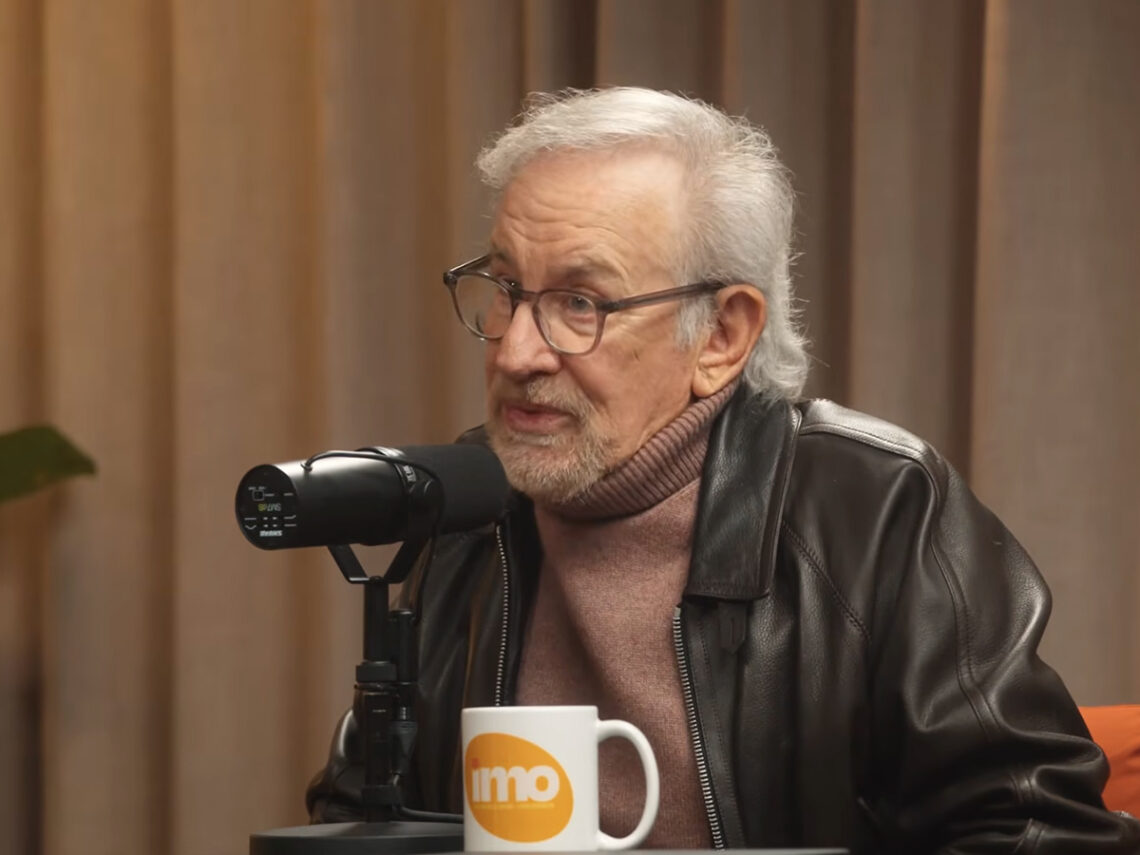
The classic 1963 TV show Steven Spielberg said “the world would be a poorer place without”

Steven Spielberg is the most successful and iconic living filmmaker, someone who has represented the purity of the theatrical experience, and is also a fan of a cult classic of science fiction.
He’s never made a film that’s been financed by a streaming service, unlike some of his contemporaries, such as Martin Scorsese, the Coen brothers, and David Fincher has spoken out in favour of recent films made by younger directors, and is currently proving with Disclosure Day that there is an appetite for original science fiction stories among moviegoers.
Despite Spielberg’s unwavering support for cinema, he has still revealed himself to be a massive fan of prestige television, especially in the modern era, when so much of it is high-quality. He is an admitted Saturday Night Live obsessive who attends as many recordings as he can, and cut his teeth in the industry making low-budget made-for-television films in the ‘70s. He was such a fan of The Twilight Zone, in fact, that he was one of the four directors who worked on The Twilight Zone: The Movie, an anthology film designed to homage the legacy of Rod Serling.
Spielberg’s interest in the British television classic Doctor Who inspired him to hire creator Steven Moffat to be a writer on his first animated film, The Adventures of Tintin. While Moffat had to drop out because of his obligations to the show, he said that Spielberg gave him words of encouragement about the legendary franchise.
According to him, Spielberg said, “The world would be a poorer place without Doctor Who”.
Doctor Who began as a BBC series that aired from 1963 to 1989, which is when a young Spielberg likely engaged with the franchise for the first time. Although the show went on a notorious hiatus, it was rebooted in 2005 with Christopher Eccleston as the new, ninth Doctor. Moffat had been part of the writing staff for the reboot since the beginning, but took over as showrunner from Russell T Davies in 2010, when Matt Smith was named as the 11th Doctor following the exit of David Tennant.
Moffat’s run on the series was generally well-received, and it was such a time-consuming endeavour that it monopolised his time. Although his contributions were credited when The Adventures of Tintin was released in 2011, he wasn’t able to commit to writing the two sequels, as Spielberg and producer Peter Jackson had intended it to be the first instalment in a trilogy.
Interestingly enough, both the Doctor Who and The Adventures of Tintin franchises are on hiatus at the moment, with the future of the former currently unknown, as the BBC’s partnership with Disney to broadcast the series has ended. It has also struggled to earn as much enthusiasm for its recent iteration, and the most recent Doctor, Ncuti Gatwa, exited the role after only two seasons.
On the other hand, the initial expectations for The Adventures of Tintin, which was a decent-sized hit, was that Jackson would take over as the director for the sequel, but his commitment to The Hobbit trilogy dominated his schedule, and Spielberg has continued working on other projects, and while both have independently expressed enthusiasm about a potential follow-up, no movement in that regard has yet been officially unveiled.
