


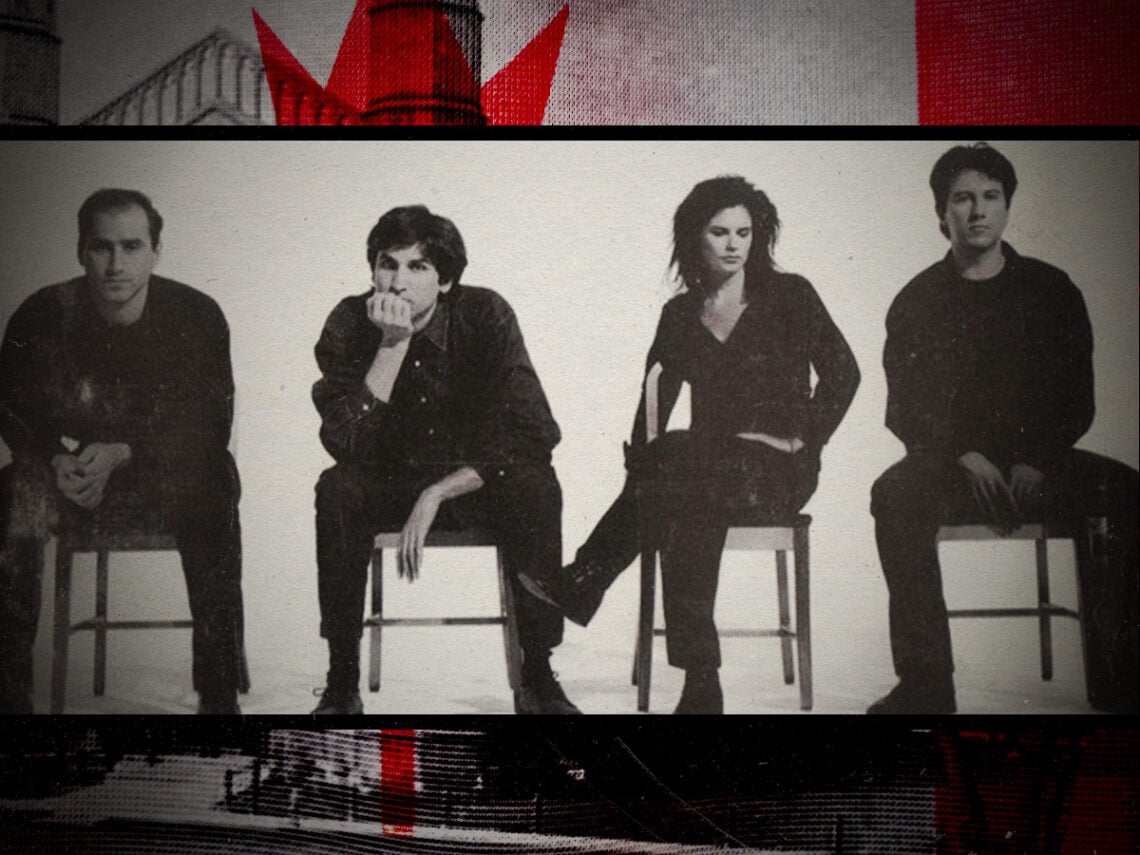
The classic Cowboy Junkies album recorded in a church in Toronto

The name ‘Cowboy Junkies’ was never meant to be an accurate description of the sort of music the Toronto-based alternative rock band were making when they got together in the late 1980s.
“The band had no connection with country music,” singer Margo Timmins said in 1989, “Our first album was all blues; so [the name] was tongue-in-cheek”.
Or maybe it was a self-fulfilling prophecy, because when the band was touring behind their 1986 debut album to mostly empty rock clubs around North America, they started listening to random country radio stations in their van, and decided they liked the vibe of artists like Dwight Yoakam and Steve Earle. The influence rubbed off as they started work on their follow-up record, with the only question of where and how they would go about recording it, as they still didn’t have a proper record deal.
That’s when producer Peter Moore stepped in with a bit of a novel idea. Moore had recently recorded the Toronto Symphony Orchestra in the city’s Church of the Holy Trinity and loved the acoustics in the building, so wondered whether the atmosphere might deliver similar results for a much smaller group of musicians. Not having a lot of other options, the Cowboy Junkies were game to give it a try and booked the church for a single-day recording session on November 27th, 1987.
The idea was to essentially play their new collection of songs, including a handful of carefully selected covers, live off the floor, with no overdubbing, editing, or mixing after the fact. The total bill, incredibly, was just $250, and the resulting album, The Trinity Session, emerged as one of the biggest independent hits of 1988, remaining the best-selling album of the Cowboy Junkies’ career.
“I think that record was a big reminder to a lot of people,” guitarist Michael Timmins told the South Bend Tribune in 2009, noting how the record contrasted with the slick production methods of its era, “It was like, ‘Oh yeah, you can actually hear people playing music as opposed to the latest gizmo in the studio’.”
The raw, minimalist recording style was certainly one big piece of the Trinity Session’s success, but there was also a timely alignment with a new movement in alternative country music, as the band’s covers of Hank Williams (‘I’m So Lonesome I Could Cry’) and Patsy Cline (‘Walkin’ After Midnight’) tapped into a haunting vein of country that had mostly exited the Nashville mainstream decades earlier. The most popular cover from the record, however, was one from a very different universe: a slow-motion, big sky take on the Velvet Underground’s ‘Sweet Jane’, powered by Margo Timmins’ whispery vocal and aided by the echoes of the Church of the Holy Trinity.
“When you’re singing in the house,” Timmins said of her vocal style, “You don’t belt out a song unless you’re really obnoxious. I used to sing under my breath, very quietly, and that is what [her brother and bandmate] Michael heard and liked.
“Our cover songs are very important to us,” Margo added, “We work very hard at getting them to sound right, finding that delicate balance between reproducing what the original artist did and putting our own twist on it.”
Cowboy Junkies rode the college radio success of The Trinity Session to a deal with RCA and a long career, but even diehard fans still appreciate the spontaneity and singularity of that 1987 recording as a key moment not just in the evolution of the band, but in the development of alt-country in the 1990s.
