


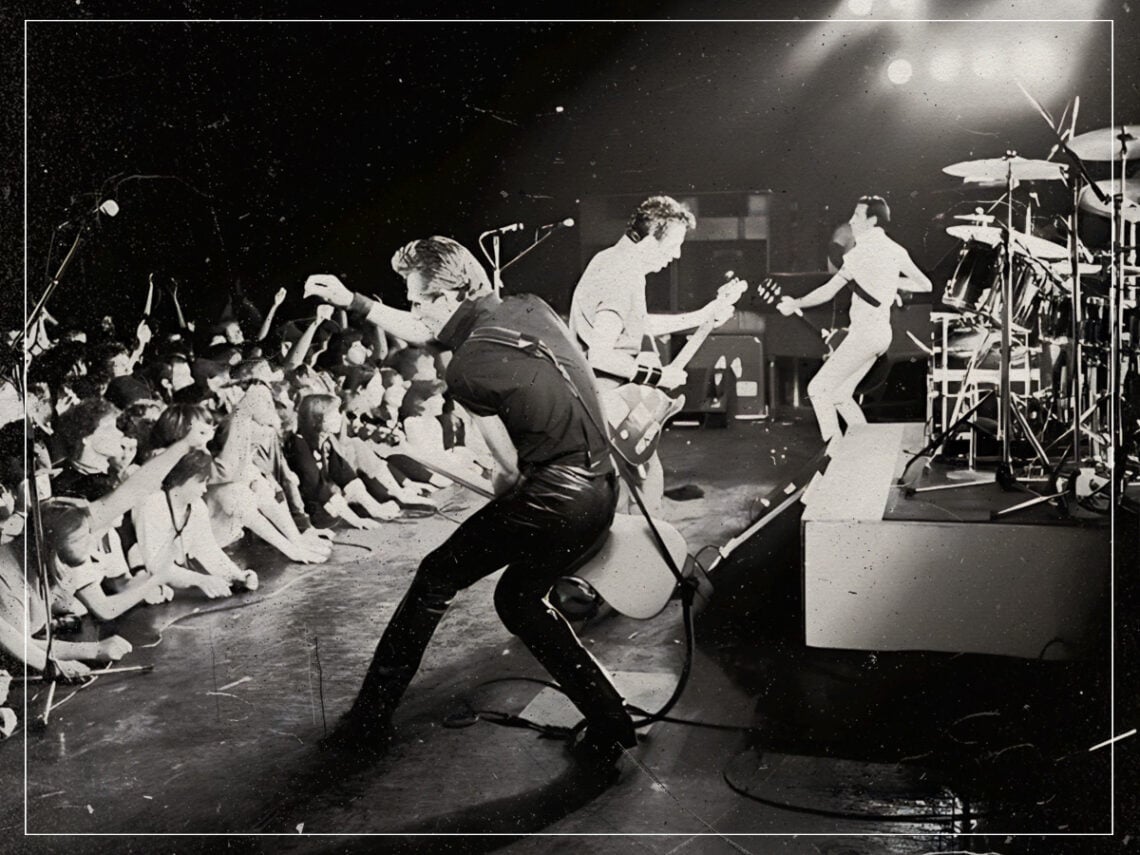
The Clash at Bonds Casino: The residency that should’ve changed the music industry

Corporate greed is what drives the mainstream music industry, rather than any pithy attitudes of creating and sharing art with widespread audiences. It was this capitalist injustice that sparked the punk movement back in the 1970s, founded on staunch DIY ideals and rebellion against the mainstream music industry’s many vices. The Clash were at the forefront of that rebellion, and they took every opportunity presented to call out the complacency and corporate greed at the heart of the monolith, particularly during their travels to New York City.
From the off in 1976, The Clash quickly established their unwavering anti-establishment ethos. Their debut album, for instance, tackles topics of police brutality, unemployment, class politics, prostitution, and the ever-expanding claw of influence of the United States, all through the lens of Joe Strummer’s defiant, rousing vocals. It is no surprise, therefore, that the band quickly earned the moniker ‘the only band that matters’ for their ability to cut through the performatism and phoniness of both mainstream music and many of their punk contemporaries.
It was this individuality, as well as the band’s unique ability to incorporate a wealth of different musical styles into their own distinctive sound, that helped to make The Clash one of the most enduring groups of the punk age. While other three-chord heroes and safety-pinned revolutionaries faded away after a couple of years or a hastily thrown-together album, Strummer’s band of angry young men lasted well into the 1980s, producing some of the most iconic and important albums of all time in the process.
Inevitably, their vast reputation and universal rebellion soon found The Clash an audience overseas, most notably in America. Despite Strummer’s 1977 declaration that he was “so bored with the USA”, the States became a regular stomping ground for the London outfit during their later years. It was in 1979 that they first set foot on US soil, embarking upon an anarchic tour which—bizarrely—saw Bo Diddley perform as their opening act. By the time the band returned again in 1981, they had certainly amassed a reputation.
With that incredible reputation came colossal audiences, putting cartoonish dollar signs in the eyes of venue bookers and record company executives across the States. This corporate greed came to a riotous head when the band reached New York. Initially, eight shows were scheduled for Bonds International Casino near Times Square, between May 28th and June 5th, 1981. However, the shows had been grossly oversold, culminating in thousands of people turning up for a performance venue that was only meant to hold 1750.
With so many people packed into Times Square hoping to get into the already overcrowded concert, the city of New York panicked. On what was supposed to be the band’s opening night at Bonds, the New York City Fire Department cancelled the show over safety concerns, leaving The Clash thousands of miles from home without a concert to perform. Immediately, Strummer and the band denounced the corporate greed which had led to the overselling of tickets, placing the blame on promoters and calling out the industry executives.
By all rights, the band could have packed up and gone home there and then. Instead, they reaffirmed their commitment to their fans, playing a total of 17 shows at Bonds Casino to accommodate the crowds that had been oversold in the first place. Ticket prices were kept low, as per usual when it came to The Clash, and the legendary run of dates became a pivotal period in the band’s history.
Not only did the residency in New York highlight the band’s endless devotion to keeping their music and concerts accessible for the fans, but their extended time in ‘The Big Apple’ introduced the group to the emerging graffiti culture and hip-hop scene, something that Mick Jones later expanded upon during his tenure with Big Audio Dynamite. Mostly, though, the residency stuck two fingers up to the greed of promoters attempting to make a quick buck off the band, while exploiting their fanbase in the process.
If we lived in a just world, the Bonds Casino affair should have altered the history of live music forever. The ‘riot’ which took place in Times Square on that first scheduled night reflected the dangers of overselling concerts, and how quickly an overcrowded arena can turn dangerous once the police enter the scene. Depressingly, though, certain events and concerts are still oversold to this day, often resulting in dangerous and even life-threatening situations, which could have easily been avoided without so much corporate greed in the mix.
