

The song Bruce Springsteen wrote about his mental health struggles
Read More


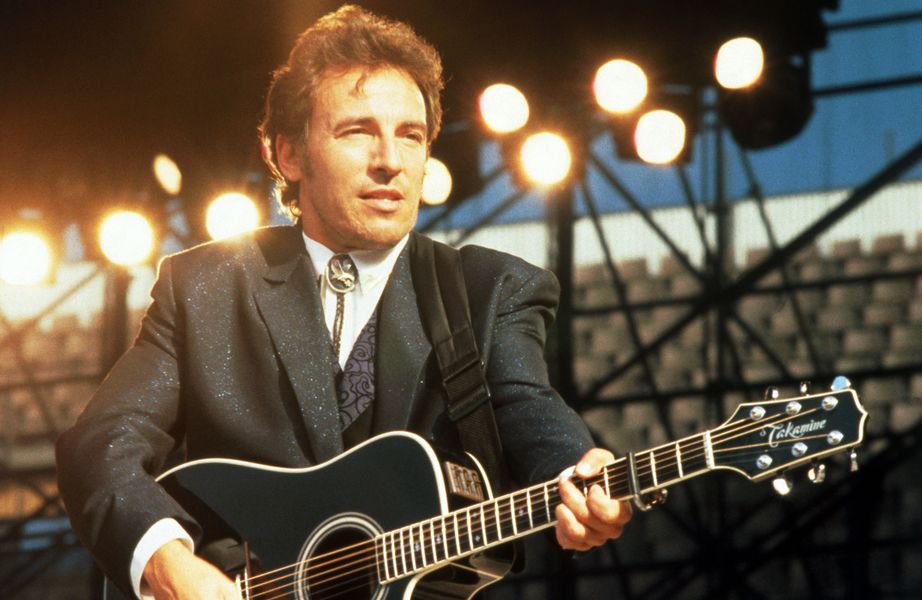
Bruce Springsteen has written almost extensively about America over the last 50 years. Born to Run embraced the country recuperating from a decade long conflict with Vietnam; Born In The USA explored the country as it absolved itself from the rigours of the past; while Darkness on the Edge of Town offered a sanctuary to fellow wandering Americans, aching to find shelter amidst this vast wilderness.
“I see these situations happening when I sing them and I know the characters well,” Springsteen explained.”I use them in different songs and see them in shadows – they’re probably based on people I know or else they’re flashes, that just appear there. There’s a lot of activity, a whole mess of people… it’s like if you’re walking down the street, my songs are what you see, only distorted. A lot of songs were written without any music at all; it’s just that I do like to sing the words.”
Characters imbue Springsteen’s work, curating a spectacle that brims with integrity and authority as men and women pass each other, their eyes gauging on the currency that cements their great life and work. In many ways, Springsteen acts as a mouthpiece, contextualising the characters that flesh out his mosaic of sound with great integrity and interest. His 1973 masterwork ‘Blinded By The Light’ captures many of these characters in full flow, oblivious to their standing in the sprawling, signature song that became a hit for both Springsteen and Manfred Mann. Typically, Springsteen thought little of the Manfred Mann version until he saw how much money it was making him. Suddenly the pop tune turned from a pop turd into a treasure chest.
Many of the characters in the song were people he grew up around, and given the personal nature of the track, he was likely to loathe to admire another rendition of the work. “Madman drummers bummers” is thought to be about Vinnie “Mad dog” Lopez, the drummer who played with the E Street Band, while “Silicone Sister” serves as a thinly-veiled dig at the rise of breast implants in popular music. Elsewhere, the tune utilises many of the slang words that formed part of his town’s lexicon, padding the song out with authenticity and reality that was scarcely heard in the realm of stadium rock in the early 1970s.
Springsteen’s tune spearheaded a new form of music, where guitars and incendiary lyrics could go hand in hand. Pop had previously dictated that music could be tuneful (The Beatles, Wings) or truthful (Bob Dylan, Neil Young), but Springsteen made a case that there needn’t be a distinction between the two supposedly disparate forms of art. By the time he recorded Born to Run, the industry had caught up to colour in the missing gaps with a collection of blinding tales that were bolstered by a collection of fiery licks.
Music served the narrative, wherein the words were used to paper the melody throughout the records that Springsteen had grown up listening to. What he added wasn’t contrast, but context, issuing a safe space for the central leads and the pummelling guitar solos to enjoy one big, grand, safe space together. No one was discriminated in the field of the power ballad, but the lyrics and solos succinctly wrapped themselves in the narrative and the power of the work.
Springsteen would go on to write a more startling ballad with ‘Jungleland’, expertly recalling the trauma of the generation facing an existential abyss, unsure how to identify themselves in a country that had seen such great political change and greater emotional turmoil. ‘Blinded By The Light’ served as a strong opening prelude to the great opera that serviced the song on an intellectual and angular level.
‘Blinded By The Light’ doesn’t stand up with the best of Springsteen’s work, but it’s certainly rich with atmosphere, offering a portrait of an America that now only be reached through montages and photographs. His writing is cinematic, and he ably constructs the semblance of a town who are determined to get on with their day. There are pastures, potential and positions to consider, but the town holds true to its ideals and aphorisms, never hoping to be something it can never again become.
One can imagine Springsteen listening to the tune as a way of engaging with his younger self, but the song has greater properties. It shows Springsteen’s development as both a person and an artist, offering a glimpse into the directions he would take in future years. He was changing as a person, growing more confident as a lyricist and a composer, and felt confident enough in his past to re-create the memories for a mainstream rock audience. From that point on, Springsteen would mine his emotional and intellectual baggage for more riches to write bigger and better songs.
All the latest stories about The Beatles from the independent voice of culture.
Straight to your inbox.
