


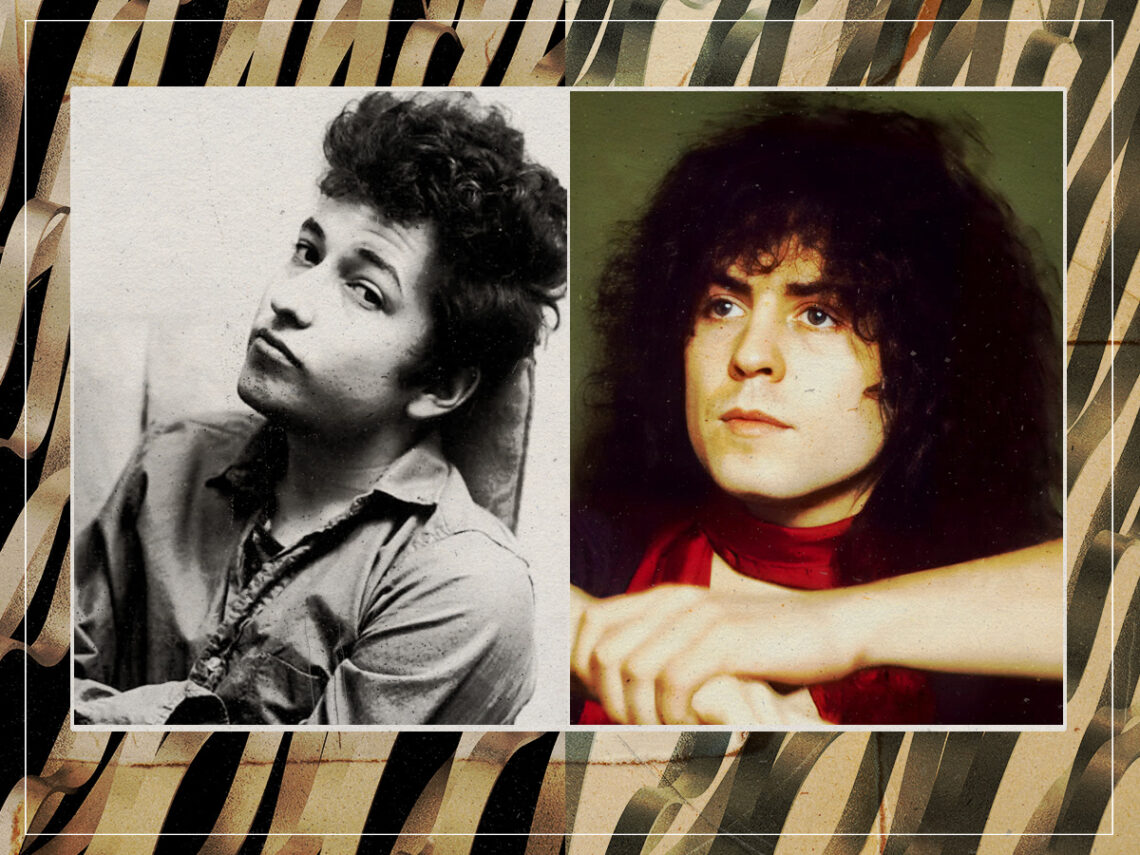
The Bob Dylan rarity that made Marc Bolan glad to be alive: “A great thing indeed”

It’s tough finding an artist who hasn’t spoken about the looming influence of Bob Dylan. As a prolific and generation-defining artist, his impact is insurmountable. First as a political mouthpiece and then as a folk-rock poet, Dylan’s ever-changing identity has provided so much inspiration. But for Marc Bolan, his favourite Dylan moment is an unlikely one.
Dylan is one of those artists who seems to have lived a million lives. The topic of which album is someone’s favourite is a deeply individual question, with each listener bringing up different eras or sounds as he moved through his career. To some, the best will always be the early days when he was just a young folk start-up with a desire to put the world to the right with his words. For others, it was only when he went electric that their ears were pricked. There are some clear standouts that come up time and time again: Blonde On Blonde, Highway 61 Revisited, Blood On The Tracks, The Freewheelin’ Bob Dylan.
During the 1960s and ‘70s especially, Dylan’s output was nothing short of remarkable. Throughout the two decades, he released almost an album a year, sometimes even more. It seemed there was no slowing him as he was churning out tracklists containing songs that would become all-time greats, releasing them in quick succession as if it was no work at all. The world knows those songs well as we cherry-pick the best-ofs to make the greatest hits compilations, but perhaps the problem with being so prolific is that great stuff ends up lost amid the volume.
It was also a period where Dylan’s evolution seemed to be on hyperspeed. Within a short time frame, that growth from country folk to more rock-leaning sounds was happening fast. While his 1965 show at Newport Folk Festival, as he shocked the crowd by emerging with a Fender Stratocaster, is marked as a turning point, there was more to his development than just whether he was plugging in or not. Marc Bolan’s interest peaked when the artist cast off the genre entirely for a strange next move.
Dylan’s 1970 album Self-Portrait is one of those that slipped between the cracks. There are no hits on the album, but instead, he dedicated an entire double release to covers of mainstream or traditional songs or meandering instrumentals. When it was released, it was met mostly with confusion towards the artist’s motives.
“I wasn’t going to be anybody’s puppet and I figured this record would put an end to that,” Dylan said in the album’s liner notes, “I was just so fed up with all that ‘who people thought I was’ nonsense.” Really, to Dylan, this wasn’t a serious album at all as he fessed up, “To me, it was a joke.” The strange handling of the record has meant it’s largely been ignored as part of his discography, but to the T. Rex singer, it contained gold.
“I’ve just listened to Dylan’s new album, and in particular ‘Belle Isle’, and I feel deeply moved that such a man is making music in my time,” Bolan said of the album, picking out his favourite track. The cover of the traditional folk song seemed to hit a sentimental chord with the musician as he added, “‘Belle Isle’ brought to my memory all the moments of tenderness I’ve ever felt for another human being, and that, within the superficial landscape of pop music, is a great thing indeed.”
Writing into Music Maker in defence of the album and Dylan himself as his fans raged against the release, Bolan called for a reconsideration of the release. “Please, all the people who write bitterly of a lost star, remember that with maturity comes change, as surely as death follows life,” he said, as a reminder that an artist needs to be allowed to evolve or they won’t be an artist at all.

Never Miss A Tale
The Far Out Bob Dylan Newsletter
All the latest stories about Bob Dylan from the independent voice of culture.
Straight to your inbox.