


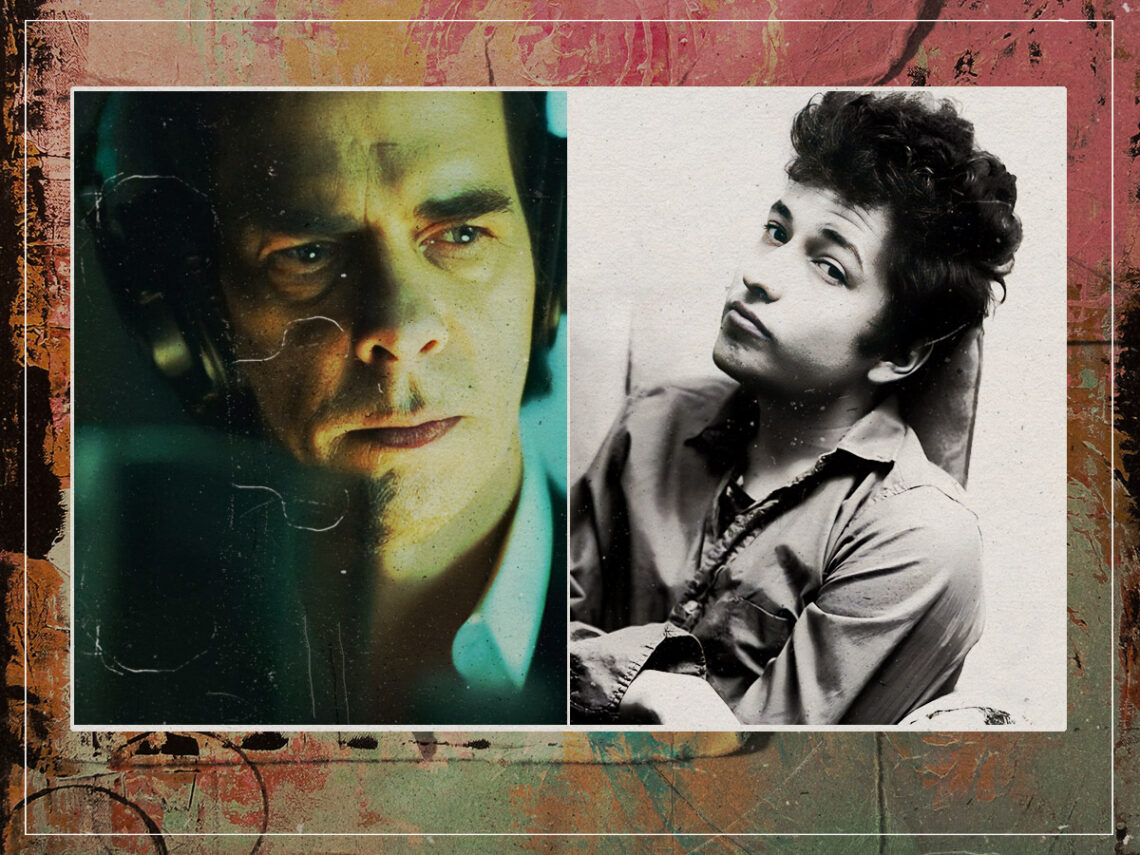
The Bob Dylan song Nick Cave called “perplexing but beautiful”

There are some artists that have been mythologised and magnified to the point of near godliness. Bob Dylan is one of them, as he’s now held up as a kind of divine in the music world. Leonard Cohen and Joni Mitchell reached it, too. Out of the current working musicians, Nick Cave comes close as his music and writing has earned him an incredible level of respect and admiration. However, even he still pays respects to those before him as he shared his thoughts on one Dylan track.
It would be weird if Nick Cave, or really any poetic-leaning rocker, didn’t worship Bob Dylan. Even when considering the worlds of punk or alternative genres, it’s easy to draw a line of references back to a younger Dylan who constantly pushed the limits and reshaped the form. It’s especially easy to connect the dots between old Robert Zimmerman and the once-raging punk turned spiritualistic poet that is Nick Cave.
One of the ways that Dylan broke down the walls surrounding the rock and country genres was by smashing them through with increasingly extended song run times. Just as the radio was starting to warm up to rock and roll and be more open-minded about countercultural sounds, the artist set about releasing perhaps the most inaccessible material he could at the time as he defied the three-or-so-minute radio rule. Instead, he wanted to be able to say whatever he wanted and take as long as he needed to say it.
As early as 1965, when his success was hitting a new height, he dropped an 11-minute long spiralling consideration on the modern world in the form of ‘Desolation Row’. A year later, he took the same approach for a lengthy consideration on love in ‘Sad Eyed Lady Of The Lowlands’. From then on, there was really no stopping Dylan, and no one on the earth seemed able to convince him to edit his songs to have neater run times. In this way, it could be argued that Dylan invented the rock epic, pioneering a song that took its time and kept going simply because there was more to say.
It was a liberty that Nick Cave took and ran with. Throughout his discography, his songs regularly stretch well beyond the five-minute mark. Tracks like ‘Ghosteen’, ‘Higgs Boson Blues’, ‘O’Malley’s Bar’ and ‘The Mercy Seat’ extend well beyond the short, sharp format the music industry likes to pretend success demands. Instead, much like Dylan, Cave lets his messages and stories run and run until they’re wrapped up and done.
It can feel inaccessible or exhaustive, but to Cave, the magic of Dylan lies within these lengthy works. When it came to his latest works and the release of the 17-minute-long epic ‘Murder Most Foul’, he shared his thoughts on the extended track. “It is a perplexing but beautiful song and, like many people, I have been extremely moved by it,” he wrote on his Red Hand Files.
For Cave, it’s exactly the length of the song that makes the track effective. As Dylan parades through American history on the track, considering the murder of JFK through a spiralling speech on art, politics, and cultural milestones, the Australian musician thinks it’s perfect in its prolonged nature.
“Dylan’s relentless cascade of song references points to our potential as human beings to create beautiful things, even in the face of our own capacity for malevolence,” he writes of the track. “Whirling around the incident Dylan weaves a litany of loved things — music mostly — that reach into the darkness, in deliverance. As the song unfolds he throws down lifeline after lifeline, insistent and mantra-like, and we are lifted, at least momentarily, free of the event.”
While some critiqued the song for being too long and lacking in any form of hook, Cave once again came to its defence. “The instrumentation is formless and fluid and very beautiful,” he continued. “Lyrically it has all the perverse daring and playfulness of many of Dylan’s great songs, but beyond that there is something within his voice that feels extraordinarily comforting, especially at this moment.”
Through its length and engagement with so many cultural moments, Cave claims the musical legend has written not a song but something closer to “a lullaby, a chant, or a prayer”. That descriptor feels reminiscent of the discussion of his own music, tying the links between the two artists even closer.

Never Miss A Tale
The Far Out Bob Dylan Newsletter
All the latest stories about Bob Dylan from the independent voice of culture.
Straight to your inbox.