


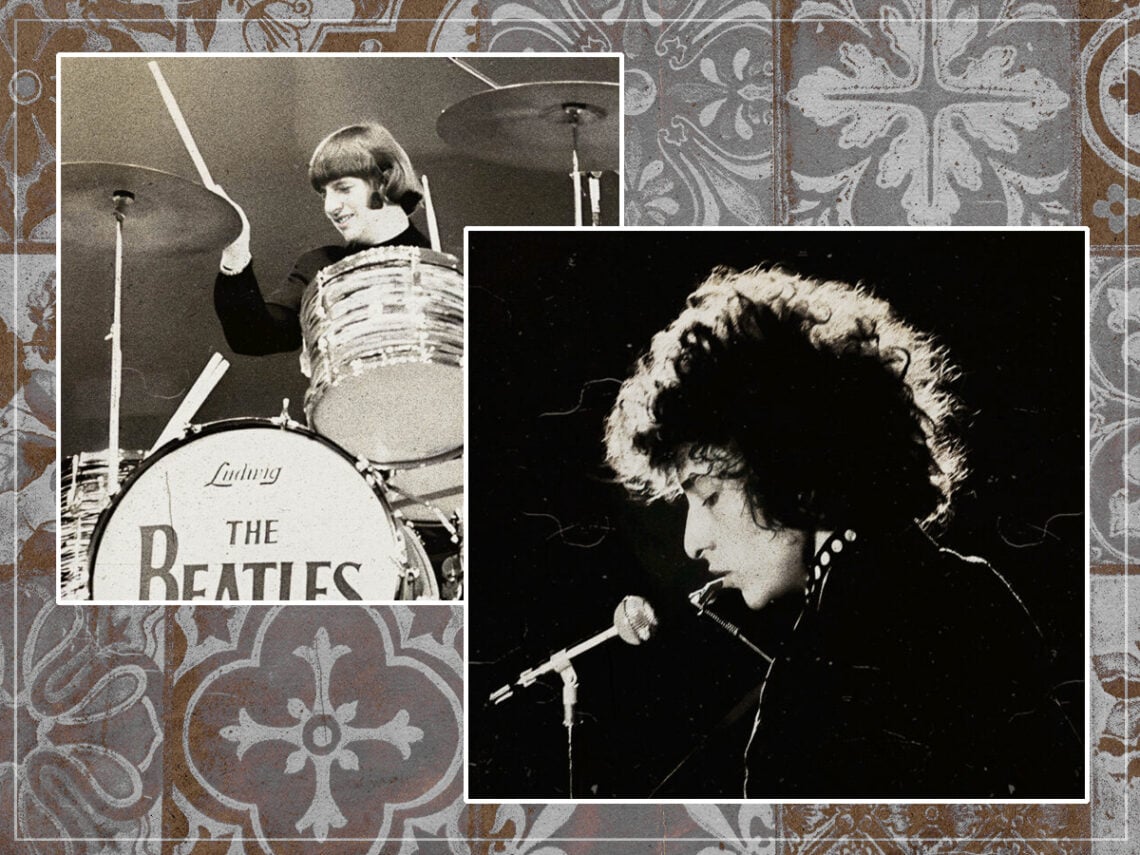
The Bob Dylan album The Beatles went “potty” over

The rather direct nature of influence and inspiration in modern pop culture is what has made it revolutionary. Together, Bob Dylan and The Beatles led the charge by sharpening each other’s steal. As Nick Cave once explained: “The great beauty of contemporary music, and what gives it its edge and vitality, is its devil-may-care attitude toward appropriation — everybody is grabbing stuff from everybody else, all the time. It’s a feeding frenzy of borrowed ideas that goes toward the advancement of rock music — the great artistic experiment of our era.”
For the Fab Four, when it comes to the original vagabond, there was one album that got the ball rolling in style. Although Bob Dylan’s self-titled debut might have only featured two original songs, his iconic follow-up in 1963, The Freewheelin’ Bob Dylan, featured introspective folk lyricism that would turn the ear of many a songsmith. In The Beatles Anthology, John Lennon is quoted as saying: “In Paris in 1964 was the first time I ever heard Dylan at all. Paul got the record [The Freewheelin’ Bob Dylan] from a French DJ. For three weeks in Paris, we didn’t stop playing it. We all went potty about Dylan.”
There is no doubt that after this period, the songs that The Beatles were crafting became more complex, lyrically more probing and literary, and more outwardly politically liberal. While this might have been an inevitability, they were certainly helped along the way thanks to Dylan’s ground-breaking LP. Likewise, when they cited him as their “hero”, it also had a huge impact on Dylan. After all, the reason Lennon hadn’t heard him until 1964 was because The Freewheelin’ Bob Dylan actually peaked at a disappointing 22 upon release in the US chart.
Nevertheless, there is now no doubt how huge the record was. This was 1963; Bob Dylan was in his early 20s when these songs were recorded. The collage of tracks contained therein would go on to change music forever, and there is no hint of the rose-tinted shades of retrospect about that. These are songs that have something to say about the singer in ways that were not always previously dealt with; in fact, the singer’s name features in two of the titles to ram home the unique introspective message for good measure.
At times, its brilliance is almost draining; you have to squint the psyche to keep the whole thing in clear focus—a zen act necessary to ensure that you’re savouring the words and wisdom in the way that they deserve. It’s an album as humble as a rustic stew that requires the fine-dining treatment; you can’t just greedily scoff it. It is as though you’re one of those kids denied sweets by strict parents, and suddenly you find yourself on a sleepover at a more liberal household, and you’ve sickened yourself on a bounty of goodness—Dylan dazzles and overwhelms with sonic sugar that the world had previously forgone.
In short, it’s one of the greatest albums of all time. So, there’s little surprise that The Beatles loved it and were eager to join him. “He was our idol. It was a great honour to meet him, we had a crazy party that night we met. I thought I had gotten the meaning of life, that night,” said a bemused Paul McCartney. He was, of course, referring to the night that The Beatles met Bob Dylan on August 28th, 1964, at New York’s Delmonico Hotel.
It was this fabled meeting where he gave the band weed, and they went potty in a different way, soon crafting the likes of Rubber Soul and Revolver in a haze of inspiration.

Never Miss A Tale
The Far Out Bob Dylan Newsletter
All the latest stories about Bob Dylan from the independent voice of culture.
Straight to your inbox.