


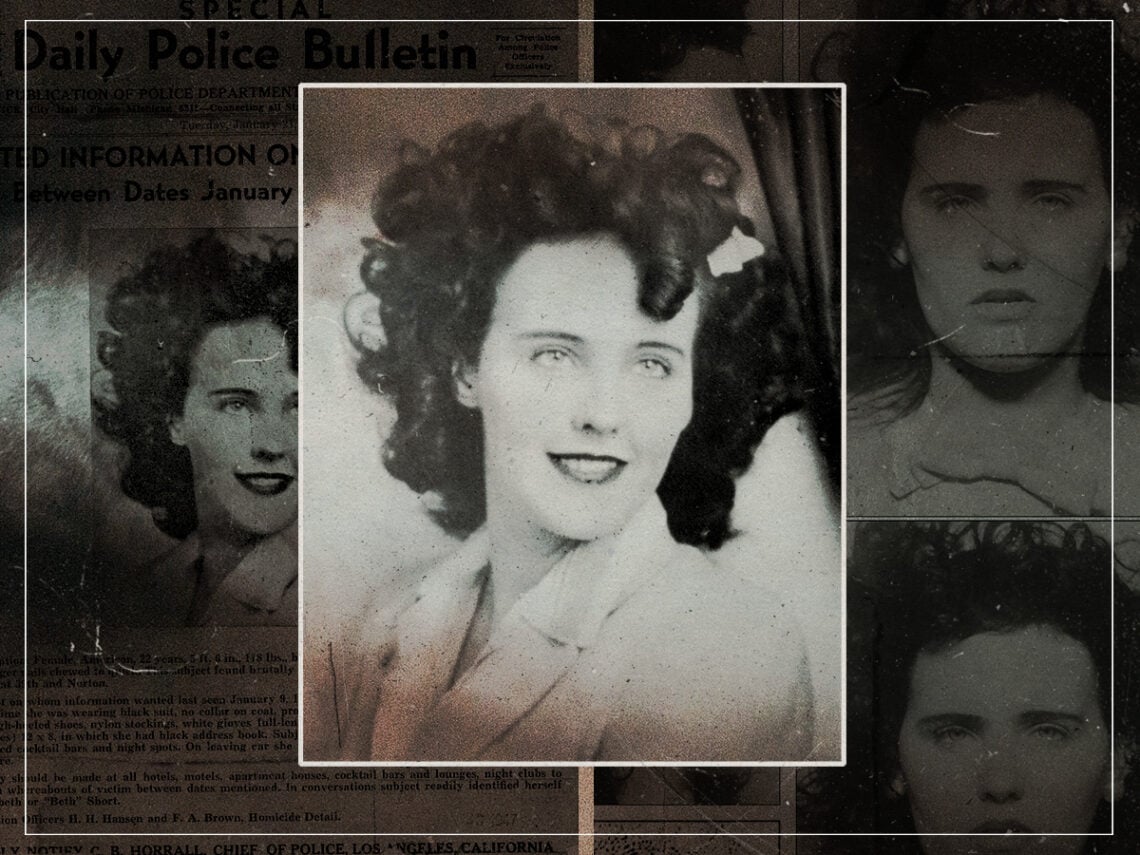
The Black Dahlia: Hollywood’s real-life true crime mystery

True crime has become one of the most popular forms of modern media, whether it’s through documentaries, movies, TV shows, podcasts, or books. It’s been a goldmine for Hollywood for decades, but there hasn’t been a case to shock Tinseltown to its core quite like the Black Dahlia.
On January 15th, 1947, local housewife Betty Bersinger spotted what she thought was a mannequin lying in an empty lot on Los Angeles’ Norton Avenue, only to discover that she was looking at a mutilated corpse. The body of Elizabeth Short was split at the waist, and sections of her flesh had been cut from the body, but the noticeable absence of any blood suggested that the body had been cleaned and placed on the street post-mortem.
After identifying Short as the victim, the autopsy offered indications that she may have been tied up and tortured before being murdered, with cerebral haemorrhage and shock cited as the official cause of death on the report. By this point, the mystery had already gripped the city, and it would soon spread to become both a nationwide and global source of obsession.
Short had only moved to LA the previous year in the hopes of carving out a career as an actor, but worked as a waitress and lived in rented accommodation on Hollywood Boulevard while trying and failing to secure her big break. It was the local newspapers who initially dubbed her the ‘Black Dahlia’ due to her dyed hair and penchant for dark clothing, but despite the overwhelming interest, no sure-fire suspects emerged.
An envelope was mailed to several Los Angeles newspapers nine days after her body was found, though, using newspaper clippings to spell out the phrase, “Here is Dahlia’s belongings”. Inside were Short’s birth certificate, business cards, assorted photos, and an address book, all of which had been cleaned to remove fingerprints or other incriminating evidence, furthering the belief it was the killer’s handiwork.
The authorities combed through her address book for clues, but none of the 75 men contacted were arrested or charged, while suspicions arose that a trained medical professional must have been responsible for the precise nature of her injuries. Warrants were issued to a nearby medical school, but again, interviews and background checks yielded nothing.
The case may have gone cold, but its place in the cultural consciousness never disappeared. The murder has become the subject of countless novels, investigative documentaries, and feature films, keeping the events firmly in the public eye while never even coming remotely close to offering a definitive assessment of who killed Short and why they did it in such horrific fashion.
There have been plenty of false confessions along the way, and theoretical connections have been made to a spate of other killings, but the speculation got so out of hand that Mary Pacios – a former neighbour of the Short family – wrote a book suggesting that Orson Welles was responsible.
Former detective Steve Hodel accused his own father – Dr George Hodel – in Black Dahlia Murder: A Genius for Murder, but the case remains entirely unsolved. It’s one of the most famous unsolved murders in history and a searing indictment on the dark side of Hollywood. Short had big dreams of becoming a star, but not only was she murdered trying to pursue them, nobody can ever know for sure who did it.
