


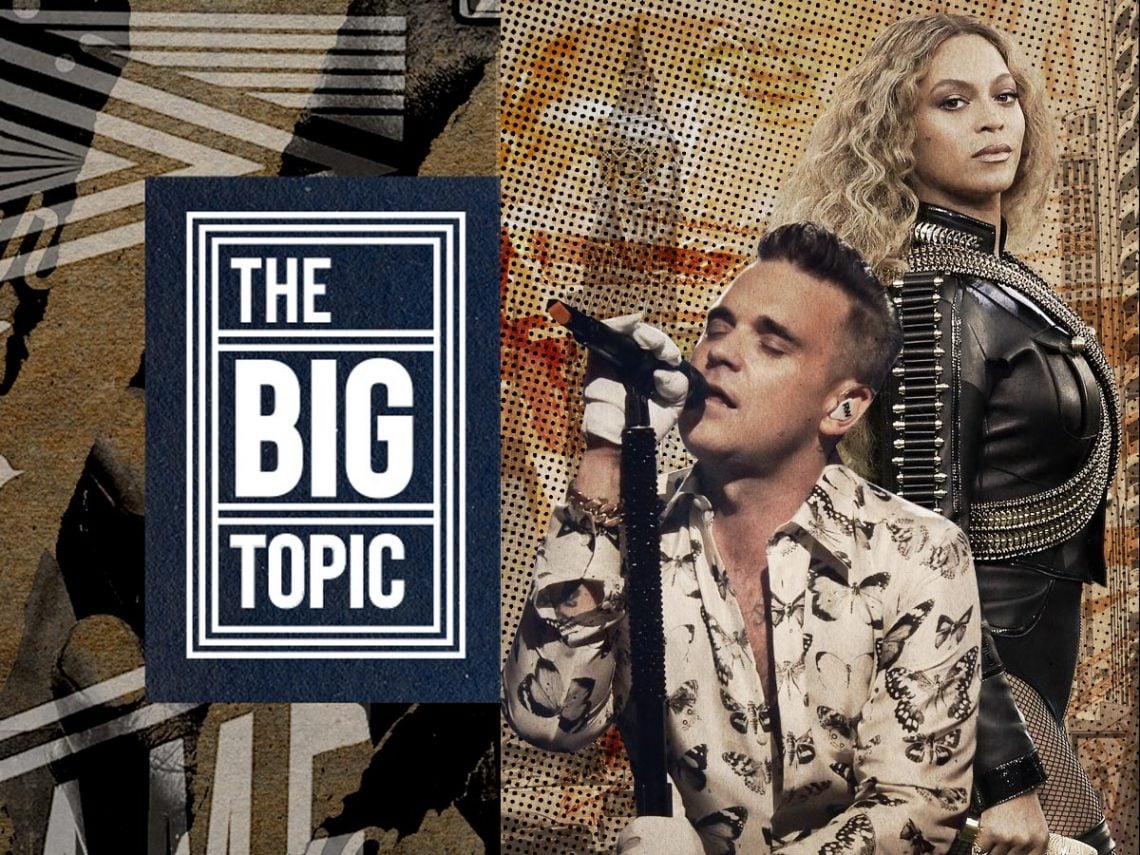
The Big Topic: The history of musicians performing for authoritarian regimes

In light of the FIFA World Cup in Qatar, the regime of the Middle Eastern country has received fresh scrutiny. Not only is football currently taking place in Qatar, but there are also a series of high-profile concerts coinciding with the tournament, including a show by Robbie Williams. However, this is nothing new, and for decades, musicians have been accepting paydays from questionable regimes.
In Qatar, homosexuality is still illegal, and there are issues surrounding worker’s rights, with many migrants dying while making stadia for the World Cup. Ultimately, footballers can’t decide where the tournament takes place, but it’s a different conversation with artists who’ve willingly taken money to perform in the Arab state.
Veteran pop star Robbie Williams is among those who have agreed to play in Qatar during the tournament. In a bizarre defence of his actions, Williams claimed it would have been a “hypocritical” decision not to accept the invitation to play at Doha Golf Club on December 8th.
“Of course, I don’t condone any abuses of human rights anywhere,” he told the Italian newspaper, Republicca. “But, that being said, if we’re not condoning human rights abuses anywhere, then it would be the shortest tour the world has ever known: I wouldn’t even be able to perform in my own kitchen.”
He added: “Anybody leaving messages saying ‘no to Qatar’ are doing so on Chinese technology. It would be hypocritical of me to not go [to Qatar] because of the places that I do go to.”
As part of the FIFA Fan Festival, superstar DJ Calvin Harris is playing on December 10th. It’ll also host performances by Clean Bandit, Toploader, Chesney Hawkes, Julian Marley, Sean Paul, and many more. Ironically, British boyband Blue have already performed at the event, despite having an openly gay member.
Although the financial aspect of their deals is undisclosed, Rod Stewart revealed he turned down an offer of $ 1 million on moral grounds. “I turned it down,” Steward told The Sunday Times. “It’s not right to go. And the Iranians should be out too for supplying arms.”
However, for many artists, their morality becomes an afterthought when they are offered an eye-watering amount of money despite already acquiring unfathomable riches. Calvin Harris is reportedly worth more than $200 million, and Robbie Williams is allegedly sitting on a fortune of $300 million. Yet, they are still willing to put their ethical code on the line for an amount of cash that’s insignificant to them.
Artists accepting dirty money from questionable regimes is nothing new and has been ongoing for decades. Throughout the apartheid, Queen, Elton John, Frank Sinatra, and many more played gigs at the Sun City resort in Bophuthatswana.
Brian May’s defence of Queen’s performance in 1984 bares a staggering resemblance to the line being uttered by artists today. He said: “We’ve thought a lot about the morals of it a lot and it is something we’ve decided to do. The band is not political – we play to anybody who wants to come and listen.” As much as May claimed it wasn’t a political decision, it undoubtedly was, and the same can be said for the acts agreeing to perform in Qatar.
On New Year’s Eve in 2010, Beyonce headlined a concert on the Caribbean island of St. Barts, hosted by Colonel Gaddafi’s son during his father’s terrorful reign. She was reportedly paid $2 million for her hour-long set. After it hit the headlines, her publicist said Beyonce had donated her fee to charity after becoming aware of Gaddafi’s involvement. In her defence, it’s plausible she was oblivious to funding the event, but it doesn’t apply to Williams or Harris.
While I somewhat understand the notion atrocities are happening everywhere in the world. Therefore, why should they play in America or the United Kingdom if they turned down Qatari money for moralistic purposes? However, there is a strong dissonance between performing for people in problematic states and accepting money from the institution that makes it problematic.
Rather than getting lost in a moral maze trying to justify their indefensible actions, it would be refreshing if an artist admitted they were doing it solely for the money. Instead, they usually double down, which is even more damning than an honest approach. At least with the latter, their LGBTQ+ fans know their basic human rights come secondary to money.
