


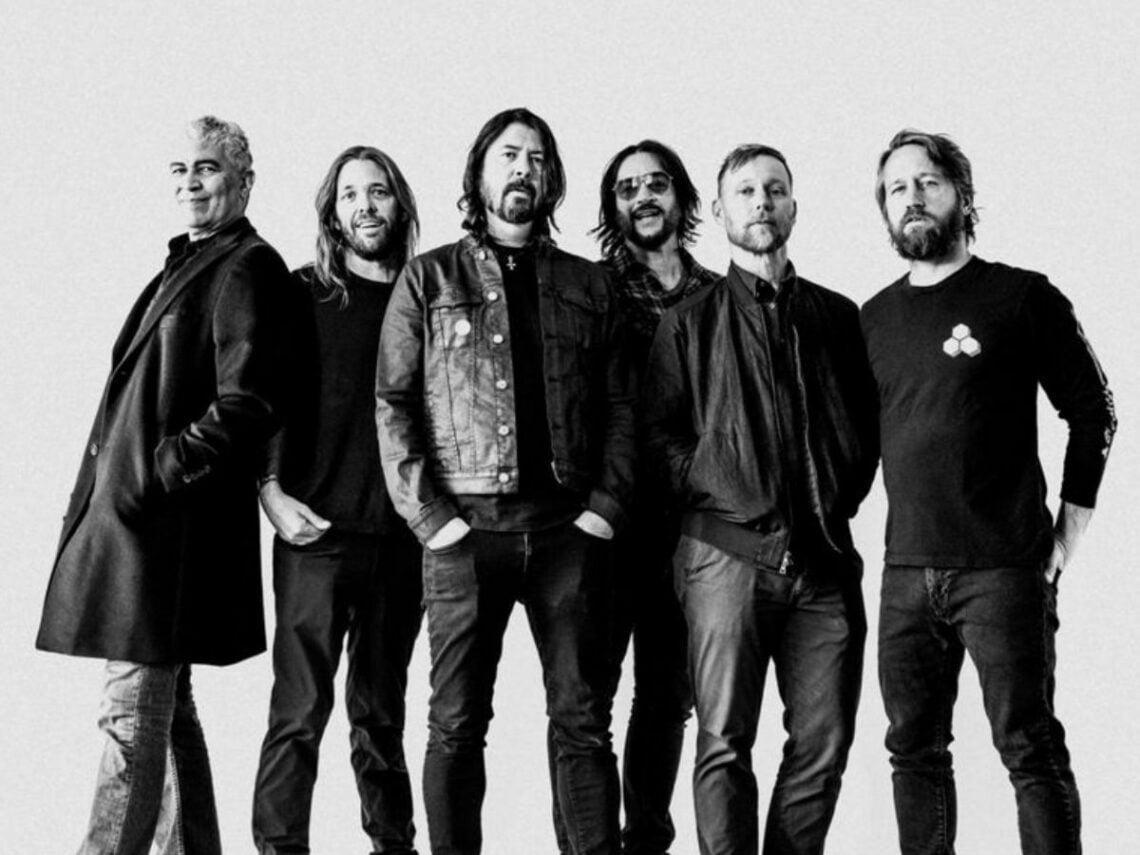
The best song on every Foo Fighters album

Foo Fighters is a band born out of tragedy. Although no one would have blamed Dave Grohl for never wanting to play music in the wake of Kurt Cobain’s death, he chose to follow his muse and put together a band big enough to rival his former glory days.
At the start, even Grohl didn’t consider himself the greatest songwriter in the early days. Though the first era of the Foos was spent enduring growing pains, each song still stood out as something special, as Grohl tried out different musical ideas while staying true to the ethos of old-school rock and roll.
Of course, there is a difference between the best Foo Fighters songs and the songs which are considered the most popular. While many fans will rightfully heap praise on tracks like ‘Learn to Fly’ or ‘The Pretender’, those are just scratching the surface of what the band are capable of, such as their subterranean beginnings to the dance-like structures on their latest offering, Medicine at Midnight.
Even after the tragic death of drummer Taylor Hawkins, the journey of rock and roll continues on as the Foos prepare to release new music in the next few weeks. With the new era of Foo Fighters on the horizon, here’s hoping that songs on the level of these gems might be in their future.
The best song from every Foo Fighters album:
‘X-Static’ – Foo Fighters (1995)
Dave Grohl never had any desire to work outside the confines of Nirvana. By his own admission, Kurt Cobain was extraordinary on his own, and none of Grohl’s songs could measure up to what he had done. When he decided to record a handful of his favourite tunes for his debut album, ‘X-Static’ was the most reminiscent of the Nirvana headspace.
Featuring some guest guitar playing by Greg Dully of the Afghan Whigs, Grohl sounds like he’s coming down from a haze in this song, constantly playing with the dynamics with his muted vocal delivery and chaotic drumming. Although this was still firmly in the alternative mould, the way Grohl weaves his melody around a wall of guitars sound more akin to what My Bloody Valentine was doing just a few years before, being far more in tune with shoegaze.
Since Grohl was still mentally frayed from Nirvana’s collapse, this could have fit firmly in the In Utero era, serving as the same type of comedown fans were treated to in tracks like ‘Dumb’ and ‘All Apologies’. Fans will never know what Nirvana would sound like in the late 1990s, but ‘X-Static’ gives a better glimpse of what could have been had Cobain decided to relinquish songwriting duties.
‘Monkey Wrench’ – The Colour and the Shape (1997)
As Foo Fighters took to the road, it wasn’t clear that Grohl’s little band was anything more than a fluke. The version of the group most fans hear today was built out of a glorified demo, so how were they supposed to build a career out of it? After a brief warm-up at the beginning of the record, Grohl announced that The Foos were here to stay on ‘Monkey Wrench’.
While this is one of the most aggressive songs in their catalogue, the melody feels more adjacent to pop-punk music in spots, as if Grohl got heavily into bands like Green Day and The Offspring before making the record. The melody might be happy, but the lyrics are far from it, as Grohl calls out a former flame for using him and refuses to be strung along by her anymore.
As if the loud guitars and pummeling drums aren’t enough, the song’s climax comes in the bridge, where Grohl starts screaming at the top of his voice and gets off every single grievance that he’s had with this relationship. Though ‘Everlong’ may have been about the healing power of love, ‘Monkey Wrench’ is what happens when that relationship isn’t handled properly.
‘Generator’ – There is Nothing Left To Lose (1999)
At the end of the ‘90s, Grohl was starting to question the identity of the Foo Fighters. During the recording and tour for The Colour and The Shape, he had tragically lost two band members and had to fire one of their replacements, leaving the group confined to a trio. The glitz and glamour of Hollywood wasn’t doing them any favours; therefore, they had no choice but to go back home.
That’s why There Is Nothing To Lose feels like a far more peaceful record than anything the group had ever done, as they sound like they’re having fun while recording it. Although the laid-back demeanour of songs like ‘Next Year’ might be endlessly blissful, ‘Generator’ hints at an adventurous side of the Foo’s that hadn’t reared its head before, as Grohl breaks out a talk-box and turns in a phenomenal guitar performance on his own.
While this could have been a standard love song in the wrong hands, Grohl frames his infatuation as a machine, calling on his lover because of how she started his motor running. The band was at half capacity in terms of personnel, but they didn’t even need a massive lineup to kick ass.
‘Times Like These’ – One By One (2002)
Prior to the recording of One By One, Foo Fighters were in disarray. Amid Taylor Hawkins’ overdose while on tour and Grohl’s performance with Queens of The Stone Age, morale was at an all-time low, which showed in the initial demos of the record. However, once everyone took a break from the madness, Grohl returned with a song that saved the group.
Written while on tour with QOTSA, Grohl started to reflect on how much the band needed each other, thinking about the small miracle that brought them together in the first place. After returning to the studio, ‘Times Like These’ was a tale of survival on Grohl’s part, talking about how he learned to love again after thinking that his musical visions were snuffed out.
Of all the songs from this era, this is one of the few that Grohl still looks back on fondly, with this and ‘All My Life’ being the only tracks that have survived in the group’s setlist. Grohl could have easily retired the band any time he wanted to, but ‘Times Like These’ proved that he still had something to say outside of collecting a paycheque.
‘No Way Back’ – In Your Honor (side 1) (2005)
In just a decade, the Foo’s had turned themselves into a rock and roll force of nature. Though they may have started out as a small idea born out of Grohl’s basement, they had ascended to stadium level, playing huge festivals around the world and becoming international rock stars. They were now an arena rock band, and it was about time their records started reflecting that.
Across In Your Honor, Grohl sets out to create the most cinematic songs that he can, opening the album with a brilliant wall of guitars. While the title track might serve its place as laying out the red carpet for the album, ‘No Way Back’ is where the band really get down to business, laying down one of the most satisfying grooves in their arsenal.
While Grohl is not necessarily known for guitar solos, his interplay with new guitarist Chris Shiftlett is phenomenal, as Shiftlett plays the precise leads to Grohl’s chaotic rhythm playing. Grohl had already created countless anthemic rock songs, but this track is the first time where he sounded like he could reach the nosebleed seats at Wembley Stadium.
‘On the Mend’ – In Your Honor (side 2) (2005)
In Your Honor is a tale of two different styles. Although the first disc is home to some of the most grandiose tracks in the Foo Fighters catalogue, the second half of the project was meant to be more intimate, dominated primarily by acoustic instruments and having a more mellow feel across the board. The band had a major opportunity to experiment across this project, but ‘On the Mend’ might be the most emotional piece of music that Grohl ever put to tape.
After writing the song ‘Friend of a Friend’ about his relationship with Kurt Cobain, this tune was loosely inspired by Taylor Hawkins’ overdose, as Grohl feels relief for him making it to the other side. The song practically puts the listener in that same headspace, as if Grohl is coming down from a druggy haze and is grateful to have not met his maker just yet.
The outro of the song is the start of the journey home, as two guitars play in harmony with each other to play the track out. Grohl was always a musician first and a lyricist second, so it’s only fitting that the guitars tell the story for him as he moves on to the next chapter in his life.
‘But Honestly’ – Echoes Silence Patience and Grace (2007)
The success of In Your Honor left Grohl a little bit confused. Although people might have loved the rock show that they slaved over, he was also grappling with a musical identity crisis, having to please both easy-listening fans and rockers at the same time. It wasn’t until he talked with musical giant Clive Davis that he found a way forward: why not do both of them together?
Echoes Silence Patience and Grace was the bold exploration of that philosophy, taking the gentle songs and putting them side by side with heavier stuff like ‘Let It Die’. Though some of the dynamics could have used a bit of work on songs like ‘Statues’ or ‘Summer’s End’, the penultimate song ‘But Honestly’ is blessed with one of the single greatest dynamic builds in modern rock.
Since the song starts solely with Grohl and a guitar, fans are probably expecting a gentle acoustic tune to play out the rest of the record. As the music starts to get more dissonant, Hawkins’ kick drum acts as the throbbing pulse, constantly building in intensity before Grohl and Shiftlett break out the lead guitars and go for broke in the final minute of the song. Grohl might have meant something deep and meaningful in the lyrics, but any words coming out of his mouth are secondary. Outside of the words, the last few minutes here is an adrenaline rush set to music.
‘I Should Have Known’ – Wasting Light (2011)
After becoming one of the last major rock bands of the 2000s, where could Grohl take the band next? They had already ascended to the biggest heights that they could have asked for, and their gigs at Wembley Stadium put them on the same level as their heroes like Queen and Led Zeppelin. Once Grohl found himself that high at the top, the next best thing was to get as DIY as possible for the next record.
Deciding on a raw version of recording, Wasting Light was made primarily at Grohl’s house and boasted some of the heaviest tracks they would produce, like ‘White Limo’ and ‘Bridge Burning’. Outside of the music, Grohl was getting reflective on this record, and ‘I Should Have Known’ is where he starts to look back on the musical milestones that led him to this point.
Bringing in former Nirvana bandmate Krist Novoselic, Grohl is combing through his back pages, thinking that he should have known about all the pitfalls that he encountered on his journey. Although he could be talking about Kurt Cobain, Grohl is holding himself accountable before anyone else, thinking that he will do things differently after understanding what that kind of hurt feels like. There’s a moody soul at the heart of this tune, but Grohl seems to be closing the story on that chapter of his life and leaving behind his survivor’s guilt.
‘Feast and the Famine’ – Sonic Highways (2014)
Dave Grohl was never really a fan of traditional album releases. From the making of In Your Honor, Grohl had been looking to expand what the band were capable of on each album, veering off in different musical directions or getting them out of their comfort zone. It was time to get back to the band’s roots, and Sonic Highways meant that quite literally.
Crisscrossing the United States to record in different studios, each song on Sonic Highways feels like its own separate entity, which doesn’t make for the smoothest listening experience when going from one track to the next. Compared to the operatic songs like ‘I Am A River’ and ‘Congregation’, ‘Feast and the Famine’ feels the most indebted to Grohl’s roots in the hardcore punk scene, featuring a kickass opening riff and guest vocals from former members of his DC punk band Scream.
While every song was looked at as a new creative endeavour, this is the shining moment where The Foos could be themselves and give 110% on a rock song.
‘Run’ – Concrete and Gold (2017)
By the time the touring for Sonic Highways had finished, the Foo’s seemed to be fairly burnt. After years of trying to reinvent the wheel in terms of production, perhaps the time had come to make a down-and-dirty rock record with no bells and whistles about it. While that was what Concrete and Gold might have been at the outset, bringing in Greg Kurstin came with its own set of musical fireworks.
Though Kurstin might have been on top of the world after producing Sia and Adele, his relationship with the Foos makes for a mixed bag. On this record, he put boring songs that went nowhere against songs that feel like leftovers from previous outings. For all of the rough edges of this album, the band do kick the door down on ‘Run’, featuring an almost metallic riff from Grohl and some of the biggest switch-ups in a Foo Fighters song, going from shimmery guitar chords to balls-to-the-wall rock and roll.
While Kurstin didn’t gel in the same way that he might have with other pop productions, this is the closest that fans will get to hearing The Foo Fighters with a Phil Spector-esque ‘Wall of Sound’ production. The album might not be aces from back to front, but there are hardly any peers of The Foos that are still willing to be this daring in the studio.
‘Making a Fire’ – Medicine at Midnight (2021)
For the four people that didn’t notice, the music world got thrown for a loop at the start of the 2020. Right in the middle of the pandemic, the Foos began working on a new record, laying down tracks in a supposed haunted mansion for the first time. Though Medicine at Midnight sounded like it would be their most foreboding album yet, ‘Making A Fire’ is the blend of alternative and glam rock that no one knew they wanted.
Since Grohl was a veteran of the festival circuit, this feels like a song that could have easily been spat out by Def Leppard back in 1983, complete with a “na na na” chorus that lodges itself in one’s brain effortlessly. Although Grohl’s contemporaries like The Struts were playing similar styles of throwback, Grohl could still hang with the new kids in town without breaking a sweat.
While Grohl has always kept his emotions at bay on some of the Foo Fighters’ biggest songs, this is the first time where his trademark stage banter found its way onto the final record. There might not be as much substance here as ‘Everlong’, but it doesn’t need to. At a time when most fans were stuck in their houses, this was the song that reminded everyone that it was still OK to have a good time.
