


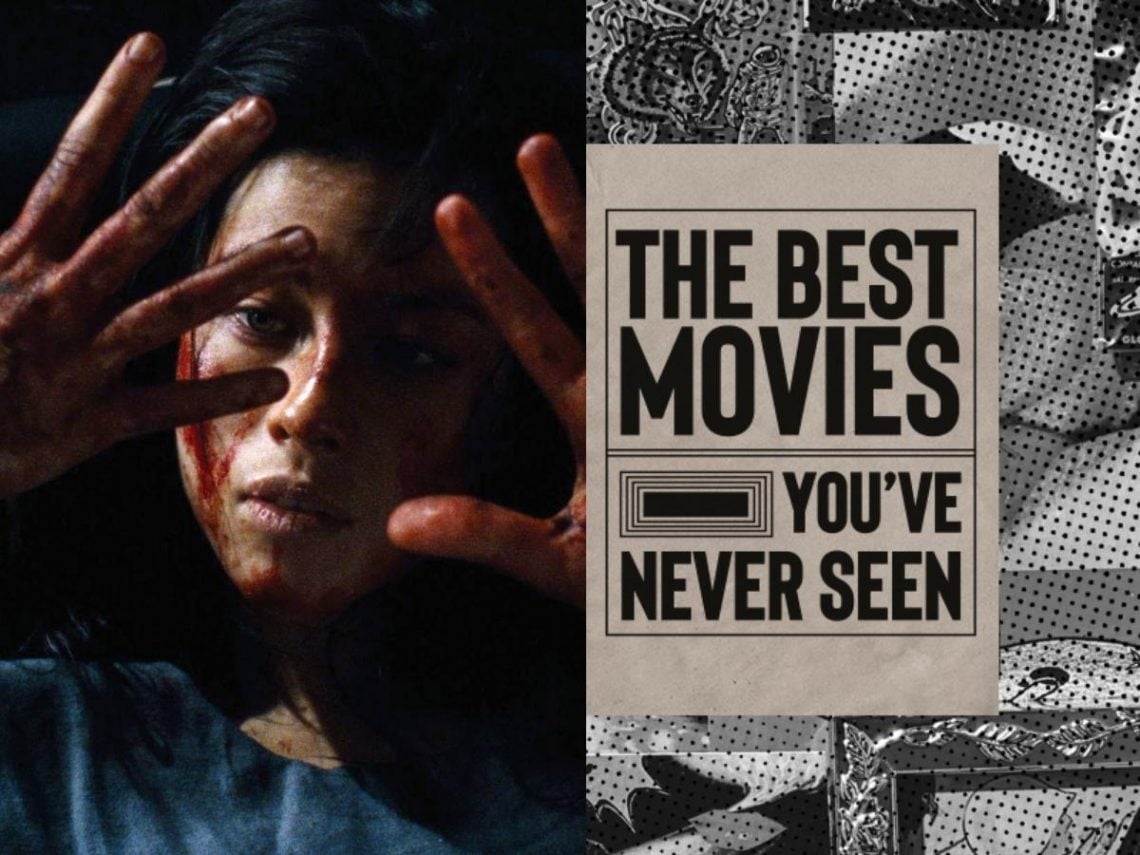
The Best Movies You’ve Never Seen: The human capacity for violence in ‘Martyrs’

Despite the popularity of the horror genre, rarely have films tackled the human capacity for extreme violence in such a visceral and devastating way as Martyrs. Pascal Laugier’s 2008 film, starring Mylène Jampanoï and Morjana Alaoui, forms part of the New French Extremity movement alongside the likes of In My Skin by Marina de Van, Gaspar Noé’s Irréversible and Inside by Alexandre Bustillo and Julien Maury.
Martyrs follows Lucie, a victim of childhood abuse, as she seeks revenge on her torturers. Desperate to rid the image of a disfigured woman that has followed her since she escaped her imprisonment, Lucie shows up at the home of a perfect-looking family armed with a shotgun, ready to kill. Soon, Lucie’s best friend Anna involves herself in the situation, unknowingly subjecting herself to the most horrific acts one can imagine.
Despite the film’s modest runtime of 99 minutes, Laugier fits in enough graphic violence and disgusting gore to last audiences a lifetime. Martyrs is hard to watch, providing viewers with a little respite from explicit and stomach-turning imagery. If you find the opening massacre uncomfortable viewing, prepare yourself for the rest of the film – Laugier uses uninhibited violence to explore just how far humans will go in an attempt to answer questions of life after death.
Throughout the first act, Anna represents us, the audience, watching Lucie battle her trauma whilst inflicting unthinkable acts of violence onto herself and others, unable to stop it. As detached witnesses exposed to the inconceivable, all we can do is sit and question the human capacity for violence. What makes the film all the more terrifying is Anna’s transformation from witness to victim, all because of her caring nature. Audiences are forced to grapple with the idea that even trying our best to be good people can result in acts of heinous brutality.
The horror genre has famously fetishised violence against women. Therefore, it is no surprise that male-directed Martyrs has been criticised for its extreme portrayal of female torture. However, the depiction of violence in the film goes past fetishisation – instead, it is truly grotesque. It can be argued that Martyrs explores how women’s bodies are institutionally abused and needlessly tortured simply for being female. The abuse of women is widespread, lurking underneath (literally) a fancy house inhabited by a happy family. When Lucie enters the house, she threatens to destroy this barrier and bring to light the systematic abuse of women. Laugier suggests that doing so isn’t as straightforward as one might hope.
The violence in Martyrs attests to the depths that trauma can reach. Lucie’s guilt-induced visions and acts of brutality demonstrate the lengths that humans will go to suppress and cope with highly traumatic events. To write off Martyrs as misogynistic torture porn is to ignore the complexities of the film’s representation of gender, power, trauma, and pain.
Alongside films such as Salò, or the 120 Days of Sodom, Martyrs is a powerful piece of cinema unafraid to make a statement about heavy topics through extremely gory and disgusting images. Although Martyrs is not for all, its cult status is a testament to its groundbreaking and unforgettable impact.
