


The best movie from 10 different horror subgenres

Unlike most film genres, horror does not need to be one straight line every time, with such movies varying in styles, tropes and subject matter. One horror movie can occur in a haunted house plagued with supernatural entities, where suspense takes centre stage, and stylised camerawork becomes the artistic focus. Another can throw audiences into a zest pool of blood and guts as a serial killer racks up a body count in a gritty and nauseating style.
Horror has changed over time thanks to the creation and execution of its subgenres, with many fantastic and timeless contributions to each nuanced category, and the list is only growing. Genre filmmakers have endless possibilities to frighten their audiences, as monsters and threats can come from out of space, beyond the grave or emerge from an ancient curse.
Distinct eras align with the prioritisation of specific subgenres, such as slashers appearing from the 1970s and gory splatter films taking flight throughout the 2000s. Each feature can take what has already been laid out and add something new and progressive to keep things moving forward for a new age while still paying tribute to the previous classics.
With that in mind, here are the ten most significant horror subgenres and their best contributions across various decades and stylistic approaches.
The 10 horror subgenres and their best films:
Body Horror: The Thing (John Carpenter, 1982)
A research team finds an alien being that has fallen from the sky and is starting to hunt them down, and things turn sinister when they realise that the creature can take the shape of its victims in John Carpenter’s iconic horror flick. Starring the likes of Kurt Russell and T. K. Carter, The Thing changed the rules of body horror forever.
While Carpenter’s film may have been misunderstood and mistreated upon initial release, it has been re-assessed to earn the credit it deserves for its brilliant and shocking visuals and atmosphere. The Thing throws in some of the most disturbing yet handmade designs onscreen, with the characters and audiences never knowing what distorted and threatening monstrosity the next victim will merge into and each time tops the last in disgusting properties.
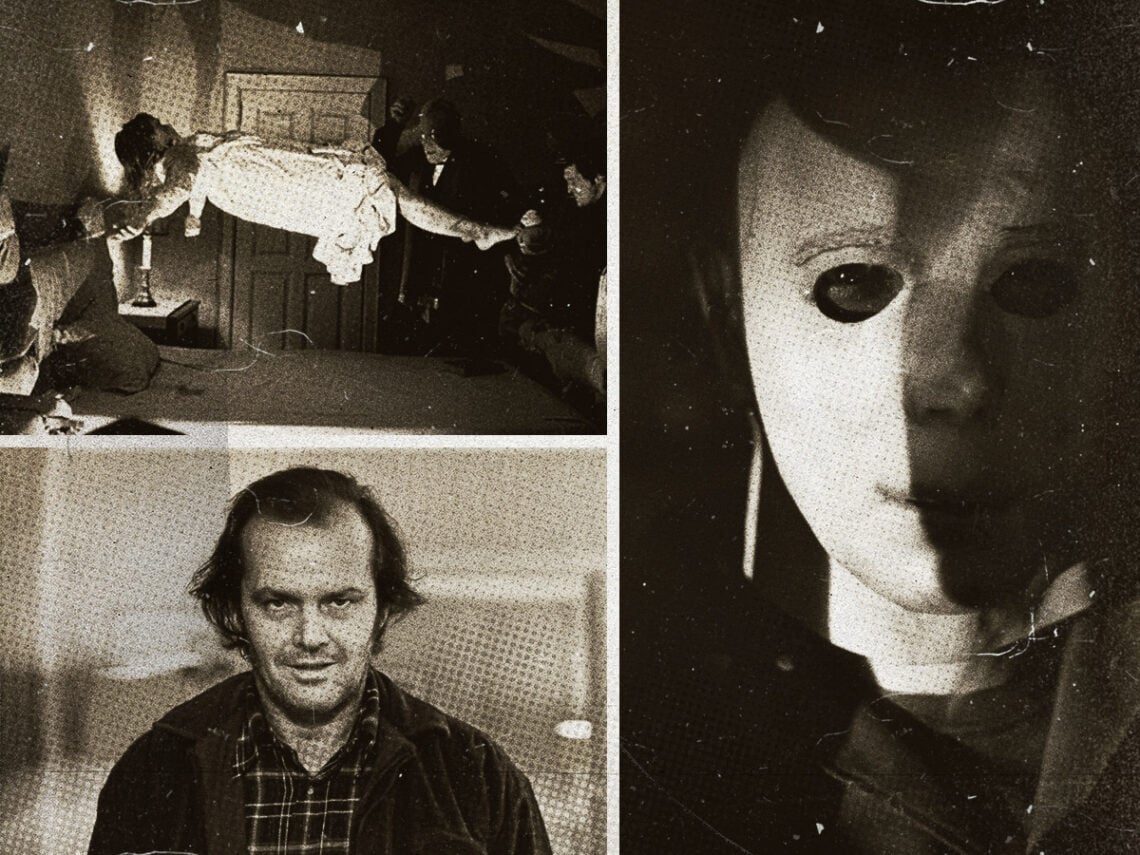
Demonic Possession Horror: The Exorcist (William Friedkin, 1973)
William Friedkin’s adaptation of William Blatty’s 1971 novel The Exorcist stars Academy Award-nominated actor Linda Blair as a little girl possessed by an evil and sinister demon. Her mother (Ellen Burstyn) enlists the help of two Church members (Max von Sydow and Jason Miller) to save the child.
The Exorcist is to the horror genre what The Godfather and Goodfellas are to the gangster genre. The film is a visceral, unforgettable and heightened experience plagued with viewing stories of audiences fainting and cursed on-set occurrences, with a terrifying and sinister underbelly that erupts into a shocking frenzy by the climax. Its subject matter of a child’s demonic possession struck initial audiences to the core, creating the quintessential possession movie.
Speaking with EWTN about his experience working on such a frightening and intense project, Friedkin shared: “I tried to keep the atmosphere very light. I tried to make it so that nobody would really get upset. Inwardly a lot of people were disturbed by the filming, without a doubt, because to watch a child — a 12-year-old girl — go through what she had to go through was very difficult for a lot of people in the cast and on the crew. But they trusted me.”
Folk Horror: The Wicker Man (Robin Hardy, 1973)
In Robin Hardy’s underrated British classic, a police sergeant’s search for a missing girl takes him to Scotland, where he meets a Pagan cult. The group denies proof that the girl existed and hid other unsettling secrets.
While the folk settings and costumes of this horror movie starring Edward Woodward suggest softness and innocence, the visuals, events, and tones suggest the opposite. A contrasting writing style is displayed throughout, with intense, tragic, fascinating, and chilling moments. In a menacing narrative, the execution combines horror, mystery, and thriller against the backdrop of religion, authority, morality, humanity, and brutality.
Gore/Splatter Horror: Saw (James Wan, 2004)
Two men (Leigh Whannell and Cary Elwes) wake up to find themselves chained to the pipes in an abandoned bathroom. They soon learn via tape that one must die due to the corrupted philosophy of a serial killer, Jigsaw (Tobin Bell).
While the first instalment in the iconic horror franchise borders more into a psychological thriller with a philosophical backdrop, James Wan and Whannell’s Saw is still relentless on the visual gore and carnage. The traps are horrific in theory and practice, leading to some intense and heart-stopping buildups that can result in grizzly and sickening antics, as skin is ripped apart and victims scream in agony.
Monster Horror: Frankenstein (James Whale, 1931)
Frankenstein is the 1931 pre-code horror film from Universal’s Classic Monsters era. It is based on Mary Shelley’s Gothic novel, Frankenstein, or, The Modern Prometheus, which invented the science-fiction genre in 1818. It stars Colin Clive as Dr Victor Frankenstein, who builds a creature he hails, Frankenstein’s Monster (Boris Karloff), after reanimating body parts.
James Whale’s film balances terror with tragedy in portraying the creature, proposing who the true monster is through a questionable moral landscape and depictions of judgement. With one of the most iconic and quoted movie scenes of all time in its re-animation sequence, the film is untouchable horror iconography that paved the way for the monster subgenre.
Paranormal Horror: The Shining (Stanley Kubrick, 1980)
A family (Jack Nicholson, Shelley Duvall and Danny Lloyd) heads to an isolated Overlook Hotel for the winter, where a sinister presence influences the father into violence. At the same time, the psychic son sees horrific forebodings from both the past and the future.
In author Stephen King’s eyes, The Shining may have failed as a straight novel adaptation, but that does not detract from the incubated genre experience of a terrifying and disturbing feature. Stanley Kubrick’s genre masterpiece feels unsafe from the beginning, thanks to the setting’s context and presentation and the visual elements such as editing and set design coming with an unnerving underbelly. Paranormal activity is executed with a harmony of suffocating tension and creative imagery that resides in pop culture as timeless, scaring generations of audiences.
Psychological Horror: Rosemary’s Baby (Roman Polanski, 1968)
John Cassavetes and Mia Farrow play a couple who move into a large Renaissance Revival apartment in New York, filled with unorthodox neighbours. After a mysterious night when she suddenly falls ill, Farrow’s Rosemary becomes pregnant. However, the happy time is infiltrated with a distressing paranoia that something is wrong with her baby and those around her.
Rosemary’s Baby is a divine example of horror and filmmaking, setting its narrative and characters out attentively before piling on the suspense inflated by mystery and paranoia. Audiences align with Rosemary’s restlessness and psychological unsettlement as everything in the film begins to feel off. The concept of female hysteria being brushed off laces Roman Polanski’s features with a contextually realistic edge, drowning the audiences in a dangerous environment where trust is eliminated
Science-Fiction Horror: Alien (Ridley Scott, 1976)
A spacecraft crew detect a distress signal from an unknown planet and investigate. An evil and deadly extraterrestrial being uses the opportunity to board their ship, leading to an onslaught of terror and kills. Alien recruited the sci-fi genre and its tropes to showcase the transitional period between the 1970s and ’80s horror filmmaking that compromised the former’s emphasis on tension with the latter’s love for excessive gore.
The film experiments with the two approaches by burrowing occasional visual bloodshed of chest-bursting and acid blood in an enticing landscape of concealment to derive tension surrounding the alien, as everything is kept in the shadows of the isolated craft setting where there is nowhere to run to.
Slasher Horror: Halloween (John Carpenter, 1978)
In 1963, a six-year-old Michael Myers brutally murdered his older sister Judith on Halloween night. Some 15 years later, he escapes from the psychiatric ward and heads back to his hometown, Haddonfield, to carry on his killings. His next victim is Laurie Strode (Jamie Lee Curtis), a teenage babysitter.
John Carptenter’s Halloween took the initial ideas Michael Powell and Alfred Hitchcock initiated in Peeping Tom and Psycho and rejuvenated them into a blueprint slasher that prioritises suspense over excessive visual carnage despite being about a series of killings. The film executes both story, characters and tone brilliantly to dignify its overall and distinct genre, orchestrating a thrilling and immersive experience of the slasher.
Zombie Horror: Night of the Living Dead (George A. Romero, 1968)
George A. Romero’s independent horror film stars Duane Jones and Judith O’Dea as two group members trapped in a farmhouse after the dead are reanimated and have an intense craving for human flesh.
Night of the Living Dead is the pivotal moment where horror created the zombie trope and the social-political commentary outlet. Romero’s film employs visuals, performances, contextual backdrop and props to illustrate a tonal and conceptual feature that scares through visual carnage and exposure of societal ills. The undead feasting sequence is one of horror’s most disturbing and gruesome scenes, accentuated by how realistic and raw everything looks. The ending is also tragic in alluding to societal racial prejudice.
