


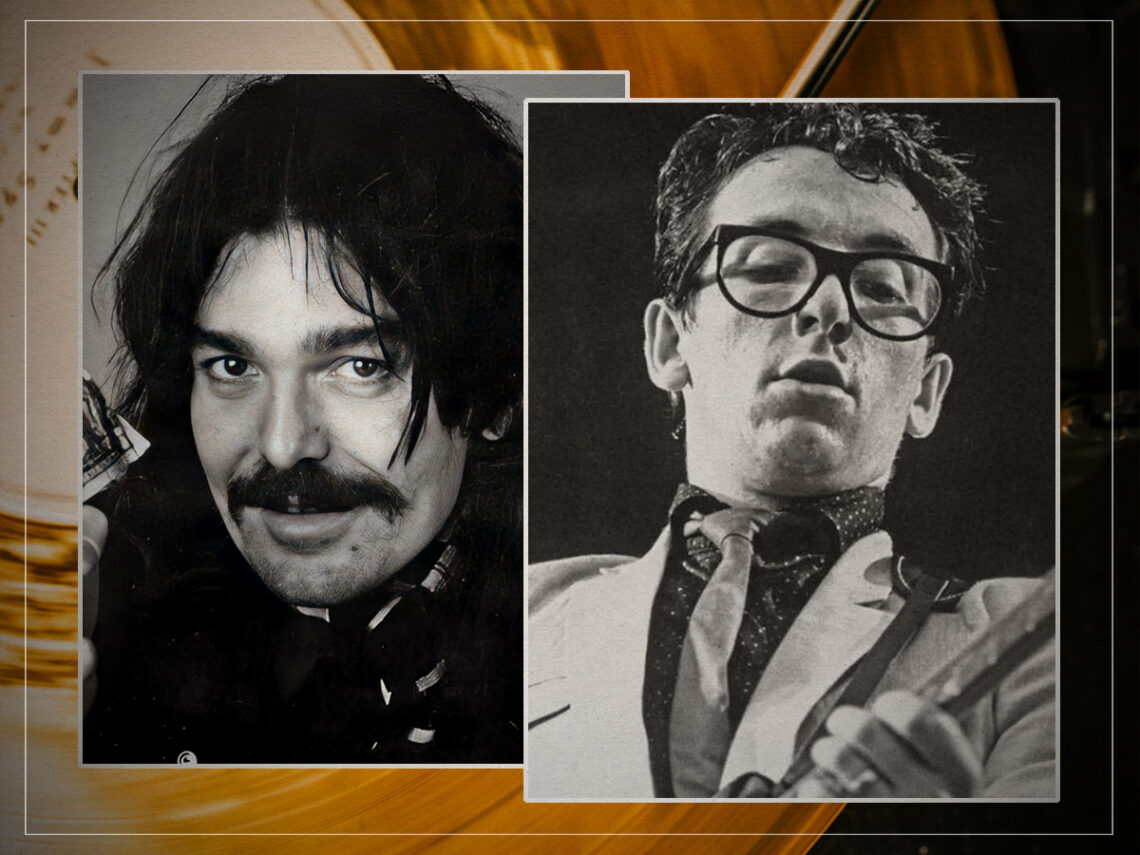
The best Captain Beefheart songs of all time, according to Elvis Costello

It’s normal to expect any musician who made their name in the 1970s to have a propensity for self-assuredness, especially when it comes to their music tastes. It’s normal in the way you might expect of any older, wiser person to have solidified their tastes over time, with less space for open-mindedness when they already know what they like and why. Knowing this is what makes Elvis Costello something of a wildcard, who once said music was “more like water than a rhinoceros”.
It’s an interesting claim, but one that makes complete sense. After all, when it comes to tastes, whether music-related or not, there’s always going to be some room for change, and assuming that we’ll always remain the same with our likes and interests feels weirdly backwards. When you look at it like that, then, it’s almost impossible to see these shifts as anything but water, always changing, not like the stone-cold physique of a rhino.
Suppose that’s also why, when Costello came along in the 1970s, he mixed well with most crowds without the need to be boxed in, like a pillar of the punk community without its primal aggression. It sounds weird to put it like that, but that’s exactly what it was: he knew how to be versatile but came at it with an intellect most didn’t really know to expect at the time. Composed, but ready for all of it.
As a result, it offered a different kind of fight that was more bite than spit, putting down the pitchforks in favour of conversational nuance, like offering an intelligent debate instead of a fist fight. This might have been seen as a softer approach to revolution (more water-based), but it no doubt fought with just as much fervour. And all of this was possible because, more than anybody, Costello knows how to move around, taking pieces of everything in a way that looks like a million things at once, forward-thinking and intricate yet anarchic.
This also shows in Costello’s own musical tastes. Once, as asked by Vanity Fair, he was asked to list 500 albums that changed his life, or what he described as ones that “can only improve your life”. Knowing the meaninglessness of words, he opted out of providing descriptions for each, instead adding in his favourite songs from each album in the hopes that they would do all the talking. Along with all the usual suspects, from Joni Mitchell to Bob Dylan, he also chose two songs by Captain Beefheart, one from 1969’s Trout Mask Replica and one from 1972’s Clear Spot.
Now, all the reasons for Costello’s love for Captain Beefheart are clear: it was never obvious what he was about to do, musically or otherwise, and there was an intelligence to his songs that felt complex yet simple, the same kind of intricacy Costello pours into his own work. But with these two records, and how differently they show off the different sides to Beefheart, there’s an obvious sense of everything Costello looked for in another musician: the right nod to the past, just the right amount of the future.
His favourite songs on the albums, ‘The Dust Blows Forward ‘n’ The Dust Blows Back’, and ‘Big Eyed Beans From Venus’, couldn’t be more different if they tried, accentuating this point: it’s never about mastering one area, even though that’s exactly what Costello and Beefheart did. It’s also about finding places in different spaces, but exercising it in a way that feels masterful and purposeful, even if there’s no rhyme or reason beyond the experimentation.
Suppose that also proves Costello’s broader point about changing tastes. It applies to artists, too, and how things are constantly shifting and evolving through different genres and patterns, sometimes with no other intention other than to exist there, whether it’s liked or not. Often, that’s besides the point: it doesn’t ask to be anything, just as it doesn’t want to imitate. Rather, it moves like liquid, reflecting multiple things at once without claiming to be anything specific.
