


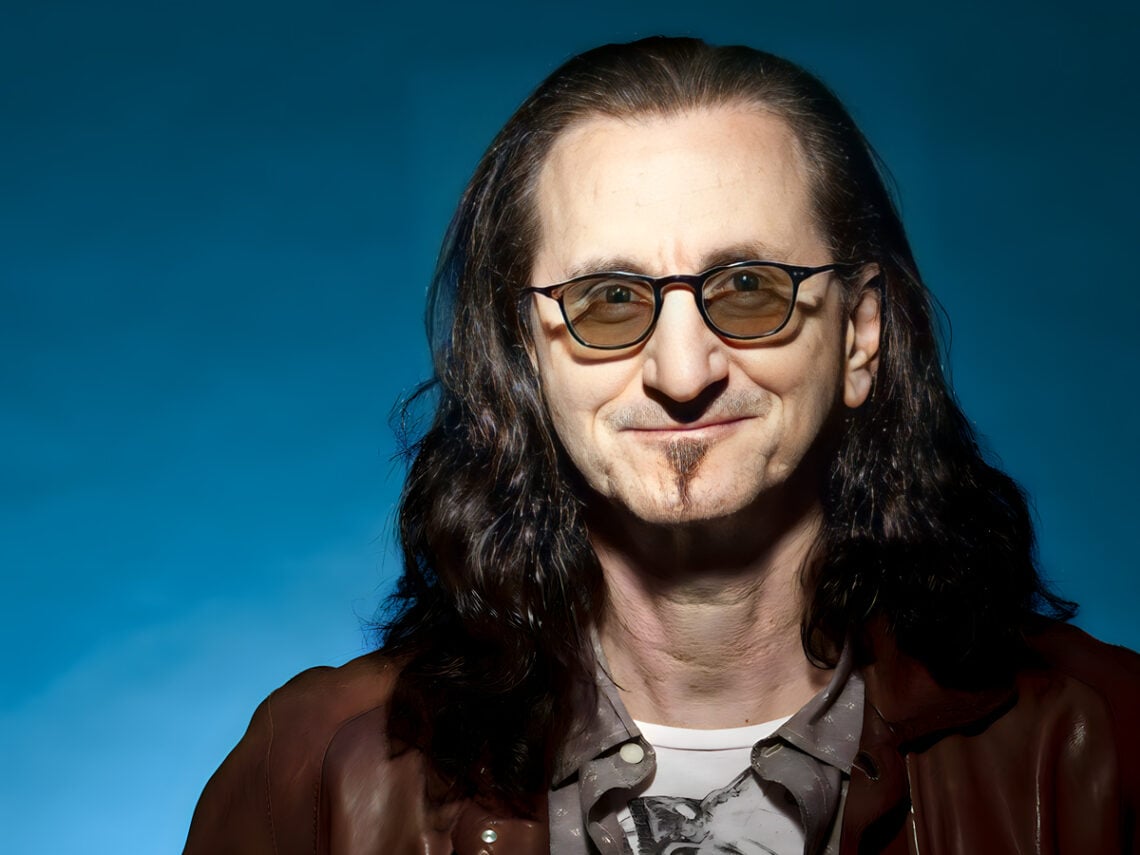
The best bass player from every genre, according to Geddy Lee

It’s a tough job being a bass guitarist. Always seen as the ‘dude in the background’ that nobody else is quite sure what they’re offering to a band, but all the while playing the role of the adhesive that holds the other musicians together. Some are happy being the anonymous member on the sidelines, but for this reason, there are so many bassists that get overlooked or ignored for their contributions – and wrongly so, might I add.
Geddy Lee, however, is one example of a bass player that’s quite difficult to ignore. As not only the bassist but also vocalist for Canadian prog rock titans Rush, he’s often cited as one of the most gifted people to pick up the instrument. Most other bassists would probably fall to their knees to worship his prowess on a four-string alone, but the fact that he could sing wavering vocal lines over equally complex melodic basslines took the impressiveness a step further.
Alongside the bombastic drumming of Neil Peart and the technical guitar parts of Alex Lifeson, Lee was crucial to Rush and their sound across five decades and produced some of the most iconic basslines in rock history, such as the undulating arpeggios of ‘New World Man’ or the morse code-interpolating ‘YYZ’. It’s hard to argue that he isn’t one of the best, so if he’s praising another bassist, then they’ve got to be good.
So, who did the Torontonian rate the highest? In an interview with UDiscover Music, he shared four names that sit on his Mount Rushmore of bass players, with one from jazz fusion, one from progressive rock, and two battling it out as the greatest in classic rock.
Geddy Lee’s favourite bass players:
Jazz Fusion: Jaco Pastorius
It could definitely be argued that Jaco Pastorius is ‘the bassist’s bassist’. His contributions to jazz fusion as a soloist, sessionist and member of Weather Report are something of an essential listen for all budding players to hear, and for even the pros to marvel at. He’s also famous for playing with Joni Mitchell on records like Hejira and having helped her transition from traditional folk artist to a more sonically daring songwriter that would expand her musical horizons.
Pastorius had a mastery of the fretless bass, which gave him a distinctive sound, and his use of harmonics on an electric four-string was something rarely seen in other players. He was daring but exceptional, and boy, didn’t he know it. He allegedly introduced himself to future Weather Report bandmate Joe Zawinul in 1974 as “the greatest bass player in the world” – and who are we to argue that?
In an interview with Rolling Stone, Lee revealed that while he was not necessarily a huge follower of jazz fusion, seeing Pastorius live was a life-changing event and “an experience that is just impossible to replicate.” Speaking about Jaco’s impeccable technique, he went on to say how “he was incredible and bizarre, and histrionic, and that thumb… I mean, he was really a once-in-a-lifetime player”.
Progressive Rock: Chris Squire
Aggressive, inventive and with fingers that move around a fretboard at lightning speed, Chris Squire was the sole continuous member of the progressive rock group Yes until his passing in 2015 and truly shaped the band’s sound.
Squire was equally as important as the keyboard playing of Rick Wakeman or Steve Howe’s noodling on the guitar, and the string of records the band would produce with Jon Anderson and Bill Bruford completing the lineup in the early ’70s are some of prog’s finest moments. On the near-flawless run of The Yes Album, Fragile and Close to the Edge, the tones of his Rickenbacker echo throughout, and it’s probably fair to say that underpinning all of the sprawling chaos on those records is Chris Squire. Nobody in the prog canon – or wider rock sphere – has ever made their bass sound so nasty.
It’s no wonder that Lee looks up to Squire as being one of the greats, as large amounts of Rush material seemingly draws influence from his playing. In the UDiscover Music interview, Lee would say that it was futile to even compare what Squire was capable of doing on his instrument. “If you look at Flea’s playing,” Lee began, “For his style of music […] he is an amazing player. I have great respect for his bass playing. But how do you compare that to what Chris Squire did? Because it’s a whole different genre.”
Rock: John Paul Jones
Despite having named two all-time favourites for the greatest rock bassist, Lee claimed that John Paul Jones stands as the greatest of his kind alive today.
Led Zeppelin are possibly the most complete four-piece in rock themselves, with everyone’s playing styles being instantly recognisable, and the contributions of Jones were no different. He very much came from a blues and jazz-centred background but used it to great effect on every Led Zep record, where the band would experiment with turning those early influences into a far headier and grandiose sound on their later records.
In a 2014 interview with Guitar World, Lee spoke about how the song ‘How Many More Times’ from Led Zeppelin, in particular, blew him away and reiterated for him how John Paul Jones “was the unsung hero in that band.”
“I saw them in Toronto at a little place called the Rockpile,” he added. “We were in the second row, and when they played this song it just blew me away. It reaffirmed for me all the creative potential in blending hard rock with progressive music.”
Rock: Jack Bruce
While Geddy Lee didn’t seem to think there was much separating John Paul Jones and Jack Bruce for the top spot, he did say that the two would have to have a playoff, and due to Bruce no longer being alive, Jones took the top spot by default. It’s understandable why Bruce might rank so highly in Lee’s estimations since he was also a singing bassist in a formidable trio, but his work beyond Cream is not to be sniffed at either.
In an interesting story he told the BBC in 2019 about witnessing Cream live for the first time, he expressed that “it was one of the strangest and greatest experiences of my life”.
“I got a balcony seat, so I was overlooking the stage and I was so close to them,” Lee continued to recall. While he could have been equally as blown away by the musicianship of Eric Clapton or Ginger Baker, Lee says that he distinctly remembers “being so enamoured with them and watching Jack Bruce. It was one of the greatest, most memorable shows I’ve ever seen”.
