


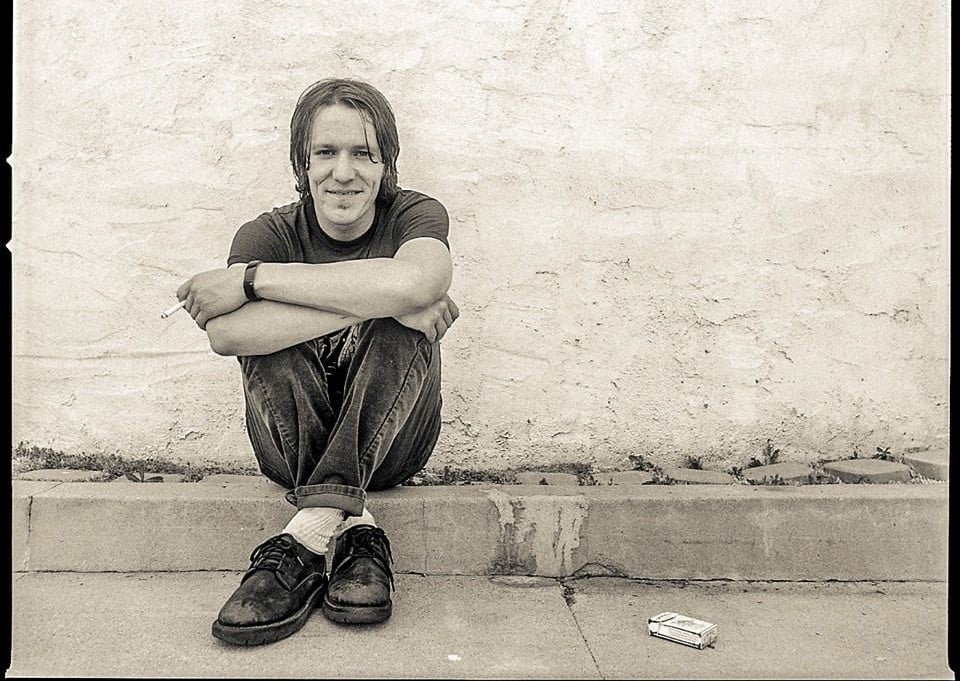
Six Definitive Songs: The ultimate beginner’s guide to Elliott Smith

Every so often, there comes a musician who is defined as a generational talent. Bob Dylan, David Bowie, Prince, Kurt Cobain…you get the point. Through chance and an abnormal amount of skill and tenacity, these musicians etch themselves into the collective memory. One of these diamonds is Elliott Smith.
Embodying the tormented artist, Smith has inspired and influenced our favourite contemporary stars. Born in 1969, before tragically taking his own life in 2003, aged only 34, he lives on through others’ music. His list of disciples is endless, and it boasts the likes of Billie Eilish, Frank Ocean, Alex G, Phoebe Bridgers and even the Red Hot Chili Peppers. This is a fantastic testament to the man who released five albums in his lifetime.
It started with Roman Candle in 1994 and ended with Figure 8 four years later in 2000. His sixth album, the posthumous From a Basement on the Hill, was released the year after his passing in 2004. It served as an emotional reminder of the genius we lost. This also points to the brilliance of Smith. The way he released five albums in just six years, and given the indelible impact they have had, really reflects the measure of accomplishment underpinning his work.
You would not be criticised for deeming him a modern-day troubadour, as his weapon of choice was the acoustic guitar, and his life, right from his birth, was one characterised by the upheaval of the self and the home. Like Kurt Cobain, Lou Reed, Nick Drake et al., Smith’s early life was also deeply scarred by deep trauma and abuse. This darkness would permeate in his work, and given his tragic passing; it only serves to make the listening experience all the more affecting.
This trauma would lead to his now characteristic abuse of drugs and alcohol. Jennifer Chiba, his partner at the time of his passing, stated: “He was remembering traumatic things from his childhood – parts of things. It’s not my place to say what.” Due to the early childhood trauma, he left his mother’s home in Texas at fourteen and went to live with his father in Portland, Oregon.
It was not just Smith’s solo work that he is remembered for, however. He also started the cult indie band Heatmiser in 1991, whilst studying at Hampshire College in Amherst, Massachusetts. Before the year ended, the band returned to Portland and it was here that Smith would start to make his enduring mark on music.
The incredibly influential four-piece released Dead Air in 1993, Cop and Speeder a year later in 1994 and Yellow No.5 the same year, all through the LA indie label Frontier Records. The band then signed to Virgin Records, who released their final album Mic City Sons (1996). Come the time of its release, though, Heatmiser had already split, as tensions had been increasing since 1994.
One of the plethora of reasons why the tension in Heatmiser had been growing was that Smith had already embarked on a solo career while the band was still functioning. His first two releases Roman Candle, in 1994, Elliot Smith in 1995 and the single ‘No Confidence Man’, were released to surprising acclaim. In 2003, Smith remembered the release of his debut album, stating: “I thought my head would be chopped off immediately when it came out because at the time it was so opposite to the grunge thing that was popular…the thing is, that album was really well received, which was a total shock, and it immediately eclipsed (Heatmiser), unfortunately.”
Smith then continued on this successful trajectory, releasing his two most iconic album’s Either/Or, in 1997 and XO 1998. Smith also famously penned the soundtrack for the classic Robin Williams film, Good Will Hunting, which featured his most well-known single, ‘Miss Misery’. He would go on to reach the summit of his fame when he performed the hit at the 1998 Oscars, clad in a distinctive white suit.
In a 2019 interview with Oregonlive, former Heatmiser bassist Brandt Peterson recalled the sentiment that marred Heatmiser towards their end, and one of the defining features of Smith’s character: “Every individual in the band had identities that were bound up with some sense of injuries, of not fitting in or whatever. I didn’t really understand myself really well, I drank pretty heavily. And Elliott was increasingly unhappy with the rock thing, and I think that I became emblematic of everything that was bad about that for him.”
So today, on what would have been his 52nd birthday, join us as we list Elliott Smith’s six definitive songs.
Elliott Smith’s six definitive songs
‘Christian Brothers’ – 2014
Taken from the soundtrack of the 2014 Smith documentary Heaven Adores You, this 1995 take Smith performed with Heatmiser is one of the best takes he ever put to wax, better than his solo version on his second album Elliott Smith (1995). This version is one of the most significant tracks in the whole of Smith’s back catalogue.
A straight-up alternative rock number, ‘Christian Brothers’ is certainly the heaviest song Smith ever contributed. It features a brilliant vocal melody, the classic and haunting line, “Nightmares become me, it’s so fucking clear”. The fuzzy, meaty guitar line in the chorus is so atmospheric it is almost an example of shoegazing. If you want to understand the background Heatmiser came from, this is it. It also agrees with Smith’s 2003 statement that he didn’t really see the majority of his solo work fitting in with Heatmiser’s brand of indie rock.
‘Roman Candle’ – 1994
The opener from Smith’s debut album Roman Candle, released in 1994, the eponymous song is critical as it represents the first real introduction listeners got to the true Elliott Smith. A moody, finger-picked number, featuring the haunting guitar in the background, ‘Roman Candle’ is folk-rock at its finest.
A moody, thoughtful number, it outlined the blueprint Smith would take in his career. The opening line is a shocking inference to the trauma he experienced as a child: “He played himself/ Didn’t need me to give him help/ He could be cool, cruel to you and me/ Knew we’d put up with anything”.
‘Miss Misery’ – 1997
No definitive list of Elliott Smith songs would be complete without what is hailed as his defining opus.
Featured on the closing credits of Good Will Hunting, ‘Miss Misery’ includes all the hallmarks of a Smith song and brilliantly ties them together. One would posit that Elliott Smith soundtracking the Robin Williams classic is one of the most perfect pairings in film history. The autumnal feel inherent to Smith’s work perfectly captured the unforgettable themes of the film.
‘Waltz #2 (XO)’ – 1998
The first single of Smith’s fourth album XO (1998), ‘Waltz #2 (XO)’ is one of his most recognisable songs. It features a Beatles-esque chord progression, and his trademark warm, compressed vocals.
A theatrical story about a woman called Cathy, trapped in a loveless husk of marriage, the song is significant as it presents Smith as what he was, a genius songwriter. A brilliant story matched by a searing musical score, the flecks of the strings at the end really help to cement this as one of Smith’s finest moments.
‘The Biggest Lie’ – 1995
One of Smith’s more stripped back and blue tracks, ‘The Biggest Lie’ starts with the autobiographical line: “I’m waiting for the train/ The subway that only goes one way/ The stupid thing that will come to pull us apart/ And make everybody late”. The final track on his eponymous second album, ‘The Biggest Lie’ is a perfect example of an album gradually winding down to a close.
In 2020, Slim Moon, the founder of Kill Rock Stars, the label through which Smith’s first two debut albums were released, said: “I’ve always felt like this record is underappreciated. A lot of people overlook Elliott’s first two records—they think of them as a prelude to the bigger albums that followed—but when you go back, you discover they’re really great. This is Elliott’s most fragile and delicate music.”
Moon is right in labelling the album Smith’s most fragile, particularly when we note the lines: “Oh we’re so very precious, you and I/ And everything that you do makes me want to die” and “You spent everything you had/ Wanted everything to stop that bad/ And now I’m a crushed credit card registered to Smith”.
‘Between the Bars’ – 1997
The fourth track off Smith’s third album Either/Or, ‘Between the Bars’ is one of the highlights from his 1997 offering. Featuring his trademark descending chord pattern, and subdued vocals, the song is undoubtedly one of Smith’s best.
Autumnal and yearning, the track is significant as it represents the middle point in Smith’s career and development. David Brusie perfectly referred to it as “a bridge between the lo-fi darkness of Roman Candle and Elliott Smith and the studio sheen of XO and Figure 8.”

Never Miss A Beat
The Far Out Beatles Newsletter
All the latest stories about The Beatles from the independent voice of culture.
Straight to your inbox.