


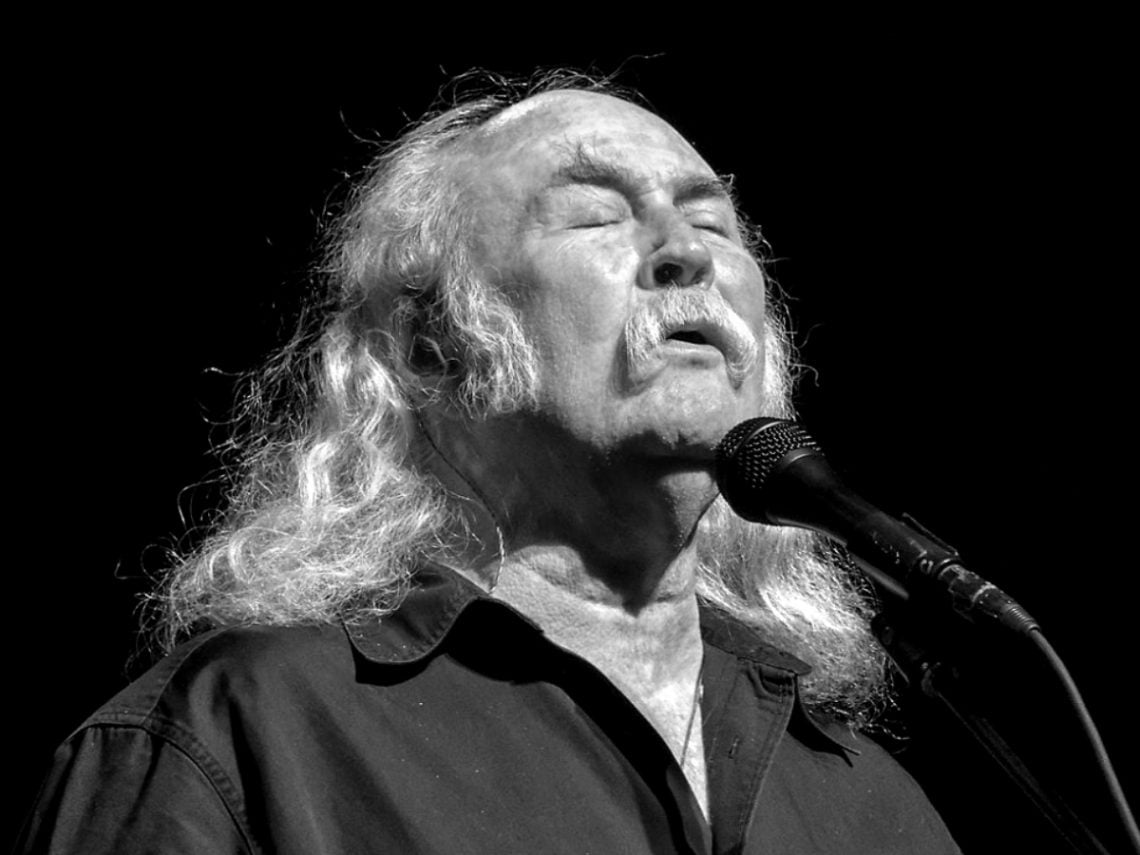
The Beatles vs The Byrds and the 1967 song that left David Crosby “stupefied”

‘Where I started with music was listening to Josh White, The Weavers, Pete Seeger, and Odetta,” David Crosby said in 1998, recalling his folk leanings as a youngster in the early 1960s.
Crosby felt like his own songwriting was heading more in the Woody Guthrie direction, right up until the summer of 1964. “It’s just that we heard The Beatles,” he told the Star-Ledger, “And if you’re a folkie and work in coffeehouses and go to see A Hard Day’s Night, your life changes.”
Overnight, at the age of 23, Crosby put away his acoustic guitar and went to work with his new bandmates Gene Clark and Roger McGuinn with the goal of crafting a new kind of Dylan-esque folk music, one injected with the energy and jangly electric guitar sound of the Fabs. They might not have been the first to come up with that rather obvious formula in 1964, but they were arguably the first to truly pull it off.
In January of ’65, just a few months after Crosby saw A Hard Day’s Night, The Byrds recorded their cover of Dylan’s as-yet-unreleased song ‘Mr Tambourine Man’, with McGuinn playing a shimmering riff on a 12-string Rickenbacker guitar. It became the band’s debut single that April, and shot up the charts to number one, essentially ushering in the folk rock era before Dylan himself had gone electric.
Suddenly, rather than just admiring Dylan and The Beatles from afar as an anonymous, coffee-house wannabe in Los Angeles, David Crosby was rubbing shoulders with them.
“The Byrds and The Beatles [took] LSD together, playing music and lying around in the sun in the Hollywood Hills,” Crosby told Mojo magazine shortly before his death in 2023, recalling the two bands’ legendary meet-up in the summer of 1965.
He added, “But the startling part was the chemistry between the people rather than the drugs. John was more difficult, and Paul was more distant, but George was more friendly and undefended. I introduced George to Ravi Shankar when I went to England, which led to George learning the sitar and meeting the Maharishi, so we inspired each other.”
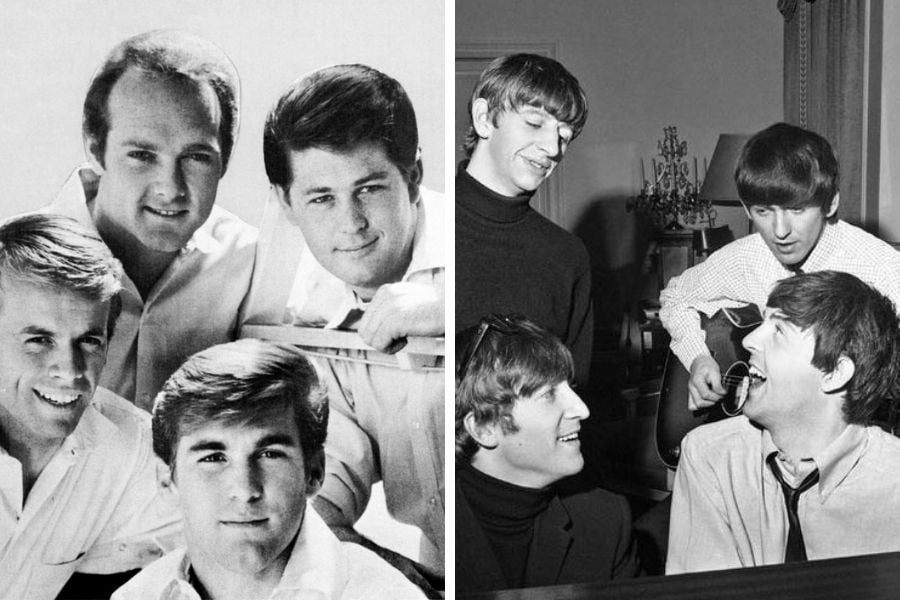
While The Beach Boys are routinely identified as the Beatles’ central rivals among American bands, with Brian Wilson’s songwriting and production serving as a necessary kick in the ass for Lennon and McCartney’s creative ambitions, there was a period in the mid-60s when The Byrds were clearly an equally important measuring stick. The charts suggested as much, and so did the sound of the records: as pristine and harmonic as anything The Beatles were doing, but more socially conscious and political.
Shortly before hanging out with Crosby and co in Hollywood, Lennon and Harrison had made a point of seeing The Byrds perform in London on the band’s first UK tour. After the gig at the Blaises Club, they went backstage to introduce themselves.
A year earlier, Crosby and McGuinn had essentially based their entire new look and sound on what the Fab Four were doing. Now, they were already returning the compliment, as a lot of the work on their next record, Rubber Soul, incorporated Byrdsy elements, including Harrison’s 12-string guitar lick on ‘If I Needed Someone’ and the three-part harmonies and West Coast vibe of ‘Wait’.
Coincidentally, in America, Rubber Soul came out the very same week as The Byrds’ sophomore album, Turn! Turn! Turn!, in early December of 1965, but it was the title track from the latter record that raced out to number one on the pop charts. The Beatles had some genuine jangly competition on their hands.
As the calendar shifted to 1966, both bands wasted no further time watching the returns come in from their last records. They were riding a creative wave that, in some respects, had started during their time together dropping acid in LA. While Crosby and McGuinn would later both take credit for introducing The Beatles to eastern religion and sitar music, the larger psychedelic revolution in rock ‘n’ roll was already pushing every major band to get ‘experienced’ right away or else get out of the way.
The Byrds poured their energy into ‘Eight Miles High’, the controversial single that would boldly announce their full embrace of psychedelia and jazz fusion, while also notching them another top 20 US hit upon its release in March. While a few radio stations refused to play the track due to its obvious drug references, most felt it was vague enough to get a pass, giving The Beatles a clear road map for pushing the envelope themselves as they returned to Abbey Road a few weeks later to start recording the album that would become Revolver.
Of course, six months counted the same as six years in that era, and by the time Revolver finally arrived in August of 1966, The Byrds were in something of a freefall. Their third album, Fifth Dimension, had suffered commercially and critically following the mid-recording departure of Gene Clark, and the overall vibe of the band was now beginning its slow, partially drug-induced descent. The Beatles, meanwhile, had collectively elevated themselves to arguably the apex moment of their career.
“I know the other Byrds, especially Roger, were thrilled by Revolver,” David Crosby told Mojo, suggesting there was no jealousy at the time, just admiration and motivation. “Anyone with a brain would have been. Revolver’s impact on The Byrds was obvious; look at how hard we were trying to go in the same direction, as fast as we possibly could. ‘Eight Miles High’ had shown we were already trying, with the John Coltrane guitar solo and writing about drugs, which nobody else dared to do. But I think ‘Eight Miles High’ was still miles behind Revolver [presumably, no pun intended]. Our next album [Younger Than Yesterday] was The Byrds trying to be us, not The Beatles.”
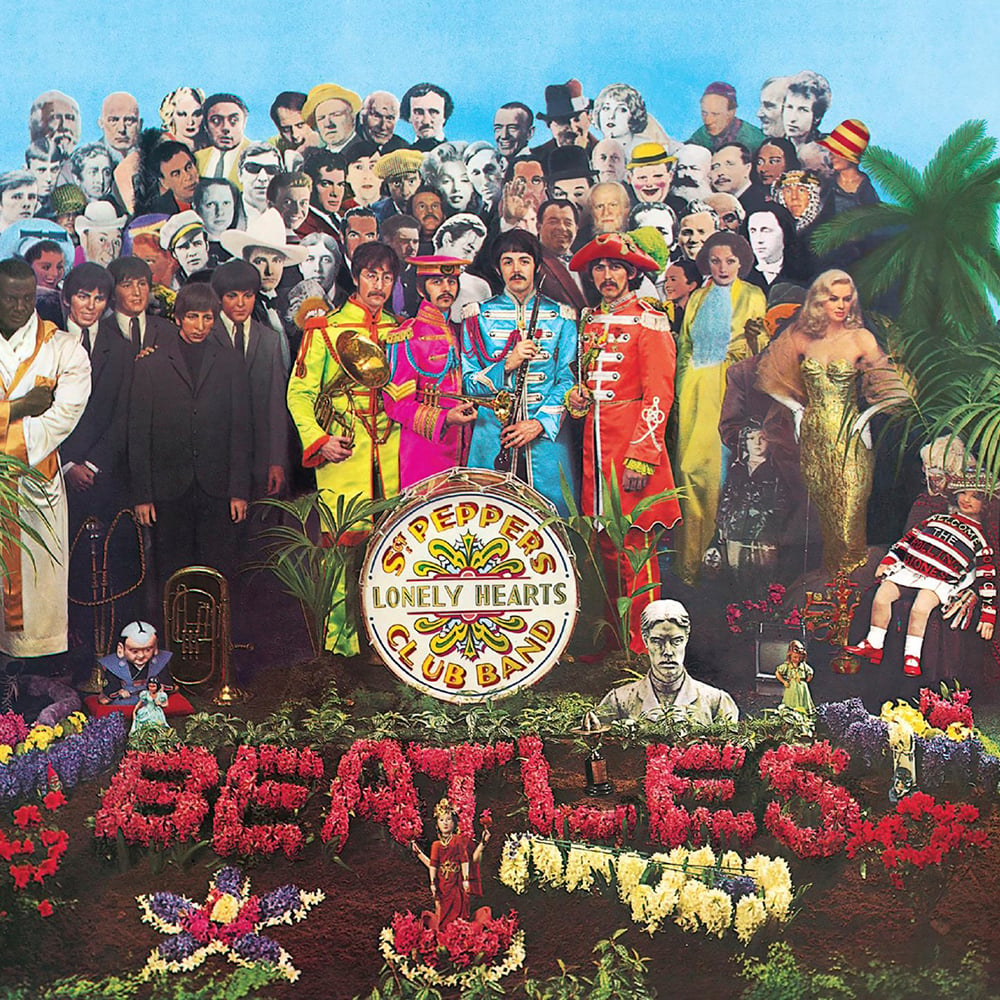
Younger Than Yesterday, released in February 1967, put The Byrds back into the first tier of pop in the eyes of many of their peers, but it again failed to capture the commercial success of their earlier, Dylan-covering days, as none of the singles broke out big in the US, or even managed to chart at all in the UK. Not long after finishing the record, David Crosby escaped the increasingly unpleasant company of his own bandmates to head to London and hang out with The Beatles in the studio for a day. They were deep into recording a new concept album called Sgt Pepper’s Lonely Hearts Club Band.
“I came in, and I was very high,” Crosby told Uncut in 2021, “They sat me down on a stool in the middle of the studio and rolled up two six-foot-tall speakers on either side of me. Then, laughing, they climbed the stairs back to the control room and left me there. And then they played ‘A Day In The Life’… At the end of that last chord, my brains just ran out my nose onto the floor in a puddle. I didn’t know what to do, I was just stupefied.”
Whatever friendly rivalry Crosby imagined might have existed between The Byrds and The Beatles up until that point had been left on the studio floor right alongside his metaphorical brain tissue. By the following year, he would be ousted from the band altogether, as they completely shifted gears again into more of a country-rock direction.
Needless to say, Crosby would recover quite well from that episode, and by the end of the decade, as a member of Crosby, Stills & Nash, he’d once again find himself being compared to the now-defunct Beatles as part of one of the finest singing and songwriting collectives in the world. Looking back on all the artists he’d met and collaborated with across a 60-year career, though, Crosby always recalled that day at Abbey Road as a standout brush with greatness, one he picked as his single most memorable encounter with another artist.
In the span of just three years, The Beatles had inspired Crosby to create the sound of The Byrds and, ultimately, to start all over again.

Never Miss A Beat
The Far Out Beatles Newsletter
All the latest stories about The Beatles from the independent voice of culture.
Straight to your inbox.