


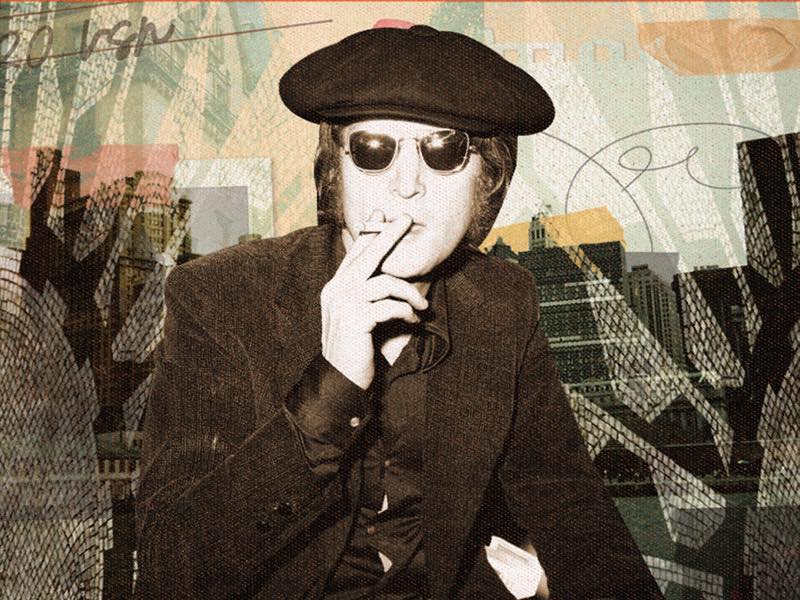
Every song by The Beatles that John Lennon hated

There are certainly not many people who can claim to have enjoyed an impressive pop music career to the magnitude of John Lennon. His work with The Beatles is rightly considered some of the finest pop songs ever created, but the truth is, Lennon himself wasn’t particularly impressed with a large proportion of them. “I feel I could make every fucking one of them better,” remarked Lennon during a typically caustic interview with David Sheff. Despite being a part of The Beatles, the bespectacled ‘Imagine’ singer has never been shy about taking the Fab Four down a peg or two.
It means that while there is certainly a list of songs that Lennon loved from the band, and he loved many, there is an equally large list of songs that he hated. Below, we’ve pulled together a comprehensive list of all those tracks and offered some background information as to why Lennon may have had a problem with his past creations. It’s a list that will likely make bonafide Fab Four fans wince, but Lennon knew what he liked, and not all of The Beatles’ work was given such favour.
Some six decades after they first got together, the world is still endlessly talking about John Lennon, Paul McCartney, George Harrison and Ringo Starr. From Please Please Me right up until Let It Be, four friends from Liverpool would achieve monumental fame and success in an astoundingly short period of time. While the group enjoyed tremendous highs, they battled through their fair share of internal tension and touring mishaps along the way too.
In their meteoric rise to rock and roll fame, the band recorded in excess of 300 songs and, predictably, not all of them hold the same weight as their classics. In the years after the Beatles disbanded, John Lennon was often drawn into a conversation about the band and was never afraid to share his opinion, no matter the angle.
It was a classic attempt at gaining some salacious column inches, and Lennon rarely disappointed.
The Beatles songs that John Lennon hated:
‘Twist and Shout’ (1963)
The cover of Phil Medley and Bert Berns’s anthem has been a mainstay at parties since the band released it, but the track has always been a problem for John Lennon and his social values.
On February 11th, 1963, The Beatles were exhausted. They’ve spent all day recording practically every song in their current live act for what will be their debut album, Please Please Me. It’s been over 12 hours with few breaks, and now it’s time to wrap up the day. John Lennon has been suffering from a cold and has just enough of a voice to let loose on one last high-energy rocker: a version of ‘Twist and Shout’.
Almost a broken unit, Lennon pushed himself to the limit for the recording. Practically tearing his throat apart in one of the most iconic rock vocal performances of all time, the process would negatively impact the singer.
Speaking in that year, Lennon says he “always hated singing that song” when there was a black artist on the bill. “It doesn’t seem right, you know. I feel sort of embarrassed,” he added. “It makes me curl up. I always feel they could do the song much better than me.” It’s an honest reflection of what many think is The Beatles’ dark secrets.
‘I’ll Get You’ (1963)
The track that ended up as the B-side to ‘She Loves You’ has never really been taken too seriously. Featuring on The Beatles’ second album, the song feels a bit flat for John Lennon and his now caustic sensibilities.
While there’s some dispute about its creation – with some scholars claiming it to be a Lennon number but McCartney insistent that it was a 50/50 collaboration – Lennon would likely have distanced himself if he could.
He told David Sheff in 1980: “That was Paul and me trying to write a song… and it didn’t work out.” Though Macca would disagree, the track remains a miss among many, many hits.
‘It Won’t Be Long’ (1963)
Taken from With The Beatles, ‘It Won’t Be Long’ is a song that many Beatles fans will hold dear to their hearts but, for Lennon, it never really quite made it despite starting off a serious discussion about the band’s intellectual credentials, and that is enough for it to be cast aside by Lennon.
As noted by Far Out’s Tyler Golsen: ‘It Won’t Be Long’ is still right within the band’s basic pop-rock wheelhouse, but it’s those literal lyrical flourishes that elevated them beyond the mindless schlock of the day. As their literary influences were poking through, the band also began to evolve into more musically complex territory as well. ‘It Won’t Be Long’ was noted for its complicated harmonic structure, and, according to Lennon, this helped endear the band to a whole new audience.
“‘It Won’t Be Long’ is mine. It was my attempt at writing another single,” remembered Lennon in 1980. “It never quite made it. That was the one where the guy in the ‘London Times’ wrote about the ‘Aeolian cadences of the chords’ which started the whole intellectual bit about the Beatles.”
‘Hold Me Tight’ (1963)
In another song from With The Beatles, we see Lennon’s tongue turn a little sharper as he reflects on a wholly forgettable number. It’s no surprise then that neither Lennon nor McCartney ever thought much of the song. “That was Paul’s. Maybe I stuck some bits in there – I don’t remember,” Lennon told David Sheff in 1980.
“It was a pretty poor song and I was never really interested in it either way,” he added.
McCartney echoed similar sentiments in Barry Miles’ Many Years From Now, saying: “When we first started it was all singles, and we were always trying to write singles, That’s why you get lots of these two minute 30-second songs; they all came out the same length. ‘Hold Me Tight’ was a failed attempt at a single which then became an acceptable album filler.”
McCartney also told Beatles historian Mark Lewishon, “I can’t remember much about that one. Certain songs were just ‘work’ songs, you haven’t got much memory of them. That’s one of them.”
‘I Should Have Known Better’ (1964)
A Hard Day’s Night is one of the band’s standout albums, and it features some incredible songs too. Some of the band’s best, in fact—but one song never really landed.
For Lennon, it fell into the same old pattern of writing as many songs as possible, as he put it: “That’s me. Just a song— It doesn’t mean a damn thing.”
The more avid Beatles fans will remember ‘I Should Have Known Better’ because it featured in a notable scene in the A Hard Day’s Night film. The scene featured the band as they mimed along to the song while playing cards on a train. It has proven to be a moment in history as George Harrison’s future wife, Pattie Boyd, looked on in admiration.
‘Eight Days A Week’ (1964)
The song featured on The Beatles’ most maligned album, The Beatles for Sale, and is regarded as one of their more popular efforts. But for John Lennon, the track never felt like a truly great tune.
In 1964, The Beatles were at their most commercial, and the demands of producing hit after hit saw them occasionally let that subconsciously arrive at the forefront of their creative focus. In a short space of a few years, they’d gone from playing to sparsely attended working men’s clubs in Liverpool to becoming the most talked-about people on the planet.
During that time, Lennon had some issues with their creations. “‘Eight Days A Week’ was the running title for Help! before they came up with Help!” he revealed during an interview. “It was Paul’s effort at getting a single for the movie. That luckily turned to ‘Help!’ which I wrote, bam! bam!, like that and got the single. ‘Eight Days A Week’ was never a good song”.
“We struggled to record it and struggled to make it into a song. It was his initial effort, but I think we both worked on it. I’m not sure. But it was lousy anyway,” Lennon added as one final kick to ‘Eight Days A Week’ as it already lies unconscious on the ground.
‘It’s Only Love’ (1965)
Released in 1965, Help! cemented The Beatles as a powerhouse pop act. As well as housing some of the group’s most beloved songs, it also had some room on the tracklisting for the song John Lennon hated most of all.
Often labelling their previous work before meeting Bob Dylan as trivial, the singer was particularly scathing about one song, ‘It’s Only Love’. Featuring on the band’s Help! the album, as a central point on the second side, the song was originally titled ‘That’s A Nice Hat’. Speaking in 1980 with David Sheff of Playboy, Lennon cringed at the triteness of the lyrics.
“‘It’s Only Love’ is mine,” he recalled, “I always thought it was a lousy song. The lyrics were abysmal. I always hated that song.” It’s a pretty damning indictment of the piece but not one it’s difficult to agree with. Looking through the song’s lyrics, it’s hard not to suggest the band are phoning it in a little.
“Sometimes we didn’t fight it if the lyric,” said McCartney, who co-wrote the song, musing on the somewhat cheesy lyrics. He continued, “[If it] came out rather bland on some of those filler songs like ‘It’s Only Love’. If a lyric was really bad we’d edit it, but we weren’t that fussy about it, because it’s only a rock ‘n’ roll song. I mean, this is not literature.”
‘Yesterday’ (1965)
Another track from Help! sees Lennon take aim at quite possibly the band’s most famous song of all time. While ‘Yesterday’ is an undoubted classic, Lennon took umbrage with the song’s lack of lyrical density.
As McCartney recalled in Anthology, the song’s melody came to him in a dream while he was staying at the home of his then-girlfriend Jane Asher: “I was living in a little flat at the top of a house and I had a piano by my bed,” he said. “I woke up one morning with a tune in my head and I thought, ‘Hey, I don’t know this tune – or do I?’ It was like a jazz melody. My dad used to know a lot of old jazz tunes; I thought maybe I’d just remembered it from the past. I went to the piano and found the chords to it, made sure I remembered it and then hawked it round to all my friends, asking what it was: ‘Do you know this? It’s a good little tune, but I couldn’t have written it because I dreamt it.’”
However, Lennon wasn’t buying it, later telling David Sheff in 1980: “The lyrics don’t resolve into any sense, they’re good lines. They certainly work, you know what I mean? They’re good— but if you read the whole song, it doesn’t say anything; you don’t know what happened. She left and he wishes it were yesterday, that much you get, but it doesn’t really resolve. So, mine didn’t used to either. I have had so much accolade for ‘Yesterday.’ That’s Paul’s song, and Paul’s baby.”
Adding: “Well done. Beautiful— and I never wished I’d written it.”
‘Run For Your Life’ (1965)
Taken from the band’s seminal album Rubber Soul, ‘Run For Your Life’ bucks the trend of the record and is closer to the band’s previous material. Rubber Soul saw the group begin to move away from pop stardom and toward artistic integrity.
In a now-iconic interview with Rolling Stone back in 1970, John Lennon was still reeling from the disbandment of The Beatles and was clearly keen to make his feelings known. Not so much that the group had broken up but that it had done so when Paul McCartney had decided to. It was an issue that had always irked the bespectacled Beatle, largely because he had tried to leave the band quietly the previous year.
He told Sheff in 1980: “It has a line from an old Presley song. ‘I’d rather see you dead little girl than to be with another man’ is a line from an old blues song that Presley did once. Just sort of a throw-away song of mine that I never thought much of… but it was always a favourite of George’s.”
‘And Your Bird Can Sing’ (1966)
Despite being one of Paul McCartney’s favourite songs from the mammoth Anthology release, the song’s original inclusion on Revolver wasn’t reviewed well by Lennon when he looked back.
The original song, released on the 1966 album Revolver, was written predominantly by John Lennon but, much like the majority of the Beatles material, is officially credited to the Lennon–McCartney partnership. “‘And Your Bird Can Sing’ was John’s song,” McCartney revealed. “I suspect that I helped with the verses because the songs were nearly always written without second and third verses. I seem to remember working on that middle eight with him, but it’s John’s song, 80-20 to John.”
However, in 1972, Lennon distanced himself from the song and called it “another horror”, which is a sentiment he backed up again in 1980, calling it “another of my throwaways”. Considering the calibre of songs Lennon likely threw away, that shouldn’t necessarily discredit the song.
‘When I’m Sixty Four’ (1967)
When Paul McCartney came up with the idea for The Beatles’ concept record Sgt. Pepper’s Lonely Hearts Club Band, he came equipped with a ream of tracks that Lennon would later refer to as “granny music”. In fact, those words are a little kinder than he would use.
Naturally, ‘When I’m Sixty Four’ falls into that cracked and Lennon admitted: “I would never dream of writing a song like that,” he said. “There’s some things I never think about, and that’s one of them.”
In fairness, McCartney himself would also follow Lennon’s opinion on this one, as the star explained in a Los Angeles Times interview: “It was really an arbitrary number when I wrote [‘When I’m Sixty-Four’]. I probably should have called it ‘When I’m 65,’ which is the retirement age in England. And the rhyme would have been easy, ‘something, something alive when I’m 65.’ But it felt too predictable. It sounded better to say 64.”
‘Lovely Rita’ (1967)
Following up that song on the album and in the list of Lennon’s least favourite songs is ‘Lovely Rita’, a track imbued with the same ragtime, good ol’ fashion fun as the previous track.
Released on the first of June 1967, ‘Lovely Rita’ is one of the haziest recordings from Sgt. Pepper’s. Infused with a hefty dose of reverb, the track simmers with the heat of high summer. It was originally written by Paul McCartney as a satirical swipe at authority figures, with the titular female traffic warden representing the banal bureaucracy of modern life. But as McCartney would later explain: “I was thinking it should be a hate song… but then I thought it would be better to love her.”
“That’s Paul writing a pop song,” recalled Lennon in 1980. “He makes ’em up like a novelist. You hear lots of McCartney-influenced songs on the radio now. These stories about boring people doing boring things– being postmen and secretaries and writing home. I’m not interested in writing third-party songs. I like to write about me, ‘cuz I know me.”
‘Lucy In The Sky With Diamonds’ (1967)
One song that may surprise fans to know was on the list of Lennon’s most disliked songs was his own composition ‘Lucy In The Sky With Diamonds’. Incorrectly deemed to be about LSD, the song is famed for its psychedelic lyrics nonetheless.
In a Lennon and Yoko Ono interview with Dick Cavett, Lennon attempted to clear up the confusion surrounding the title of the track. He claimed: “It [the song] never was, and no one believes me. I even saw some famous star introduce me; I’ve forgotten who it was; they were introducing a Lennon/McCartney show, and they were saying how ‘Lucy in the Sky with Diamonds’ was about LSD. This is the truth: my son came home with a drawing and showed me this strange-looking woman flying around. I said, ‘what is it’, he said, ‘it’s Lucy in the sky with diamonds’. I thought, ‘that’s beautiful,’ and immediately wrote a song about it.”
However, Lennon didn’t appreciate the track: “I heard ‘Lucy in the Sky With Diamonds’ last night. It’s abysmal, you know?” Lennon said in 1980. “The track is just terrible. I mean, it is a great track, a great song, but it isn’t a great track because it wasn’t made right. You know what I mean?”
‘Good Morning, Good Morning’ (1967)
When you’re asked to produce so many songs in such little time, there’s a good chance you will begin to fall out of love with the creations as quickly as you made them. ‘Good Morning, Good Morning’ falls into that bracket.
His own song, ‘Good Morning Good Morning’, was inspired by a mixture of television commercials for Kellogg’s Corn Flakes breakfast cereal and the 1960s sitcom Meet the Wife. “It’s a throwaway, a piece of garbage, I always thought,” ever the critic, Lennon once said.
Adding: “I always had the TV on very low in the background when I was writing, and it came over, and then I wrote the song.”
‘Hello, Goodbye’ (1967)
This one divides people: For some, it’s Paul McCartney at his most brilliantly creative, while for others, it’s a slow and obvious sign of the direction the bassist would take with Wings.
With the Magical Mystery Tour film released, the band needed a new record to accompany it. The album is filled with some of the better Beatles efforts ut one stuck in Lennon’s teeth, ‘Hello, Goodbye’.
“That’s another McCartney. An attempt to write a single. It wasn’t a great piece,” Lennon told Sheff. “The best bit was at the end, which we all ad-libbed in the studio, where I played the piano. Like ‘Ticket To Ride,’ where we just threw something in at the end.”
‘Lady Madonna’ (1967)
Another number from that album which found no favour with John Lennon was ‘Lady Madonna’, a track which Ringo Starr quite accurately noted as sounding “like Elvis, doesn’t it? No, it doesn’t sound like Elvis… it IS Elvis. Even those bits where he goes very high.”
Though Lennon admits that the song had a great piano lick, but he later conceded that “the song never really went anywhere”. For the singer, that was enough to cast it into the shadows.
‘Ob-La-Di, Ob-La-Da’ (1968)
The song that launched Lennon’s tirade of “granny music” was ‘Ob-La-Di, Ob-La-Da’ a song that not only lacks any real sensical lyrics but was also compounded by Macca’s incessant desire to record it.
After the song was finally completed, studio engineer Geoff Emerick quit the studio and refused to work with the band. It would be Emerick who revealed Lennon’s true thoughts on the track, later stating that Lennon “openly and vocally detested” the song and called it “more of Paul’s ‘granny music shit'”.
However, in periods of a more lighthearted nature, Lennon is said to have been a little more enthusiastic about the song, as Emerick said, Lennon began “acting the fool and doing his fake Jamaican patois”.
‘Birthday’ (1968)
Featuring on the band’s White Album, ‘Birthday’ has a curious story attached to its composition as the band rushed to finish a track so they could watch The Girl Can’t Help It, an “old rock film with Little Richard and Fats Domino and Eddie Cochran and a few others.”
As such, the song falls flat as Lennon remembered in 1980, “‘Birthday’ was written in the studio. Just made up on the spot. I think Paul wanted to write a song like ‘Happy Birthday Baby,’ the old ’50s hit. But it was sort of made up in the studio. It was a piece of garbage.”
While Lennon was a little blunt in his view, McCartney offered more detail on the song’s creation: “What happened was The Girl Can’t Help It was on television. That’s an old rock film with Little Richard and Fats Domino and Eddie Cochran and a few others,” remembers McCartney back in 1968. “We wanted to see it, so we started recording at five o’clock. And we said, ‘We’ll do something, We’ll make up a backing track.’ So we kept it very simple—twelve-bar blues kind of thing. And we stuck in a few bits here and there in it, with no idea what the song was or what was gonna go on top of it. We just said, ‘Okay. Twelve bars in A, and we’ll change to D, and I’m gonna do a few beats in C.’ And we really just did it like that… random thing”.
‘Rocky Raccoon’ (1968)
A White Album song which couldn’t be more Paul McCartney if it tried. Asked by David Sheff who wrote the song, Lennon dryly replied: “Couldn’t you guess? Would I go to all that trouble about Gideon’s Bible and all that stuff?”
He was also quoted as saying: “I saw Bob Hope doing it once on the telly years ago; I just thanked God it wasn’t one of mine.”
Like most things in this field, the band were in agreement. “‘Rocky Raccoon’ is quirky, very me,” Paul McCartney proclaimed in the book Many Years From Now. “I like talking blues so I started off like that, then I did my tongue-in-cheek parody of a western and threw in some amusing lines. I just tried to keep it amusing, really; it’s me writing a play, a little one-act play giving them most of the dialogue. Rocky Raccoon is the main character, then there’s the girl whose real name was Magill, who called herself Lil, but she was known as Nancy”.
‘Cry Baby Cry’ (1968)
Another White Album number, this time straight from Lennon himself. While in 1968 he was happy to include the song on the album, he also showed his hesitance to conclude it: “I’ve been playing it over and over on the piano. I’ve let it go now, but it will come back if I really want it,” he said.
According to Lennon, he had come up with the original idea for the song much in the same way that he conceived of ‘Good Morning Good Morning’: through an advertisement.
Speaking in 1980, Lennon simply referred to it as “a piece of rubbish”.
‘Maxwell’s Silver Hammer’ (1969)
There are a lot of songs on this list that highlight Lennon’s ability to be cutting when he wanted to. However, in this selection, the singer and guitarist would have been backed by his bandmates as George and Ringo equally disliked this song too, largely because of the song’s intense and lengthy composition.
Written about a student named Maxwell Edison who commits murders with a hammer, McCartney was the sole creator of the song: “My analogy for when something goes wrong out of the blue, as it so often does,” he once explained.
“I hated it,” John Lennon told David Sheff for Playboy in 1980. “All I remember is the track – he made us do it a hundred million times.” He was quick to take aim at the track’s quality as well, adding: “He did everything to make it into a single and it never was and it never could’ve been. But [Paul] put guitar licks on it and he had somebody hitting iron pieces and we spent more money on that song than any of them in the whole album.”
Of course with this one, Lennon wasn’t alone: “The worst session ever was ‘Maxwell’s Silver Hammer’,” Ringo Starr later told Rolling Stone. “It was the worst track we ever had to record. It went on for fucking weeks,” he added in a damning reflective take.
“Sometimes Paul would make us do these really fruity songs,” George Harrison added during a conversation with Crawdaddy in the 1970s. “I mean, my God, ‘Maxwell’s Silver Hammer’ was so fruity,” he added.
‘Mean Mr Mustard’ (1969)
Lennon takes another shot at his own songwriting when he told David Sheff that ‘Mean Mr. Mustard’ was “a bit of crap I wrote in India”.
Featuring on the band’s final full-length studio record Abbey Road, ‘Mean Mr Mustard’ was also in Lennon’s crosshairs. Written during his time in India, Lennon once said that the track was inspired by a newspaper story about a miser who relentlessly attempted to hide his money hide to stop people trying to make him spend it.
Of course, a song about a man who hides money in his rectum isn’t likely to trouble the Ivor Novello awards, and Lennon knew it. Lennon continued that the song was a “piece of garbage. I’d read somewhere in the newspaper about this mean guy who hid five-pound notes, not up his nose but somewhere else”.
‘Sun King’ (1969)
Another track from Abbey Road that Lennon severely disliked was ‘Sun King’.
Though in 1969, as part of a press run, he was happy to see the lighter side of the track when he stated: “We just started joking, you know, singing ‘quando para mucho’. So we just made up… Paul knew a few Spanish words from school, you know. So we just strung any Spanish words that sounded vaguely like something.”
By 1980 this view had considerably soured, and he described it as “a piece of garbage I had around”.
‘Dig A Pony’ (1970)
Written prior to Abbey Road but released later on Let It Be, ‘Dig A Pony’ falls victim to the same trappings as ‘Sun King’ and a track that Lennon once saw as “just having fun with words” soon changed for him.
As Lennon did bluntly state, there aren’t exactly subconscious levels to be gorged on from ‘Dig A Pony’ and, in truth, it isn’t one of The Beatles’ most profound moments. However, that didn’t stop their devoted fanbase from attempting to make sense of his abstract lyricism and preposterous lines, such as “I pick a moondog” or the even more absurd: “You can syndicate any boat you row”.
Of course, Lennon’s assessment of the track in 1980? Well, it was simply “another piece of garbage.”
The Beatles songs that John Lennon hated:
- ‘Twist and Shout’ (1963)
- ‘I’ll Get You’ (1963)
- ‘It Won’t Be Long’ (1963)
- ‘Hold Me Tight’ (1963)
- ‘I Should Have Known Better’ (1964)
- ‘Eight Days A Week’ (1964)
- ‘It’s Only Love’ (1965)
- ‘Yesterday’ (1965)
- ‘Run For Your Life’ (1965)
- ‘And Your Bird Can Sing’ (1966)
- ‘When I’m Sixty Four’ (1967)
- ‘Lovely Rita’ (1967)
- ‘Lucy In The Sky With Diamonds’ (1967)
- ‘Good Morning, Good Morning’ (1967)
- ‘Hello, Goodbye’ (1967)
- ‘Lady Madonna’ (1967)
- ‘Ob-La-Di, Ob-La-Da’ (1968)
- ‘Birthday’ (1968)
- ‘Rocky Raccoon’ (1968)
- ‘Cry Baby Cry’ (1968)
- ‘Maxwell’s Silver Hammer’ (1969)
- ‘Mean Mr Mustard’ (1969)
- ‘Sun King’ (1969)
- ‘Dig A Pony’ (1970)

Never Miss A Beat
The Far Out Beatles Newsletter
All the latest stories about The Beatles from the independent voice of culture.
Straight to your inbox.