


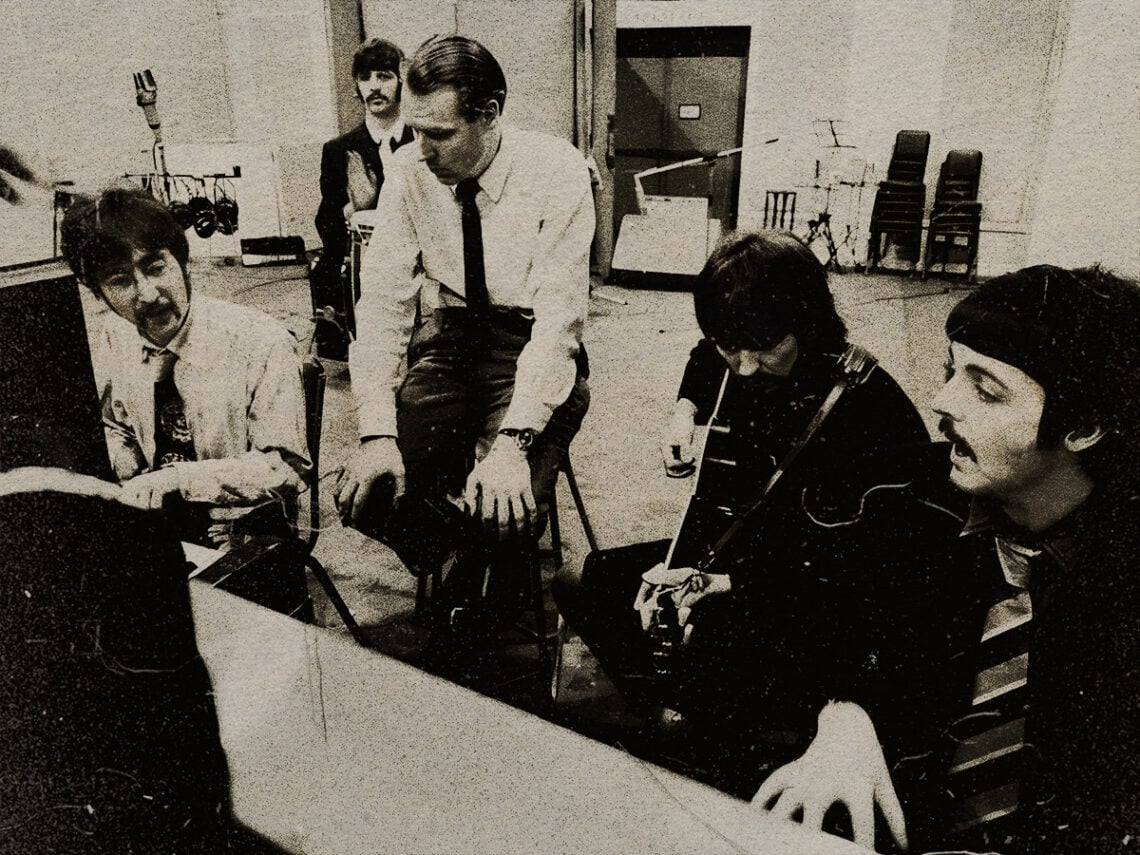
The Beatles song too hard for George Martin to play: “It was too intricate”

In the grand history of The Beatles, George Martin could be considered the real puppetmaster of their early career. John Lennon and Paul McCartney already had fine songs that would become legendary for years to come, but their producer was the one able to turn their strange experiments into works of art, usually bringing in the right orchestral arrangement or suggesting that the song have different harmonies than are typically found in rock. Then again, even Martin wasn’t safe from the odd song that was a bit too complicated for him to master.
Granted, being a musical genius wasn’t what Martin initially signed up for when working with the Fab Four. Part of his major musical training came from playing the oboe, so unless the band had a horn section on every single track, it was better for Martin to illustrate what he thought the song needed on the piano first before presenting it to the band.
And while he would sit in as the odd pianist on a couple of their early songs, it wasn’t until Rubber Soul that he took on a more hands-on role in everything. The band were already looking to branch out from the typical love song structure that they had half the time, and that meant working with Martin to find the right approach to a track, whether that was Lennon making those deep breaths sound so moody on ‘Girl’ or George Harrison bringing in the sitar for ‘Norwegian Wood.’
Even if they had different approaches to how the song was constructed, ‘In My Life’ was as close to perfect as any of their songs got without using classical musicians. McCartney had already written a masterpiece with ‘Yesterday,’ but Lennon detailing all of the pieces of his life and promising to love his other half even better than that is one of the purest devotional songs he ever wrote while in the band.
But a song of this calibre needed a much better solo to go along with it, and Martin figured the best way to orchestrate it was to make something a bit more baroque than usual. While he had sculpted out the perfect solo to play for the middle section, he ended up realising halfway through that the band were going to need a better pianist if they had any chance of getting the right take.
So instead of calling in a session player, Martin figured the next best thing was to speed the track up, saying, “I quickly composed a little section for a piano, but I couldn’t play it. I couldn’t play it because it was too intricate, at the speed I wanted it done. So I said, ‘Let’s use the wound-up piano technique, drop the speed of the tape down to half of what it is. And then I could play the piano, exactly the notes I wanted, quite effectively.”
The piano also adds a sophisticated touch to the whole thing by speeding up the tape. Lennon was already making a love song far more adult than anything he had written before, so bringing in a piano that sounds like a harpsichord for a few seconds sounds like it could have easily come off of a classical record rather than something by a pop group.
But that was the core behind all of The Beatles’ greatest moments. They had never wanted to stay confined to one area, and when they tried working with different instruments, they went from being a decent rock and roll group to one of the most complex bands of the modern age.

Never Miss A Beat
The Far Out Beatles Newsletter
All the latest stories about The Beatles from the independent voice of culture.
Straight to your inbox.